A new vision for Hanoi agriculture in 2024
Overcoming many difficulties and challenges, Hanoi's agricultural sector grew by 2.74% in 2023.
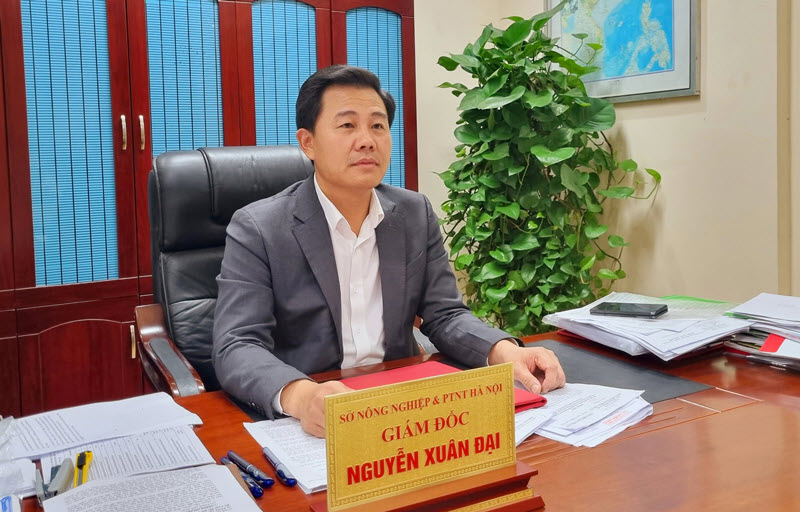
In 2023, Hanoi completed the goal of building new rural areas in suburban districts one year ahead of schedule, and this achievement was voted one of the top 10 notable events in the capital. Based on these results, Nguyen Xuan Dai, Director of the Hanoi Department of Agriculture and Rural Development, shared with Hanoimoi newspaper the sector's vision, goals and solutions for 2024.
Unique highlights and impressions
| Nguyen Xuan Dai, Director of the Hanoi Department of Agriculture and Rural Development. Photos: Hanoimoi Newspaper |
What are the vision and goals for Hanoi's agricultural sector this year?
In 2024, the city's agriculture sector aims to grow from 2.5% to 3%. To attain this goal, the sector will focus on restructuring agriculture, restoring growth momentum by improving production efficiency, adding value to products, expanding markets, improving people's income and living standards, and ensuring food safety and security in the new context.
In parallel, the city will build a concentrated commodity agriculture system, applying new technologies with high productivity, quality, environmental friendliness and adaptability to climate change and international integration.
The city will allocate resources to strengthen the development of modern, clean and organic agriculture, as well as the circular economy, linked to the development of agro-processing industries and sustainable linkages with global agricultural value chains; promoting the production of crops and breeds.
The city will also develop green agriculture, smart and environmentally friendly agriculture, linked to the development of urban areas, services and rural tourism.
In addition, Hanoi is committed to rural development by focusing on a cooperative economy, agribusiness, industry and traditional craft villages.
Could you tell us more about the many challenges and constraints facing agricultural production?
The biggest challenge for the agricultural sector remains the weather. In addition, the prices of inputs and labor are unstable and tend to increase, leading to higher production costs and lower economic efficiency.
The adoption of technology in agricultural production is not synchronized, and investment resources for agriculture and rural areas have not reached the level required for development.
How can Hanoi's agriculture create its highlights and advantages, based on its characteristics different from other provinces and cities nationwide?
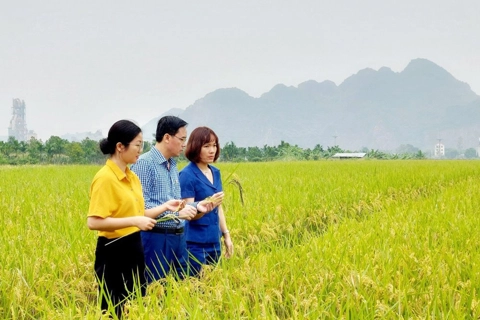
Hanoi's urban agriculture faces a special challenge: determining a development path that reconciles economic growth, environmental protection, cultural preservation and food security. Several key issues in the agricultural sector require careful consideration and balance. The focus is on maximizing agricultural services by establishing an efficient urban ecological farming system.
The amended Land Law, with its new provisions, is key to addressing the existing difficulties and shortcomings of the current agricultural sector. In addition, the amended Capital Law (expected to be reviewed and passed by the National Assembly in the upcoming session) will promote the rational and efficient use of land resources for agricultural and rural development.
One notable proposal is to give Hanoi the authority to use and manage agricultural land along the riverbanks to develop organic agriculture, tourism, education and experiential activities.
In addition, it is proposed that Hanoi be allowed to change the cropping structure to allow the cultivation of annual and perennial crops, livestock, aquaculture and other agricultural activities on rice fields.
The city will also be given the power to contribute to, lease, and transfer land use rights for concentrated agricultural land for production purposes.
Objectives of building new rural areas
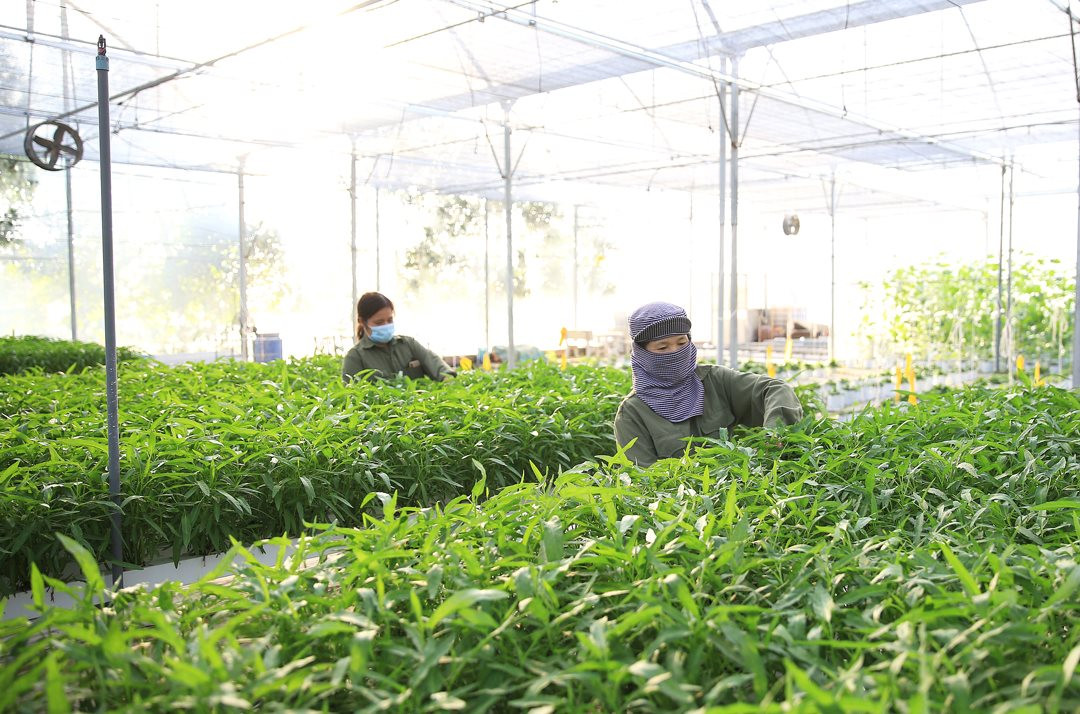
| High-tech vegetable production model applied in Yen My commune, Thanh Tri district. |
Completing the construction of new rural areas in the suburbs in one year was voted as one of the top 10 notable events in the capital in 2023. What are the goals for 2024?
The city aims to have at least four districts achieve the higher status of new rural areas by the end of 2024. In addition, there will be 40 more municipalities that meet the advanced standards of new rural areas and 35 more that meet the exemplary standards of new rural areas.
The agricultural sector will work with districts and towns to review and fully implement the standards set by the New Rural District Criteria for the period 2021-2025.
In addition, the objectives of building new rural areas set out in the Program of the Hanoi Party Committee on Enhancing the Effective Implementation of the National Target Program for Building New Rural Areas, Restructuring Agriculture and Developing the Rural Economy, Improving the Material and Spiritual Life of Farmers for the Period 2021-2025 will be achieved.
The process of building new rural areas is continuous, and the Department will closely follow the City's directives, coordinate with localities to implement them together, and address any difficulties and obstacles in the process.
The city has adopted various mechanisms and policies to support investment, but there are still shortcomings. What are the problems?
At present, there are still many shortcomings and limitations in the planning and management of construction, land, environmental sanitation, waste collection and treatment in rural areas.
Economic restructuring and agricultural transition have not kept pace with the potential and advantages of the city. Rural infrastructure is not synchronized, and many areas are in a state of decline, requiring significant investment resources.
In addition, many localities have not paid enough attention to implementing certain criteria for building new rural areas, such as those related to security and order, production organization, environment and culture.
Some localities have not fully understood the impact of these criteria on rural economic development and the improvement of farmers' material and spiritual lives.
What steps will the Hanoi Department of Agriculture and Rural Development take to ensure the successful implementation of the New Rural Area Plan?
We will prioritize the allocation of investment funds to meet the criteria for upgrading new rural areas, improving the standards of new rural communes, and developing exemplary new rural communes to achieve the goals of the plan.
Furthermore, the districts and towns need to proactively balance and allocate budgets at the district and commune levels and mobilize other resources within their jurisdictions to implement and ensure the set objectives.
The department will continue to promote the campaign "The whole people united to build new rural areas and civilized cities" and the movement "The whole country joining hands to build new rural areas".
At the same time, the department will strengthen monitoring and supervision activities to improve efficiency, contribute to maintaining and promoting the criteria for building new rural areas, and accelerate the progress of new rural area construction.
Thank you!