Agricultural cooperatives in Hanoi flourish, driving value chains and rural transformation
Hanoi reports rapid growth in agricultural cooperatives, value chains and high-tech farming, while addressing policy bottlenecks to boost competitiveness, sustainability and food security.
THE HANOI TIMES — Hanoi had more than 1,600 agricultural cooperatives as of November 30, up 16% from the end of 2022, according to Hoang Thi Hoa, Head of the Rural Development Division under the Hanoi Department of Agriculture and Environment.
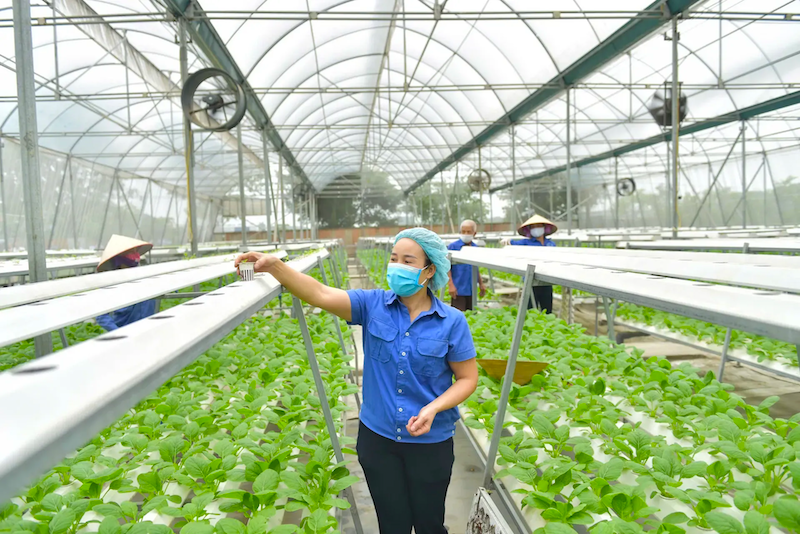
A high-tech farm in Noi Bai Commune, Hanoi. Photo: Pham Hung/The Hanoi Times
Hoa released the figures at a workshop reviewing agricultural cooperative development and value-chain-based production during 2022-2025, while outlining directions for 2026-2030 with a vision toward 2045 held today (December 30).
She said the city’s cooperatives now employ about 33,700 regular workers, with average annual revenue reaching nearly VND2.7 billion (US$102,540) per cooperative.
Hanoi also has 11 agricultural cooperative unions, which play a central role in linking production with consumption and strengthening the collective economy, Hoa added.
Many cooperatives have moved beyond their traditional role of providing input services and shifted toward market-oriented models that organize large-scale commodity production aligned with demand.
The application of high technology and scientific advances has accelerated, improving productivity, product quality and brand recognition for Hanoi’s agricultural goods.
At present, 213 cooperatives apply high technology, digital transformation and production models aligned with green, circular, organic and ecological agriculture.
These cooperatives increasingly serve as “locomotives” in restructuring agricultural production, shifting from fragmented household farming to value-chain-based models with concentrated raw material zones, thereby enhancing competitiveness.
Hanoi now has 183 active agricultural value chains, up 42 compared with the 2015-2020 period. Of these, 65 relate to livestock products, including seven aquaculture chains, while the remainder focus on crop production.
Several value chains have established strong market recognition, including the Bao Minh high-quality rice chain, Nam Phuong Tien’s organic rice and Dien pomelo chain, the Dai Ang high-tech aquaculture chain, the Chuc Son safe vegetable chain and the BBB beef chain.
Notably, the Hanoi Department of Agriculture and Environment has partnered with 26 provinces and cities to develop nearly 1,400 safe food supply chains for the capital, an increase of 76% from 2015-2020. These partnerships help secure stable and safe food supplies for more than 10 million residents.
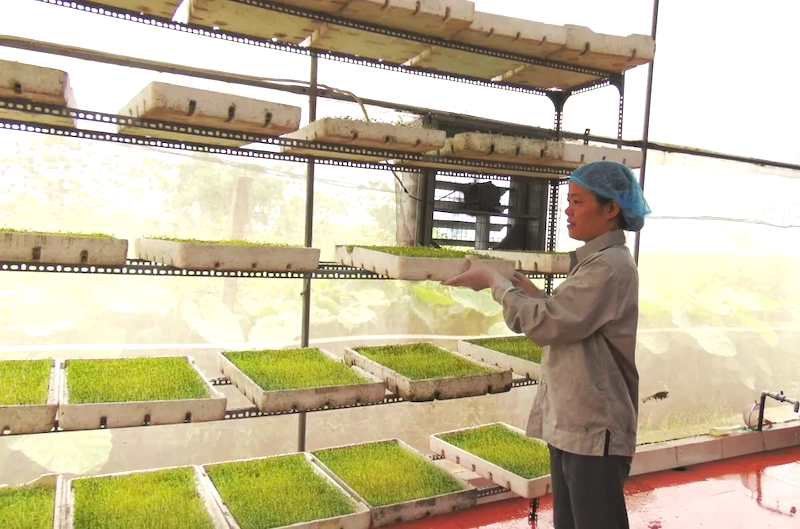
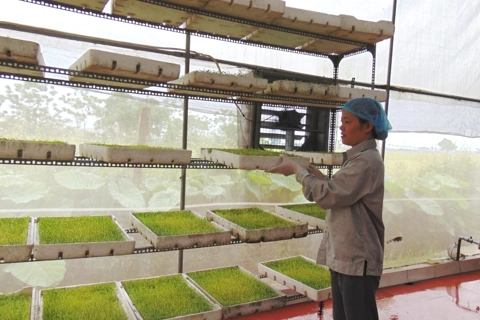
Nursery at Thanh Ha Agricultural Production and Service Cooperative, Thuong Tin Commune. Photo: Lam Nguyen/The Hanoi Times
However, many value chains remain insufficiently sustainable, with loose contractual links between farmers, cooperatives and enterprises and unclear risk-sharing mechanisms.
Most products still enter the market in raw form with limited added value, while branding, traceability and digital transformation remain weak, constraining market expansion.
Pham Quoc Trinh of the Vietnam Cooperative Alliance stressed the need to strengthen cooperative governance, improve communication to build social consensus and review support policies to better reflect on-the-ground conditions in the 2026-2030 period.
He said closer integration of cooperatives with One Commune One Product (OCOP), VietGAP and organic standards offers a clear pathway to raising product value.
Nguyen Manh Hung, Deputy Head of the Department of Agricultural and Environmental Policy, said authorities must carry out thorough assessments of cooperative performance and dissolve ineffective cooperatives that fail to meet required standards.
Trinh Anh Tuan, Director of the Center for Science, Technology and Digital Economy, said land access and credit remain the most pressing bottlenecks for cooperatives.
He also called for stronger human resource training, noting that 38.2% of cooperative managers lack formal training, which directly weakens production organization and market linkage capacity.
Pham Thi My Dung, Director of the Institute for Rural Development Science, proposed clearer mechanisms and defined responsibilities for city departments and agencies.
She also suggested that Hanoi develop around five pilot value-chain models under the Government’s revised Decree 98 on fostering agriculture partnerships, along with one to five ecological value chains linked to experiential tourism.