Hanoi adopts new resolution to accelerate modern, high-tech agricultural transformation
Hanoi has adopted comprehensive incentives for high-tech farming, organic production, seed development, digital traceability and low-emission agriculture, targeting a shift toward sustainable, innovative and climate-resilient agricultural growth.
THE HANOI TIMES — The Hanoi People’s Council on November 26 approved a resolution outlining several agricultural development policies to modernize the sector through science, technology and innovation.
The new resolution focuses on supporting organizations, cooperatives, households and individuals directly involved in agricultural production and services in the city.
Support policies cover the entire value chain, from inputs such as seeds and technology to outputs such as processing, preservation and traceability.
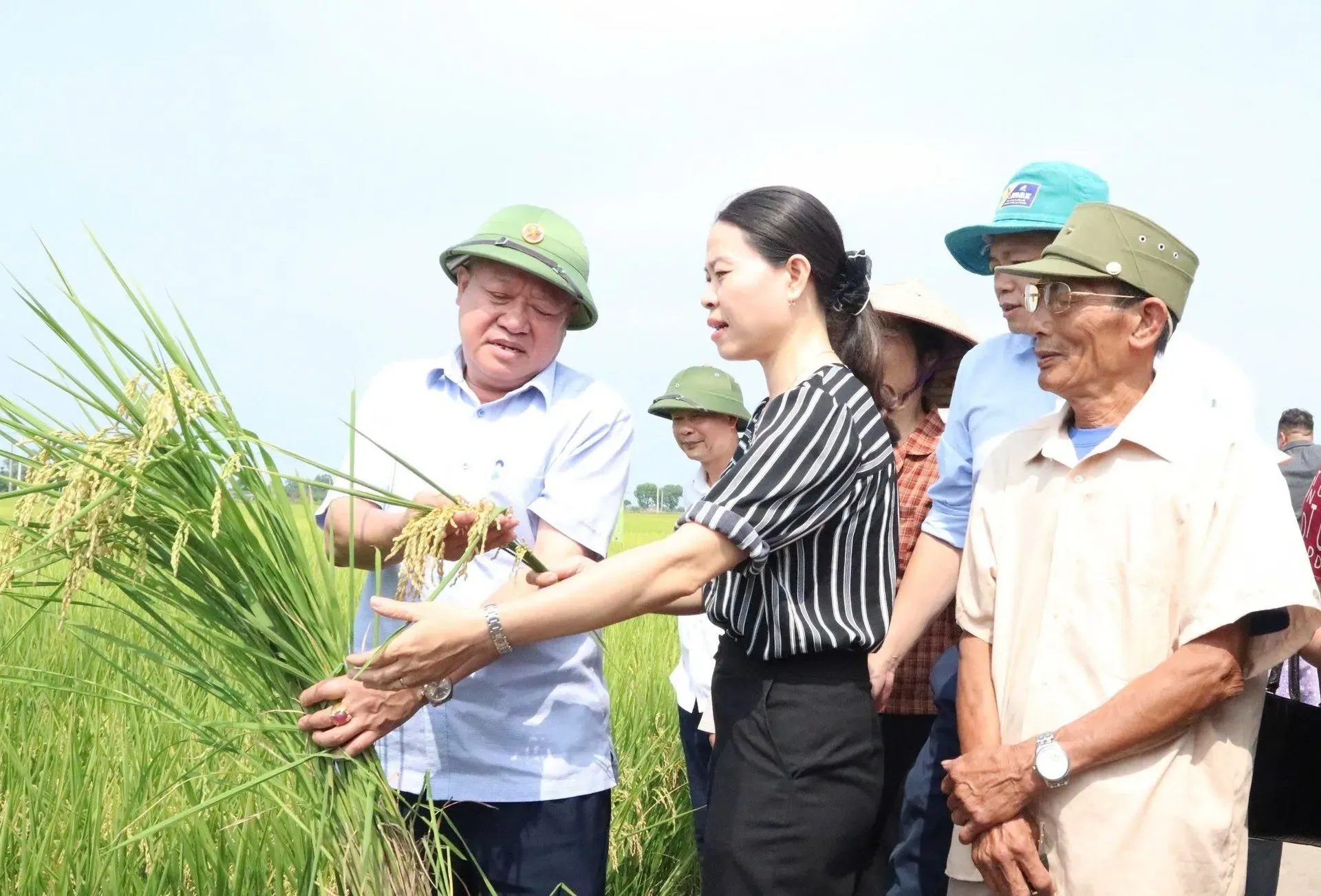
A rice field in Lien Mac Commune using SRI model to curb carbon emission and promote sustainability. Photo: Kinh te & Do thi Newspaper
Under the resolution, organizations and individuals will receive full funding for first-time consultation services to obtain planting-area codes, capped at VND15 million (US$570) per code.
They will also receive one-time support for 100% of the cost of establishing digital traceability systems, designing or upgrading packaging and printing electronic labels, with a maximum of VND20 million ($760).
In addition, consultation, assessment and certification costs for good practice standards (such as VietGAP, GlobalGAP and organic) or food safety management systems (HACCP, ISO 22000) will be fully covered, up to VND65 million ($2,460) per beneficiary.
Organizations with projects producing plant, livestock or aquaculture seeds will receive one-time support for 100% interest on loans over 36 months to invest in infrastructure, technology and breeding stock.
For seed imports, the city will cover 50% of the import cost for purebred cattle, high-quality swine breeding stock and grandparent lines, with funding capped at VND5 billion ($1.9 million) per organization or individual.
High-tech seed-production projects qualify for special incentives under the Capital Law, including 10-year exemptions from land and water surface rent and 50% reductions for the remaining period.
These projects are also eligible for a 5% corporate income tax rate, including a four-year tax exemption and a 50% reduction for the subsequent nine years.
The city will fund 50% of seed-purchasing costs for high-yield rice varieties grown in designated production zones.
Projects upgrading, renovating or building new facilities for preliminary processing, processing and storage of seeds and agricultural products will receive interest-free loans for three years.
Centralized slaughter facilities will also be eligible for 100% interest support for three years for construction, upgrades and the purchase of clean-energy meat transport vehicles.
For ecological agriculture, the city will provide one-time support of VND25 million ($950) per hectare for organic rice and VND50 million ($1,900) per hectare for other organic crops.
Eco-agriculture models combined with tourism will receive full funding for consulting services, up to VND300 million ($11,370).
The municipal People’s Council said that digitization is a shift in production thinking to make agriculture sector transparent, efficient and sustainable rather than a mere transition to machinery or sensors.
Nguyen Manh Phuong, Deputy Director of the Hanoi Department of Agriculture and Environment, said applying digital solutions in agriculture will reduce emission, support Vietnam to fulfill its climate commitments and promote adaptive, higher-value and environmentally friendly agriculture.
He stressed that farmers must remain at the center of all action plans as they understand production realities and face climate impacts directly.
Hanoi currently has more than 160,000 hectares of rice, over 20,000 hectares of fruit trees, more than 30,000 hectares of vegetables and tens of thousands of hectares of tea and ornamental plants.
Nearly half of the city’s commune-level units still engage in agriculture, underscoring its importance to the economy and rural livelihoods.
“One notable achievement is the adoption of the SRI improved rice cultivation method, which reduces seed, water and fertilizer needs while increasing yields,” Phuong told the Vietnam News Agency.
“Many areas have shifted to organic production without plant-protection chemicals, strengthening the image of greener and safer agriculture in the capital.”
Hanoi moves toward green, clean and smart agriculture
High-tech and smart farming models in Dong Anh, Lien Mac and Ung Hoa communes have helped farmers reduce labor, improve efficiency and produce safe agricultural products.
In the spring crop this year, farmer Luu Ba Tiep in Lien Mac Commune used the improved SRI method combined with mechanical transplanting to grow rice paddies.
The new method helped him reduce labor costs and lowered fertilizer and pesticide use. The rice plants grew sturdier and produced more panicles, averaging 18–20 per cluster, with some reaching 25.
Using the same method, farmer Nguyen Thi Nhan in Lien Mac said that seed use fell by 40%–50% compared to the last season while yields rose 10$–12% compared with traditional methods.
Nguyen Thi Tinh, Director of the Ung Hoa Agricultural Service Center, said applying low-emission rice cultivation linked to carbon credits is a breakthrough that opens a new economic pathway for green, environmentally friendly farming.
According to Luu Thi Hang, Head of the Crop Production and Plant Protection Division under the Hanoi Department of Agriculture and Environment, the SRI method – combined with alternate wetting and drying – results in significant cut of methane (CH₄) and nitrous oxide (N₂O), the two main greenhouse gases in rice farming.
With this method, farmers can cut input costs by 30%, increase profit margins by 50% and reduce emissions by around 10%. If the model meets international standards, farmers can sell carbon credits for about $20 per ton of CO₂-equivalent reductions.
SRI improves plant balance, boosts yield, saves water and reduces fertilizer and pesticide use, which lowers greenhouse gas emissions.
However, traditional SRI expansion was limited because it required labor-intensive hand transplanting at a time when rural labor is increasingly scarce. The improved model using machinery has overcome this barrier, Hang said.
Hanoi’s assessment of the improved SRI model shows rice yields rising 10%–12% (6.4–7.8 quintals per hectare) compared with traditional cultivation. Grain quality meets food safety standards and economic efficiency increases by VND19.8–25.6 million ($750-$970) per hectare.
In Dong Anh Commune, a fast-urbanizing area, the commune government aims to align economic and urban development with environmental protection and expanded green spaces.
The commune plans ecological and green agriculture in riverside zones to form green belts and manage public land for community green projects.
Dong Anh is carrying out a 2025–2030 plan on “Urban-oriented agricultural development” to promote clean, organic and high-tech agriculture and create green ecological spaces.
According to the Dong Anh Commune People’s Committee, local authorities are strengthening oversight of agricultural models and focusing on organic and eco-friendly approaches.
Although production areas may be limited, the commune said it will prioritize resources and policy mechanisms for green, environment-friendly models.
Hanoi is steadily building a modern agricultural system in which every product has traceability, every farm operates on digital data and every farmer becomes a “digital farmer”, contributing to a greener, cleaner and more sustainable capital.