Modern high-tech agriculture models drive greener, safer farming in Hanoi
The Hanoi Department of Agriculture and Environment highlights the city’s efforts to modernize agriculture through high-tech, safe and sustainable models aligned with market demand.
THE HANOI TIMES — Hanoi is currently focusing on developing modern agricultural production models that apply advanced technologies, ensure food safety, and meet market demands. This strategic direction aims to enhance the added value of agricultural products while restructuring the sector for greater efficiency and deeper global integration.
Nguyen Manh Phuong, Deputy Director of the Hanoi Department of Agriculture and Environment, shared insights with Hanoimoi Newspaper on how these models are being implemented across the capital.

High-quality rice production area in Ung Hoa Commune. Photo: Anh Ngoc/The Hanoi Times
How has Hanoi developed high-quality agricultural models aligned with market needs?
In 2025, Hanoi’s agricultural sector has launched a series of extension models in both cultivation and livestock production, ensuring they follow planned schedules and align with the city’s farming seasons. These models are tailored to actual production needs, integrate advanced technical innovations, and have gained strong participation from local farmers.
In crop cultivation, the Agricultural Extension Center has implemented 14 models across four key groups, adapted to local conditions. Eight models are already in operation, with several showing clear economic, social, and environmental benefits.
Two models focus on high-quality rice production under VietGAP standards issued by the Ministry of Agriculture and Environment. These standards ensure safe, eco-friendly, and traceable practices. Rice yields average between 6.3 and 6.5 tons per hectare, and enterprises have signed contracts to purchase all output, increasing economic efficiency by around 20% compared to traditional methods.
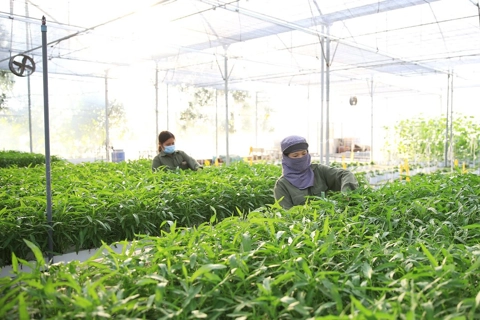
The center has also supported high-tech vegetable, flower, and fruit cultivation under VietGAP standards. The intensive pomelo model applies advanced planting and care techniques to improve yield and quality. The melon cultivation model uses growing media such as coir dust, burned husks, and coconut fiber in a controlled environment to maintain stable nutrition and growth.
The industrial mushroom model follows a closed, monitored process to ensure safety and stable productivity. Both the melon and mushroom models have completed their first harvests, producing high-quality products that have received positive feedback from consumers.
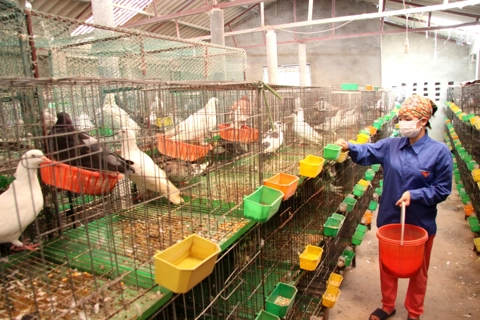
In livestock farming, the city has implemented seven models across three groups, raising a total of 43,330 animals. For aquaculture, three VietGAP-standard models have been deployed on 20 hectares, focusing on safe, efficient production to ensure a stable market supply.
How has Hanoi linked production with consumption and developed concentrated farming areas?
In recent years, Hanoi’s agricultural sector has adopted modern techniques, restructured crops and livestock, and developed a wide range of safe, high-quality products with clear economic benefits. Across the city, over 153,000 hectares are used for rice cultivation, yielding around 930,000 tons per year.

Nguyen Manh Phuong, Deputy Director of the Hanoi Department of Agriculture and Environment. Photo: Trong Tung/The Hanoi Times
Fruit trees cover 20,000 hectares, including 4,700 hectares of concentrated orchards. Vegetables occupy about 33,900 hectares, producing 735,000 tons from over 40 varieties. The city now maintains 1,700 hectares of VietGAP-standard farming, including 429 hectares of vegetables, 446 hectares of fruit trees, and three hectares of tea.
Hanoi also has over 100 hectares of organic vegetable farming and 52 safe vegetable production and consumption chains under the Participatory Guarantee System (PGS) – a community-based quality assurance system involving producers, consumers, and social organizations. These models cover nearly 2,000 hectares, accounting for about 14% of the city’s total vegetable area.
The city has restructured livestock farming by focusing on key communes and areas outside residential zones to prevent disease and ensure biosecurity. It has designated 128 concentrated livestock areas. Aquaculture covers 24,500 hectares, with many facilities switching to high-yield, high-quality species using advanced technical methods for sustainable development.
The main challenge for the sector is the small production scale, which limits the ability to consolidate output and sign contracts with large enterprises. High investment costs for technology, certified materials, and standards such as VietGAP or GlobalGAP remain a barrier for many farmers. Climate change and unpredictable weather also continue to affect productivity and the stability of production models.
What are Hanoi’s priorities to improve the effectiveness of these models?
Hanoi aims to build a modern, green, clean, and organic agricultural system based on a circular economy, integrated with food processing industries and resilient to climate change. The city plans to develop ecological and smart agricultural models linked with urban growth, rural tourism, and experiential education.
In crop cultivation, Hanoi will continue investing in high-quality and organic farming models to promote sustainable and efficient production for farmers and businesses. The city will further restructure crops and livestock to fit local conditions, develop high-quality rice varieties, expand specialty livestock farming, and strengthen production linkages to ensure stable markets.
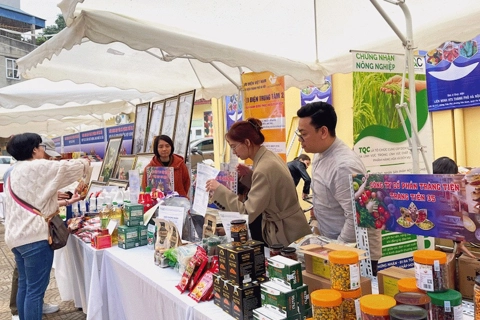
Hanoi is also advancing digital transformation in agriculture by using QR codes, electronic diaries, and e-commerce platforms for production and sales, increasing the competitiveness of its agricultural products in both domestic and international markets.
Thank you for your time!