American firms in Vietnam cautiously optimistic despite trade uncertainty, AmCham says
The American Chamber of Commerce in Vietnam - Ho Chi Minh City (AmCham)’s mid-year snapshot reveals a business environment characterized by resilience and recalibration.
THE HANOI TIMES — Sentiment among US businesses operating in Vietnam leans positive but remains tempered by concerns over global trade friction and domestic policy inconsistencies, according to a report from the American Chamber of Commerce (AmCham) in Vietnam.
The organization's Mid-Year Market Update Survey reported that 39% of its members were “slightly optimistic” about the business outlook for the remainder of 2025. Another 32% held a neutral view, while fewer than 10% expressed strong optimism.
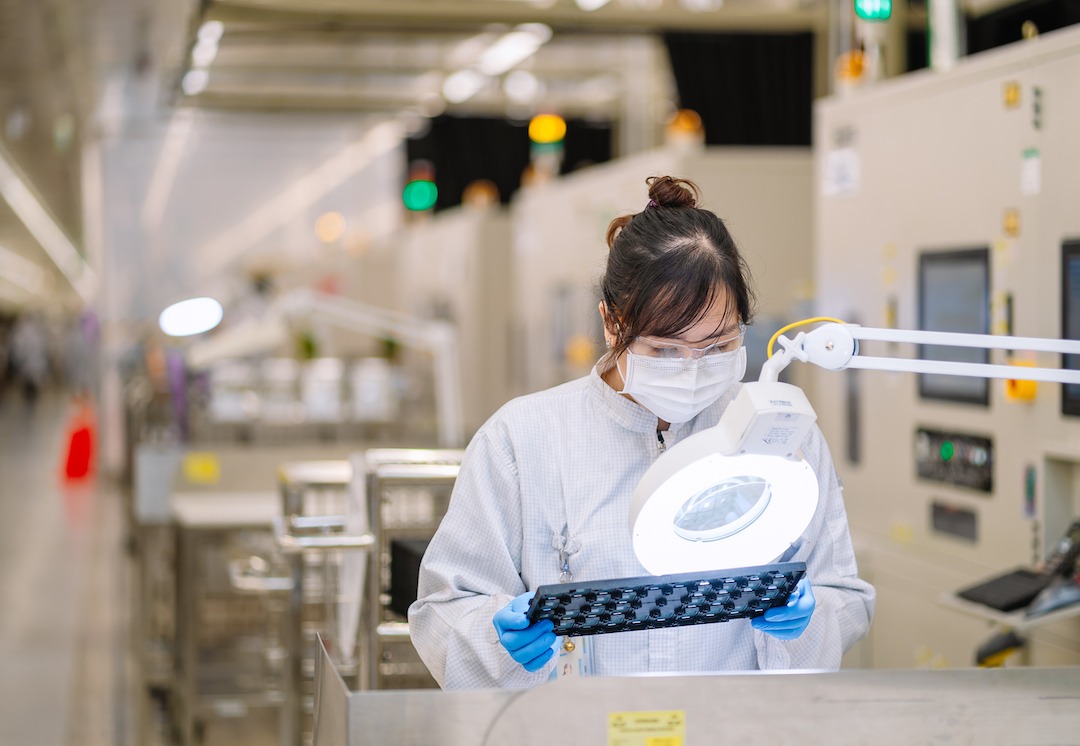
A chip design engineer at the Intel Products Vietnam factory. Photo: Intel Products Vietnam
One of the most pressing concerns identified was the potential impact of US retaliatory tariffs with 36% of companies said they were “extremely concerned,” while 41% being “somewhat concerned.”
Many firms, particularly those in the manufacturing and export sectors, said that recent US trade policies had already "somewhat" or "significantly" affected their operations. Some warned that future investment plans may depend on improved predictability in trade relations.
However, Vietnam’s rising profile in global supply chains, especially under the “China+1” strategy, continues to be a competitive advantage. Other positives cited include the expanding digital economy, growing consumer demand, and ongoing infrastructure development, according to the report.
Logistics and professional services firms reported rising demand for tech-enabled solutions, compliance support, and sustainable practices. Meanwhile, manufacturers noted new purchase orders shifting to Vietnam from other Asian markets. However, they cautioned that this momentum depends on global policy stability and local conditions.
When asked to assess the overall business climate, 37% of respondents rated it “somewhat positive,” while 30% remained neutral. Respondents acknowledged progress in administrative reform, particularly reductions in paperwork and digital government initiatives. However, ongoing concerns included inconsistent policy enforcement, regulatory ambiguity, and limited provincial coordination.
“For Vietnam to fully realize its potential, clarity on tariffs, consistent policy implementation, and accelerated reform remain critical,” the report noted.
Business performance in H1
AmCham's business performance in the first half of 2025 showed divergence across sectors. About 18% of companies outperformed expectations, led by logistics, select manufacturing segments, and large-scale food and beverage firms.
On the flip side, 29% reported results below expectations, and 12% underperformed. The challenges were among smaller professional services firms, educational institutions, and parts of the real estate sector.
Despite these challenges, employment trends were mostly stable or growing. About 45% of companies increased headcount, 16% maintained current levels, and only 9% reported reductions, suggesting that businesses continue to plan for long-term growth despite short-term headwinds.
Revenue performance reflected this split with just over half (52%) of respondents saw revenue gains year-on-year and 29% experienced declines.
Manufacturing companies were present on both ends of the spectrum: some benefited from higher exports, while others struggled with tariff pressures and supply chain disruptions.