Banh Duc: A classic girlie light snack
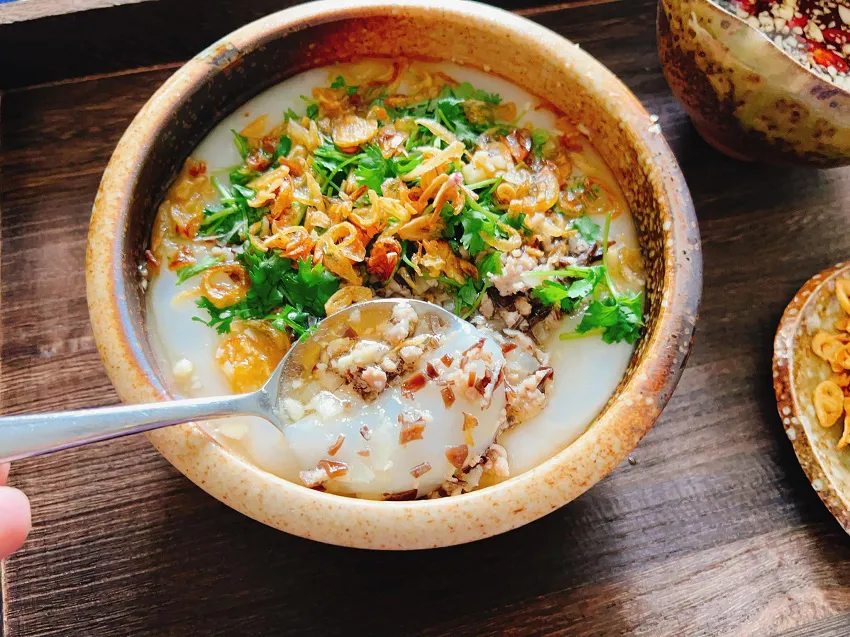
One of Hanoi's specialties, Banh Duc, a smooth and plain flan, has become a culinary favorite throughout the country.
For so long in the S-shaped land, including Hanoi, Banh Duc or rice plan has been considered a countryside snack that many people favor.
A Hanoi’s countryside snack
| Banh Duc is a countryside snack favored by many people. Photo: Ngoc Ha |
In the old days, mothers and grannies often came home from the market with slices of banh duc as a treat for their kids. Today, banh duc has become a breakfast, lunch, or snack dish.
Although it is a rustic cake made of ordinary white rice and peanuts, among other ingredients, the maker still has to be meticulous to satisfy diners.
According to some banh duc shop owners, the most important step is choosing good rice. Before cooking, the rice is rubbed and washed in water to remove impurities.
Specifically, the rice is soaked in clear lime or ash water until the grains feel crumbly when squeezed. It is then cleaned, drained, ground into a fine powder, and mixed with water. Meanwhile, peanuts are soaked for three to five hours, then peeled, rinsed, boiled, scooped out, and left to drain. The cooking step must also be done by someone with many years of experience who is good at managing the heat and stirring the dough evenly.
These are the cooking tips shared by Bui Thi Ninh, owner of a Banh Duc shop on Hang Than Street in Hoan Kiem District, for over 30 years.
| The original version of Banh Duc. Photo: Nhung Nguyen |
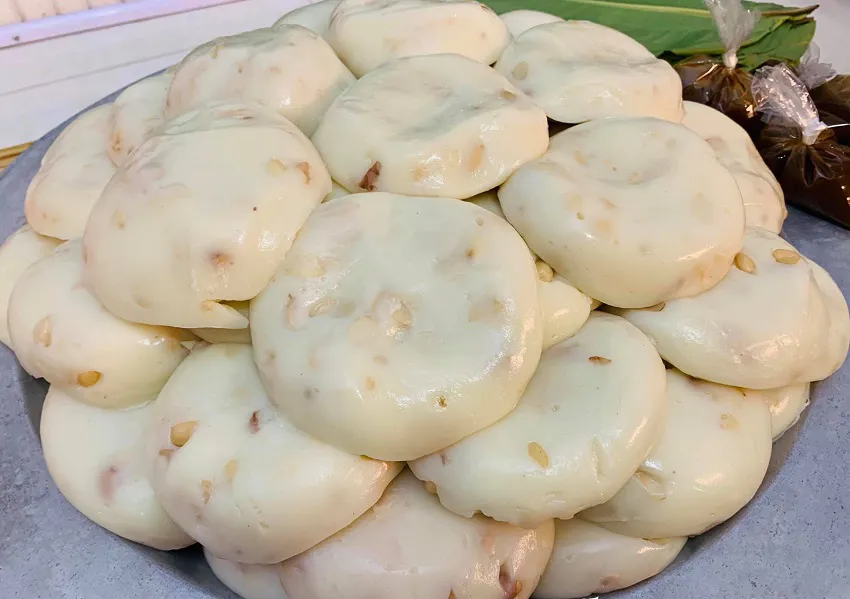
The most important and strenuous step is stirring the dough to make a piece of banh duc with the traditional flavor. When you pour the rice flour into the pot, you need to sift it so that the surface of the cake will be smooth. During cooking, keep the heat low and stir constantly, adjusting the heat as needed at each stage, and you'll get a batch of soft cake that won't burn.
When the dough is evenly cooked, the maker adds the peanuts and continues stirring until the ingredients are mixed. As soon as the pot is removed from the cooker, the mixture is poured onto a tray and spread evenly while still hot. When it cools, the surface becomes firm and shiny, as if it were covered in oil. This shine comes from the rice, peanut oil, and the appetizing aroma.
Several variations
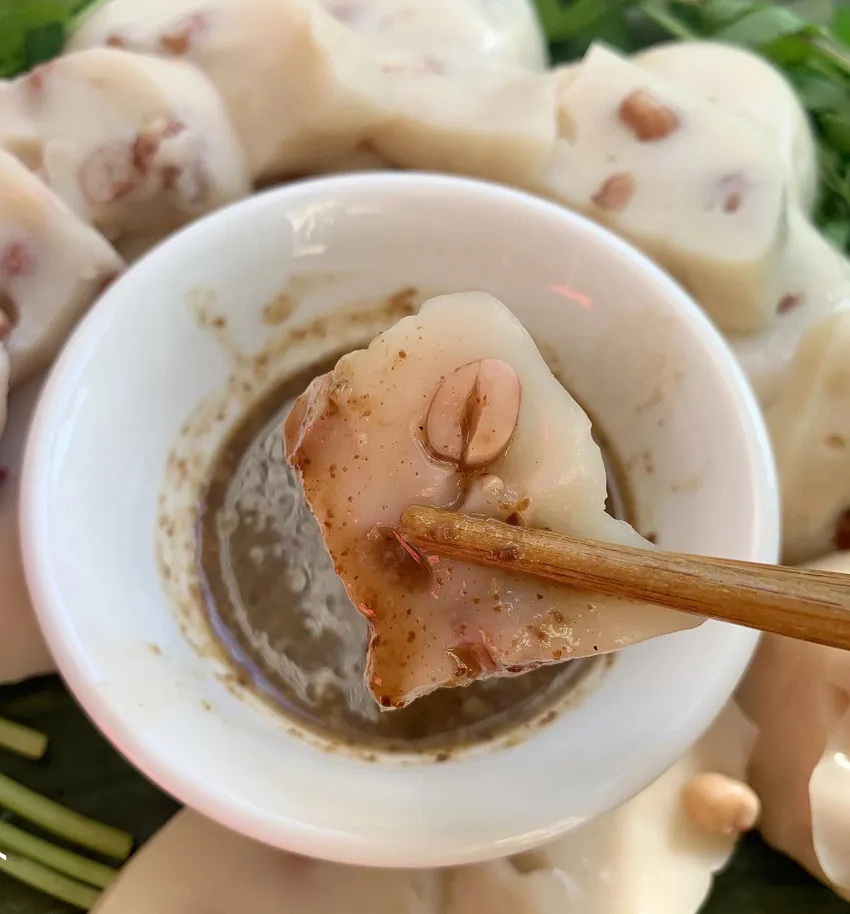
Freshly made banh duc can be eaten on its own. If you chew it thoroughly, you can feel the rich, buttery flavor of the rice and peanuts. The traditional Vietnamese way, however, is to eat banh duc dipped in fermented soy paste.
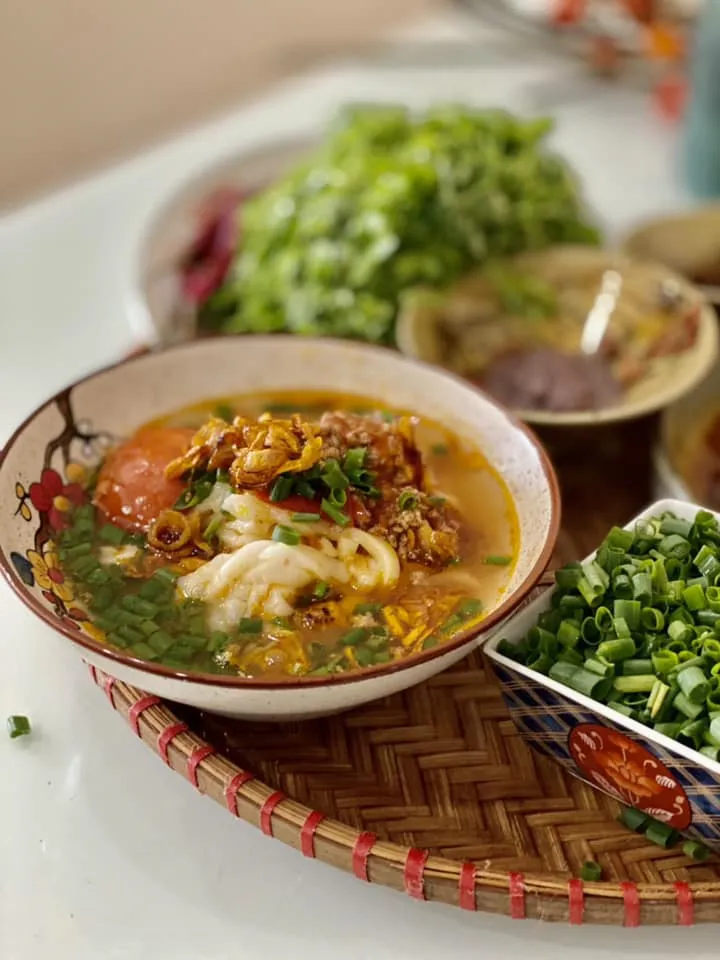
| The dish of banh duc rieu cua or banh duc with rice field crab soup. Photo: Vinh Quyen |
This is a pastoral yet elegant culinary habit of generations of Hanoians. On every street corner and alleyway in Hanoi, banh duc in general and banh duc dipped in fermented soy paste are offered as an affordable and tasty snack.
In the market economy, new recipes for banh duc have been invented, such as banh duc with shallots and shrimp paste, corn banh duc, or banh duc with coconut juice.
Another notable variation is banh duc salad, which is sold at a stall on Hang Than Street. The restaurant draws a big crowd in the summer as the dish has a special refreshing taste. Banh duc salad consists of shredded banh duc, which resembles thick noodles, blanched bean sprouts, and salad dressing.
The soul of banh duc salad is in the dressing. Roasted peanuts and sesame seeds are ground and boiled in bean sprout-blanching water. The mixture is then seasoned to taste just sweet enough - with an appealing richness, fragrance, and distinctive milky white color.
| The dish of salad banh duc. Photo: Esheep Kitchen |
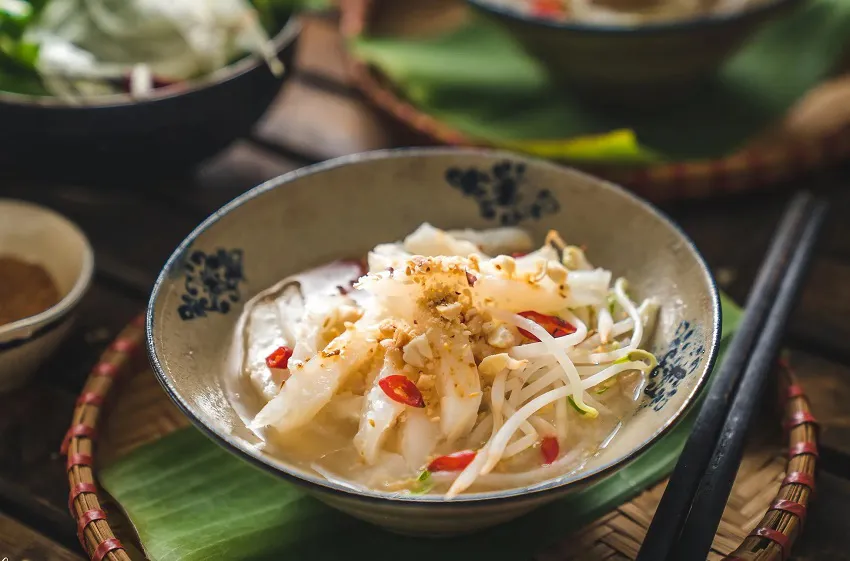
According to the shopkeeper, the cooked dressing is left to cool. When guests start to eat, the dressing is poured over the cake and bean sprouts.
The meaty texture blends deliciously with the richness of the rice, peanuts, and sesame seeds, as well as the crunchiness of the bean sprouts. In addition, banh duc salad is often served with herbs such as rice paddy herbs, purple perilla leaves, and shredded banana blossoms.
"I often come here to eat on weekend afternoons. In winter, I prefer banh duc dipped in fermented soy paste or peanut and sesame salt. In summer, when it's sunny and hot, I often have banh duc salad. It is tasty, refreshing, and affordable," said Quyet, a customer on Hang Be Street in Hoan Kiem District.
No matter the variation, banh duc is always an idyllic dish that makes Vietnamese diners nostalgic for their heavenly childhood. This rural snack is one of the irreplaceable specialties that tourists must taste to understand traditional Vietnamese cuisine.
| The dish of hot banh duc. Photo: Nguyen Hong Thuy |