Book about Hanoi cuisine wins award in China
Through her delicate writing style, the author has given Chinese readers a vivid picture of the changes in Hanoi's and Vietnam's culinary cultures.
THE HANOI TIMES — The Chinese edition of Hanoi: People, Food, and Drink in the Past by Vu The Long has just won the 2025 Influential Southeast Asian Book Award in China.
The award is a joint project of the China-Southeast Asia Cultural Book Week Committee, the Guangxi Publishing Group, and Baidu. It is based on Chinese consumption statistics, reader feedback, and media reviews.
According to the jury, the author's delicate writing style vividly depicts the changes in Hanoi's culinary culture for Chinese readers, conveying his thoughts on the inheritance and innovation of Vietnamese culinary culture and his deep love for Vietnamese national culture. It is an excellent work that combines knowledge and emotion.
The award was presented to a representative of Chibooks, the copyright holder of the work, during the China-Southeast Asia Cultural Book Week in Nanning, Guangxi, China, on July 3-6.
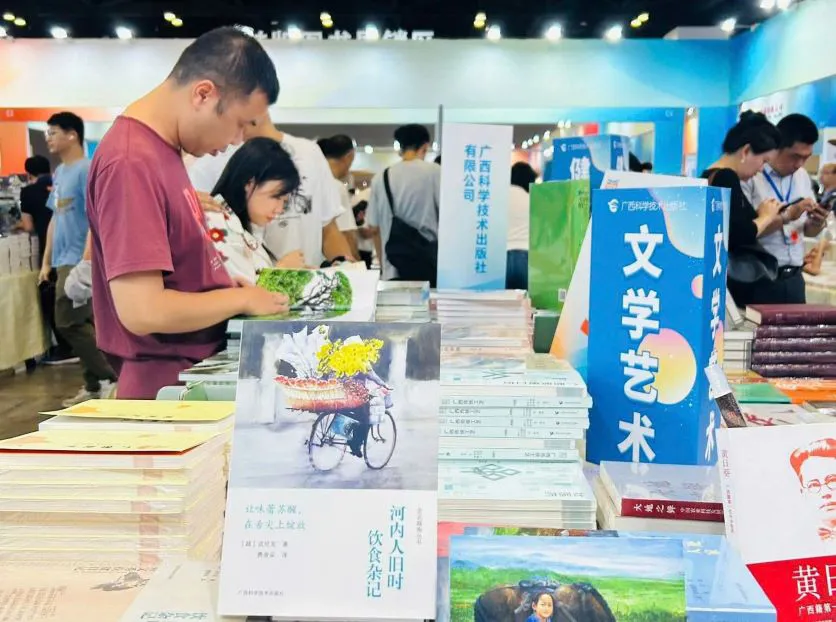
Chinese version of the book displayed at the China-Southeast Asia Cultural Book Week. Photos courtesy of Chibooks
The book, published by Chibooks in 2021, is the result of Vu The Long's (born in Hanoi in 1947) deep love for Hanoi's culinary culture and many years of research.
It takes readers back in time to the early 20th century to learn how Hanoians ate, prepared, and created cuisine and how they responded to new culinary influences introduced to the capital through immigration.
According to Long, cuisine is an important aspect of culture. Discovering the identity of Vietnamese and Hanoi culinary heritage and delving deeper into Hanoians' lifestyle is equally important to developing a new Hanoi culture.
"To approach the food culture of Hanoi and Vietnam, I wrote down what I, a Hanoian of a certain age, know about what I drank and ate, and what my family and the people around me, of different ages and generations, drank and ate. Maybe it will benefit the research and preservation of Hanoians' food culture," Long said.
As soon as it was released, the book was enthusiastically received by domestic readers and foreign publishers alike. The Guangxi Science and Technology Publishing House bought the copyright and published the book in China.
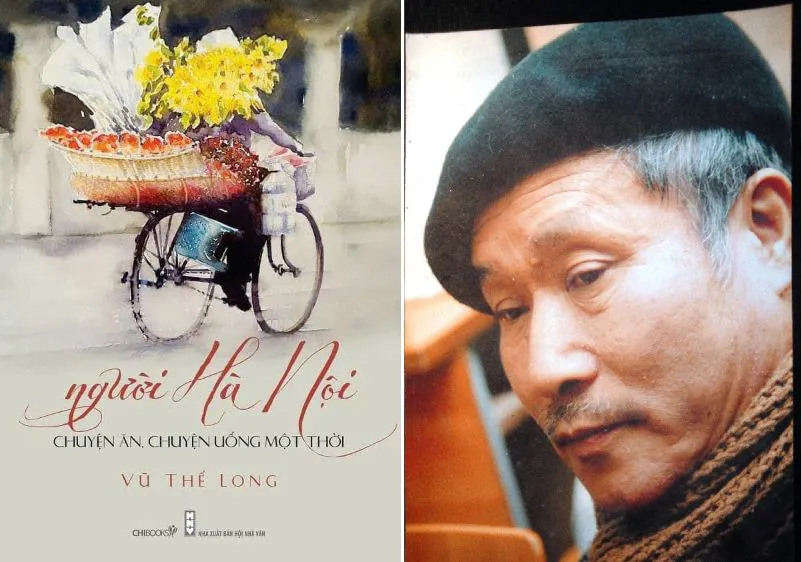
The Vietnamese version of the book and author Vu The Long.
Fei Qingdao, the translator who brought the book to life in Chinese, said author Vu The Long used fluent, comfortable, and delicate sentences to recount his memories of Hanoi.
"While reading the book, I felt like I was talking to an old man and listening to him tell stories of the past. The author also has a unique perspective. In each story, he conveys his emotions,” she said.
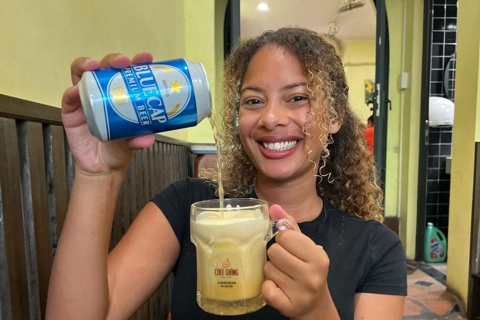
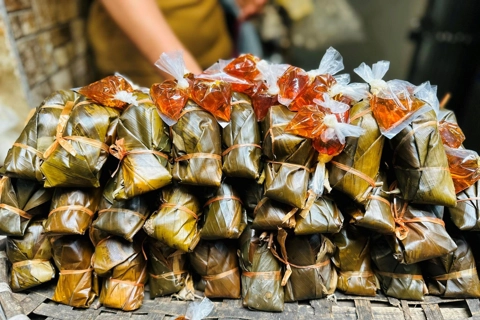
According to the translator, readers can learn about many aspects of ancient Hanoians' lives and the history and stories behind Hanoi's culinary culture from this book. For example, they can learn about the origin of beef noodle soup, the evolution of coffee-drinking culture, how Vietnamese beer became ubiquitous, and how ancient Hanoians made cakes.
The cuisine in this book is like a window through which readers can see the changes in modern Vietnam's socio-economic situation.
One thing that impressed her deeply was the story of little Long going to Dong Xuan Market with his mother.
Qingdao said Dong Xuan Market is the most typical wholesale market in Vietnam, and it is still preserved today as a living testament to folk culture.
"Looking at Dong Xuan Market through the author's eyes, we can glimpse the lifestyle and beauty of Hanoian culture and experience the warmth of the mother-child bond. I believe this can evoke sympathy from readers everywhere,” the translator said.