A line of Hanoi ancient painting revived
The Hanoi folk painting line of Kim Hoang has been restored thanks to the efforts of folklore experts.
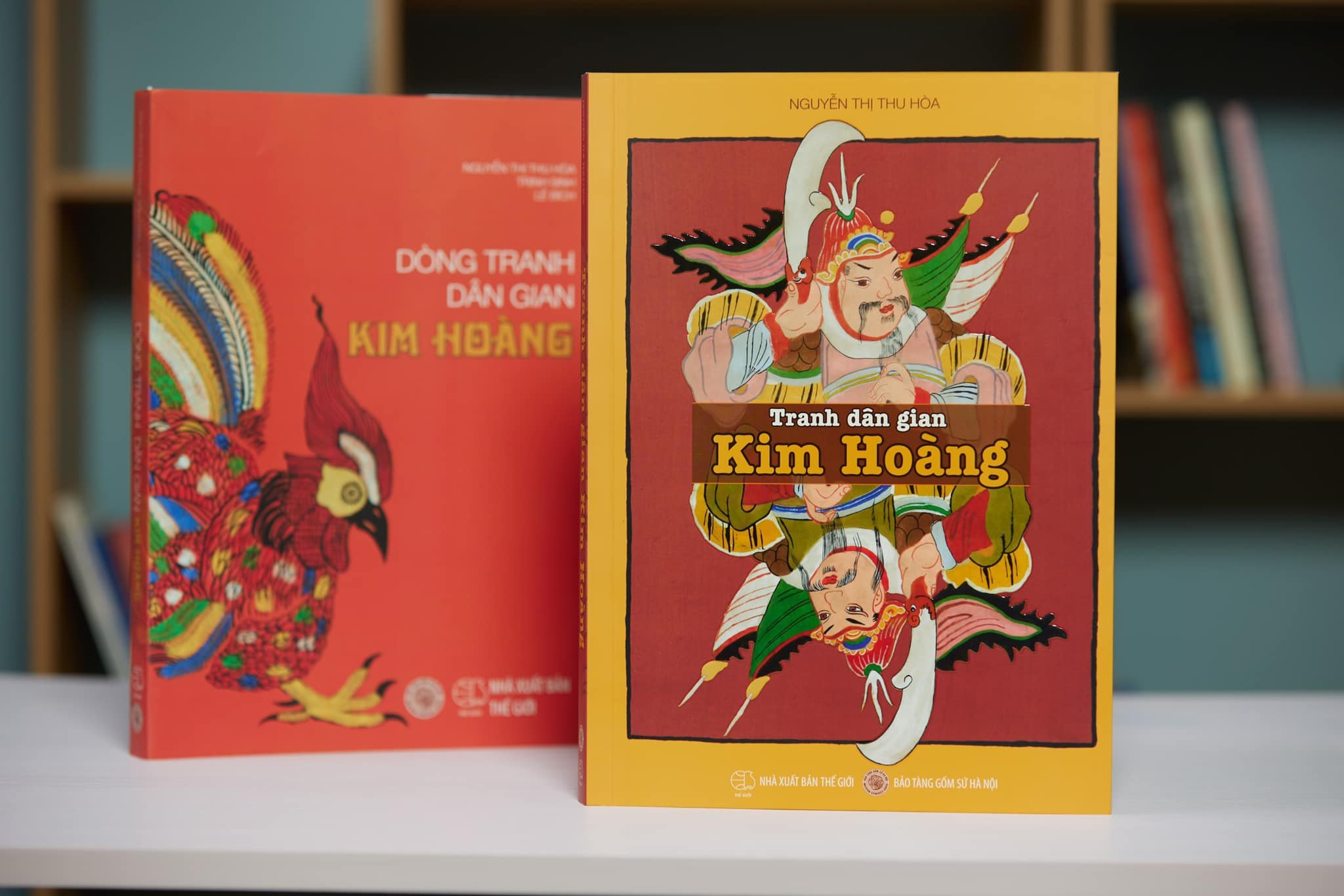
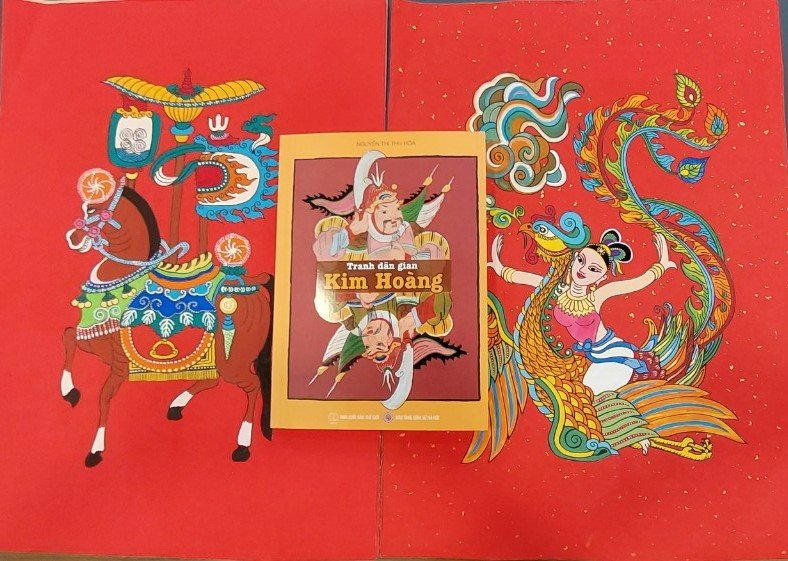
The book titled "Kim Hoang Folk Paintings" was jointly launched today [August 9] by the Hanoi Museum of Ceramics and the World Publisher. It was the result of the Kim Hoang Folk Painting Restoration Project led by researcher Nguyen Thi Thu Hoa, director of the museum.
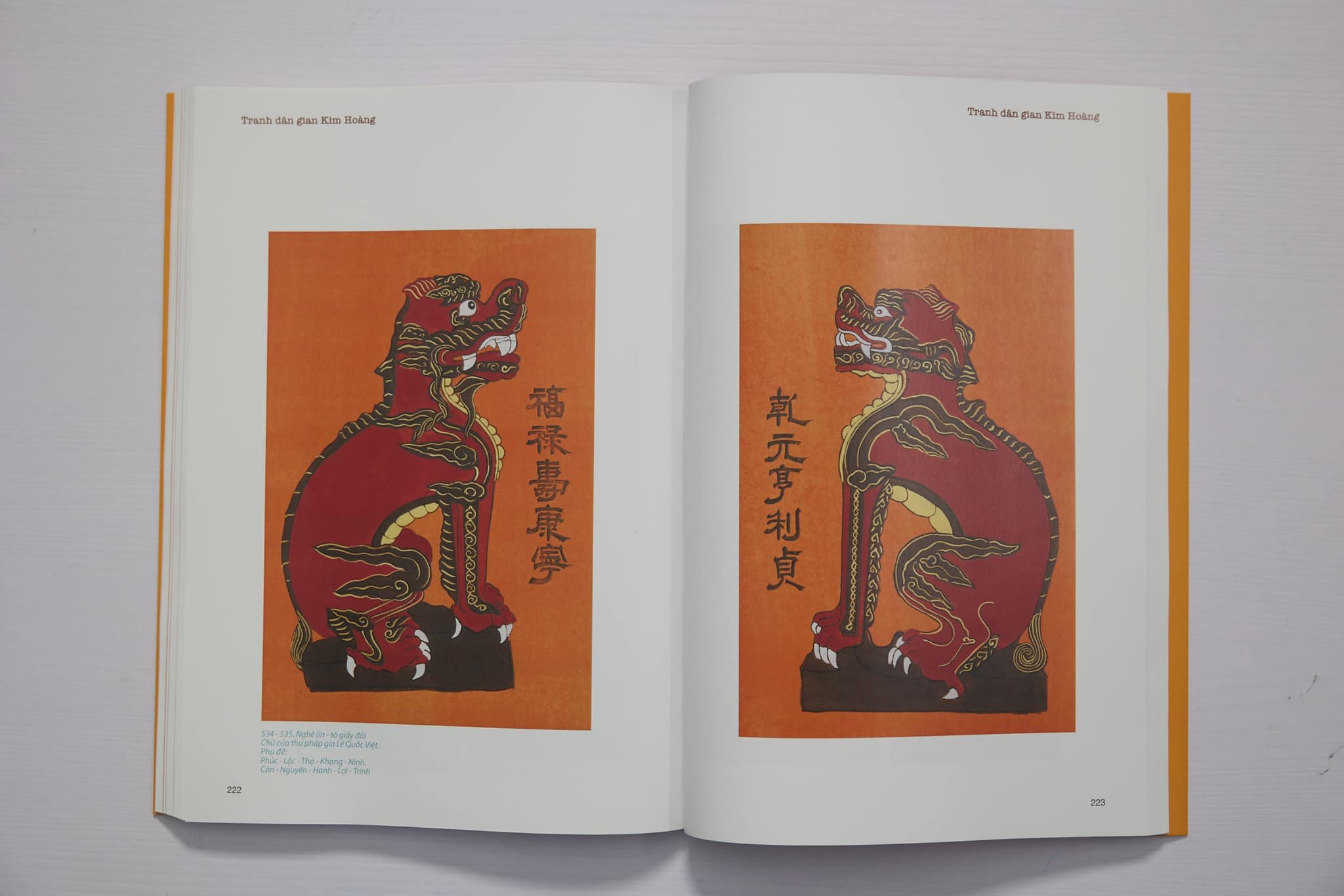
| A Kim Hoang folk painting. Photos: Tra My |
The project has been implemented since 2016 with the participation of many artists, researchers, and collectors of Vietnamese folk paintings as well as artists and photographers.
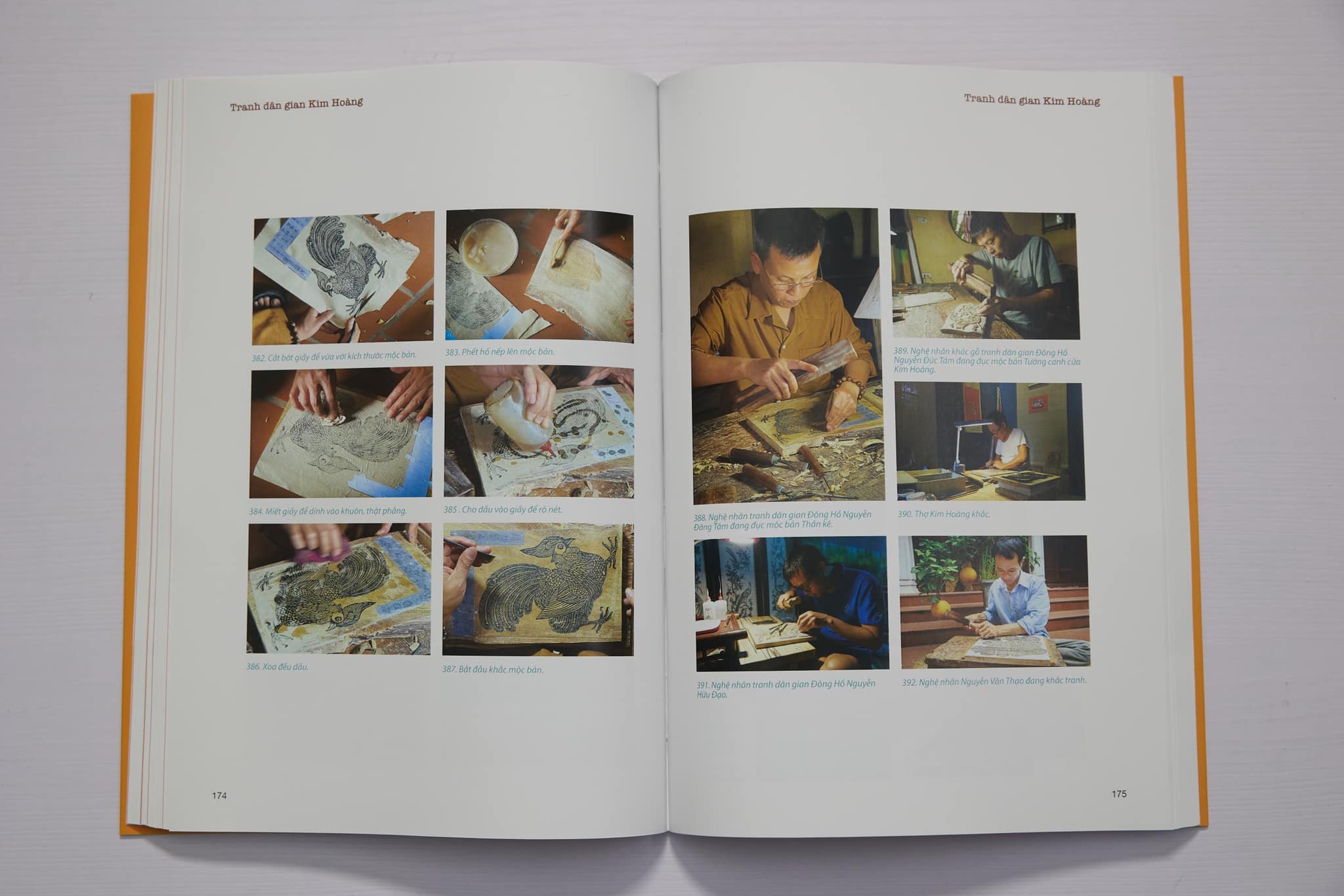
The book provides a panoramic view of the origin of Kim Hoang folk paintings, the traditional way of producing the pictures, and the challenges in preserving and developing this traditional painting school in modern life.
According to Dr. Tran Hau Yen The, a lecturer at the Hanoi Fine Arts University, the book "Kim Hoang Folk Paintings" proves an attempt to affirm the position of this painting school in the general flow of Vietnamese folk paintings.
“Regarding Tet [Lunar new year] traditional paintings, people often think of the folk paintings of Dong Ho and Hang Trong. Few people know that Kim Hoang is also a famous line of paintings that used to be displayed during the Lunar New Year celebration. Through many ups and downs in time, Kim Hoang paintings are in danger of falling into oblivion if there is no timely restoration and promotion of this heritage,” The said.
The trade of Kim Hoang folk paintings dates back to the second half of the 18th century, in Kim Hoang Village (Van Canh Commune, Hoai Duc District, Hanoi).
Like other folk painting schools, Kim Hoang painting’s themes are related to rural people's lives and also divided into topics including, Tet paintings, worship paintings for home decoration on the occasion of Tet, prayer for blessings, and chasing away evil spirits, among other purposes.
| Author Nguyen Thi Thu Hoa is interviewed at the book launch. |
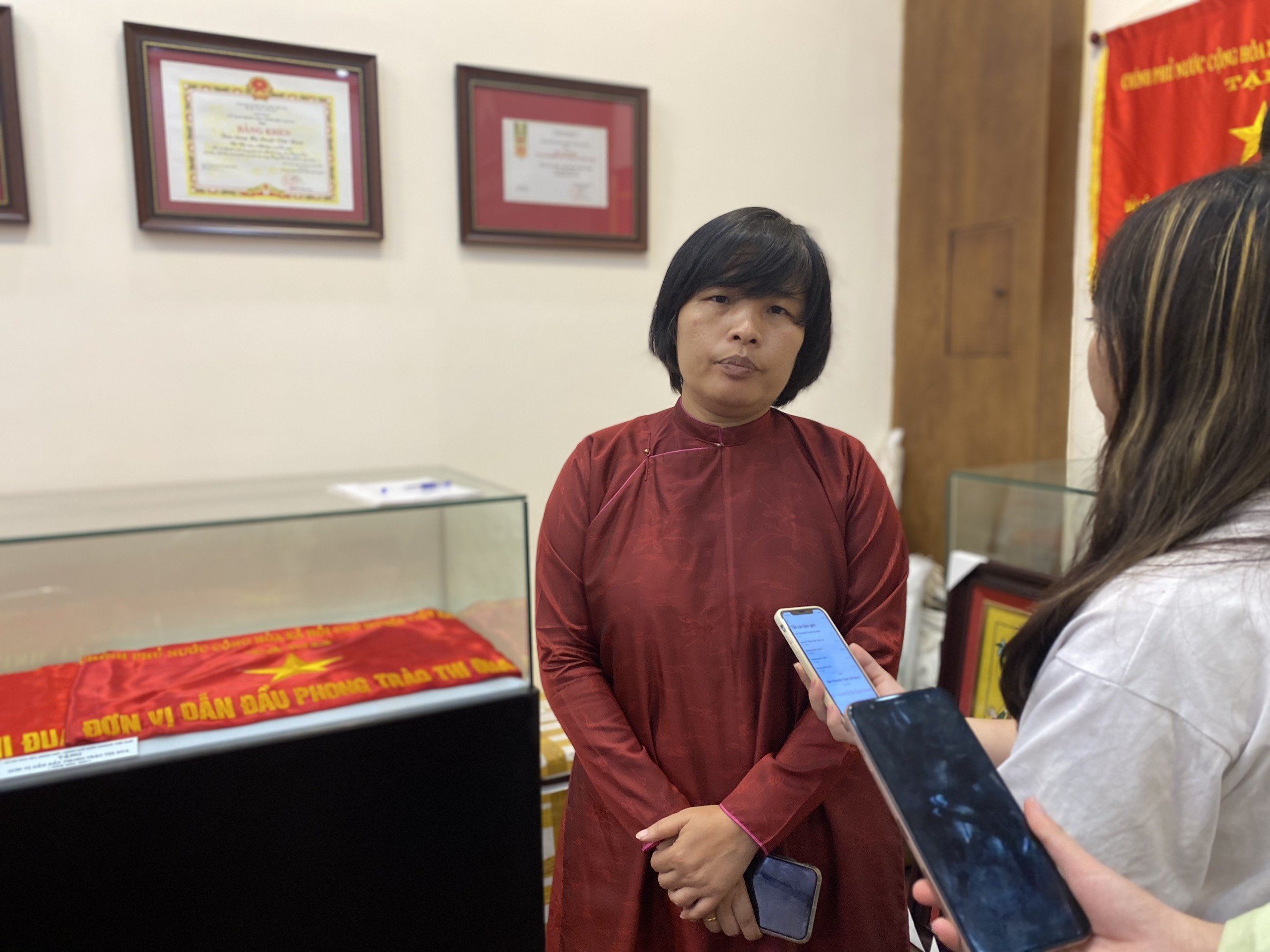
According to researcher and art collector Nguyen Thi Thu Hoa, in 1917, the Lien Mac dike broke and flood water wiped out all paintings and woodcuts of Kim Hoang Village, leading to its demise. The Lunar New Year of 1947 was the last time people saw Kim Hoang folk paintings on the market.
Therefore, the story of Kim Hoang folk paintings is not only about painting school or its printing technique but it’s also about the restoration of heritage.
“The efforts of folk artists of Dong Ho, Hang Trong, and Kim Hoang have resulted in a miracle. After 75 years of absence from the market, Kim Hoang folk painting line has returned and stepped into the 21st century,” author Hoa shared.
She added that Kim Hoang paintings are printed on sheets of paper that are dyed beforehand with red color.
That’s the highlight feature of this traditional painting school. Through this book, the author helps readers distinguish the paintings of Hang Trong, Kim Hoang and Dong Ho schools.
“I hope this book and project will inspire people to delve into this line of paintings and most importantly, arouse the pride and sense of protection of the heritage of the Kim Hoang villagers,” the author said.
| The story of Kim Hoang folk paintings is not only about painting school or its printing technique but it’s also about the restoration of heritage. |