Capital Law 2024 enables Hanoi's sustainable agricultural growth
Sustainable agriculture is key to the city's growth, ensuring food security and protecting the environment.
The capital city needs policies to support high-tech, digital and urban agriculture soon, especially in light of climate change, said Cao Duc Phat, former Minister of Agriculture and Rural Development.
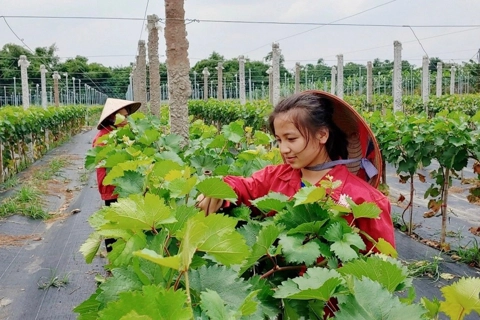
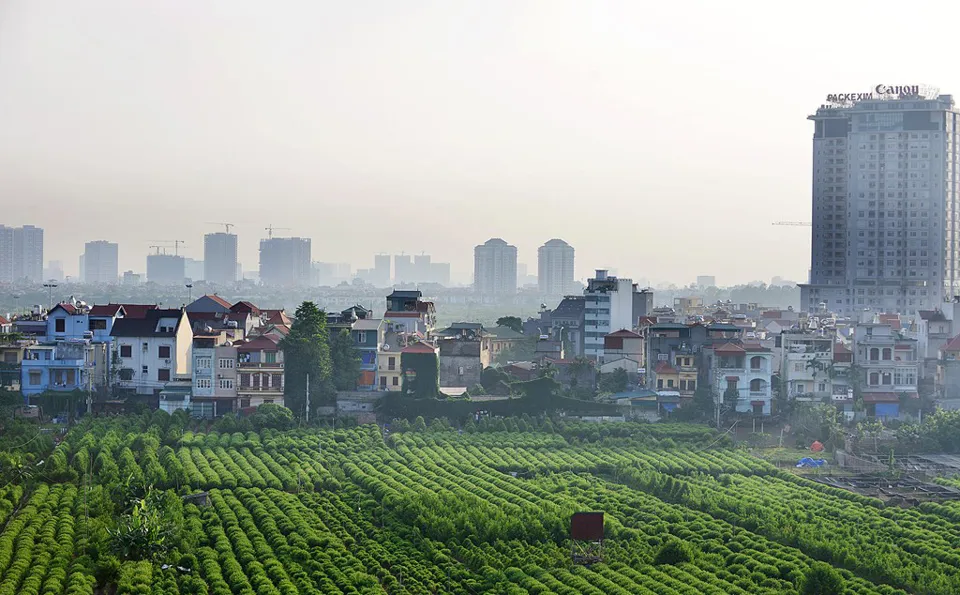
| Green farms in Hanoi's Dong Anh District. Photo: Tuan Anh/The Hanoi Times |
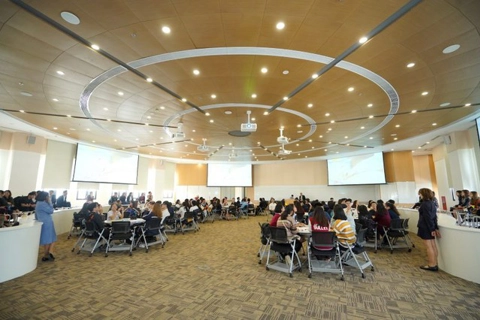
This is essential to meet the requirements for the development of several key sectors related to agriculture and rural development in the capital, he said at a seminar on the implementation of the Capital Law 2024 on November 14.
Hanoi still faces some challenges in agricultural and rural development, although it leads the nation in this sector with 100% of communes reaching new rural standards and 40% meeting advanced rural standards, he said.
These challenges include rapidly shrinking agricultural land, low land use efficiency and rice yield, income disparity between rural and urban workers, and environmental pollution, he added.
Agricultural growth has been driven primarily by structural shifts in crops and increased value-added, rather than by expansion of farmland, he said. Specifically, rice cultivation fell significantly, from 313,000 hectares in 2015 to 248,000 hectares in 2023, resulting in a 19% decline in rice production. In contrast, production of livestock and other crops increased, driven by the growth of high-tech farming models.
According to the Food and Agriculture Organization of the United Nations (FAO), urban and peri-urban agriculture contributes to food security, improves production, nutrition and the environment, and enhances quality of life.
Urban agriculture offers a comprehensive solution to food security, community engagement, and environmental protection, but it needs policies tailored to Hanoi's urban characteristics to develop sustainably, the former minister said.
This transition requires a rural development approach that takes into account the unique characteristics of each area and is consistent with the long-term trajectory of urbanization, especially in terms of natural disaster prevention and climate change adaptation, he said.
According to Phat, locals no longer have to worry about the Red River bursting its banks because of the presence of large reservoirs upstream that reduce the flow of water during the rainy season. In addition, instances of boats navigating flooded streets in riverfront neighborhoods have disappeared.
Under the amended Capital Law, new dikes will be built and some land on the floodplains of the Red River will be reserved for public works and infrastructure, which will boost the city's growth, he added.
But city authorities and the Ministry of Agriculture and Rural Development should review flood prevention and drainage plans, especially in flood-prone areas near the Bui, Tich and Day rivers, former Minister Phat said.
"This will ensure flood safety and effective disaster response amid increasing climate risks," he added. "We need to take a long-term approach while putting the law into practice, aiming to build a sustainable agricultural foundation for Hanoi beyond 10-15 years."
Le Hoang Phuong, Director of the Hanoi Center for Architecture and Planning at the National Institute for Urban and Rural Planning, Ministry of Construction, noted that Hanoi's planning efforts reveal specific challenges in managing urban and rural development, such as the growth of large metropolitan areas, extensive infrastructure networks, the development of public transport, the de-pollution of rivers, the renovation of old housing, and the renewal of existing urban and rural areas, he said.
He stressed the need for tailored policies and mechanisms under the Capital Law.
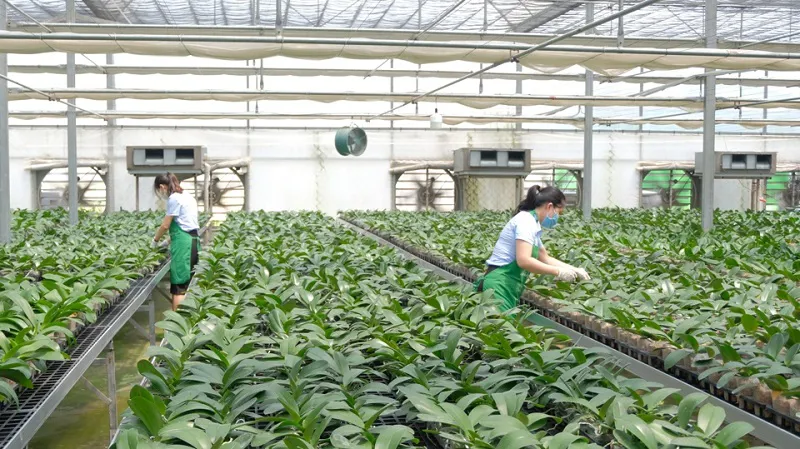
| A flower farm in Me Linh District, Hanoi. Photo: Trong Tung/The Hanoi Times |
The delegate from the Ministry of Construction said that future planning will establish important strategic directions with high consensus, including green development, heritage preservation, environmental protection, public transportation, and improving the quality of life for residents.
"With limited resources, manpower and time, we need to focus on specific problem-solving areas and targeted projects that address current challenges and promote breakthrough development," Phuong said. "Adjustments should remain flexible and in line with market trends and broader social development."
The implementation of the Capital Law should be coupled with decisive, effective action programs for each phase, along with unity and creativity, he said.
In this way, the city can realize its long-term vision and become a leading national center and a driving force capable of competing with the capitals of developed countries, he added.
Focus on key sectors
Hanoi should prioritize high-potential fields that align with broader strategic goals, said Nguyen Anh Tuan, President of Hanoi University Council.
Those fields include digital technology, information and communication technology, biotechnology, new materials technology, semiconductor industry, manufacturing and automation, environmental technology, carbon reduction, climate change adaptation, finance and services, he said.
To supply a high-quality workforce, the city should strengthen investment in training and research programs in these fields, Tuan added.
Tran Ngoc Duong, former Deputy Chief of the Office of the National Assembly, highlighted the need for Hanoi to build and complete an efficient, intelligent e-government and digital government system.
This will improve the performance of public institutions and strengthen the interaction between government agencies and citizens, he said.
"Building a smart city is an inevitable trend that requires cooperation between the Government, city authorities, enterprises and the community," he said.
"A proper, robust legal services network will help citizens and businesses effectively implement and follow the laws, thus building a rule-of-law society," Duong said.
He also noted that Hanoi needs to develop a modern, effective governance model to build, develop, manage and protect the capital.
"In particular, it's crucial to speed up the planning and development of the capital in accordance with the the Capita's general urban and socio-economic plans to ensure a cultured, civilized, modern and sustainable capital with a healthy living environment, safe water resources anchored by the Red River, central green landscapes and harmonious urban development along both riverbanks," Duong said.