Capital Law to make Hanoi major center for quality education
Hanoi is a hub for talent from all over the country.
The newly-approved Capital Law will help improve Hanoi's education and gradually make the city a showcase for quality education and training in the country.
Bui Tat Thang, former Director of the Institute of Development Strategy, said that Hanoi has been working on three major projects that are closely interconnected: Developing the capital plan, adjusting the general plan for the construction of the capital, formulating the amended Capital Law (completed, approved by the National Assembly on June 28, 2024).
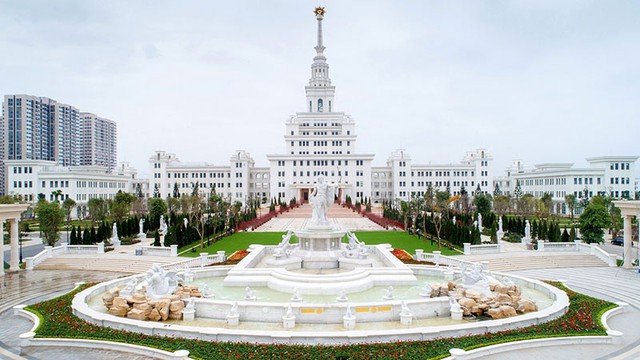
FPT University in Hanoi. Photo courtesy of the university |
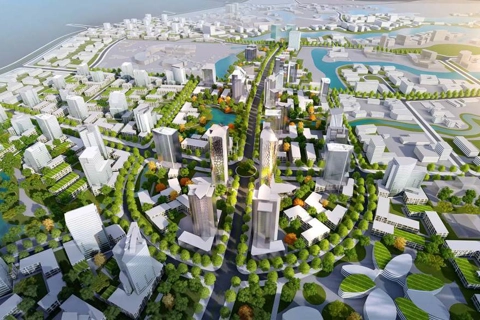
He added that the Vietnamese government's recent resolution on the direction and tasks of the capital to 2030, with a vision to 2045, has identified a number of important orientations for Hanoi's development: building a city-within-a-city in Hanoi North (Dong Anh, Me Linh, Soc Son districts) and in Hanoi West (Hoa Lac, Xuan Mai districts); developing a smart city along the Nhat Tan Bridge-Noi Bai Airport highway; and creating underground urban space, green space, and public space. "Based on these orientations, Hanoi would focus resources on new urban developments and modernize the urban profile."
Furthermore, Hanoi has all the conditions to become a city of education and training, capitalizing on its high-quality human resources, the position of a center for gathering talents of the whole country, being home to a large number of leading experts and scientists, with a network of centers, research institutes and the largest universities in Vetnam.
About 80% of the country's universities and research institutes; 82% of the national key laboratories; 65% of the professors, associate professors, doctors, and PhDs are based in Hanoi.
"Hanoi enjoys excellent preferential policies, allowing a legal corridor that strongly supports comprehensive development," Thang said.
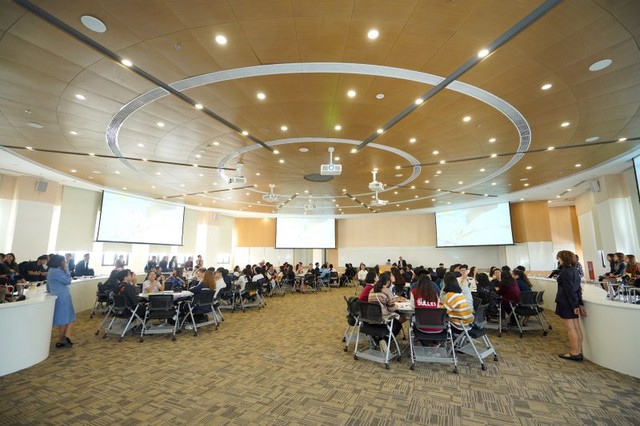
One of the classrooms at VinUni in Hanoi, which can accommodate more than 200 students. Photo courtesy of the university |
However, in the face of new demands, such as keeping pace with the capitals of other countries around the world, Hanoi will focus more on a number of areas to truly promote its unique strengths and its leading role in national development.
"These include modern industries and fields that apply high technology, such as finance, banking, design, law, science and technology, education, and healthcare," Thang emphasized.
Bui Tat Thang noted that despite these achievements, Hanoi's education and training system still faces two major challenges namely the general education infrastructure has not kept pace with population growth, resulting in a shortage of schools and classes and secondly, universities are concentrated in the downtown area, leading to infrastructure overload
Therefore, in order to develop the educational space, Hanoi needs to solve two obstacles at the same time. The first is to build more than 80 new high schools and high-quality middle schools. The second is to try not to expand the land area for existing hospitals, industrial clusters, higher education institutions, and vocational training facilities in downtown Hanoi.
According to the Hanoi People's Committee, the second campus of 25 universities is expected to be built in the Hoa Lac, Xuan Mai and Son Tay areas under this plan.
The Capital Law will have a significant impact on the development of the city's universities and colleges, creating a basis for diversifying their forms of education, expanding cooperation with many countries, and attracting high-quality human resources to the capital.
"Universities and colleges in the capital must take the initiative to seize opportunities, make use of the specific and outstanding mechanisms of the Capital Law to make a breakthrough, and contribute to the development of education, economy and high-quality human resources for the capital," Thang said.