China, ASEAN pledge stronger water governance for Mekong
Vietnam wants to increase sharing of hydrological data, consultation, and development of water resources policy.
China and five Southeast Asian countries have highlighted the principle of consensus, equality, mutual coordination, and shared benefits in water resources management of the Mekong-Lancang River, which sources from Chinese territory.
| Vietnamese Foreign Minister Bui Thanh Son (1st left) and foreign ministers of Laos, Myanmar, China, Cambodia, and Thailand. Photo: Baoquocte |
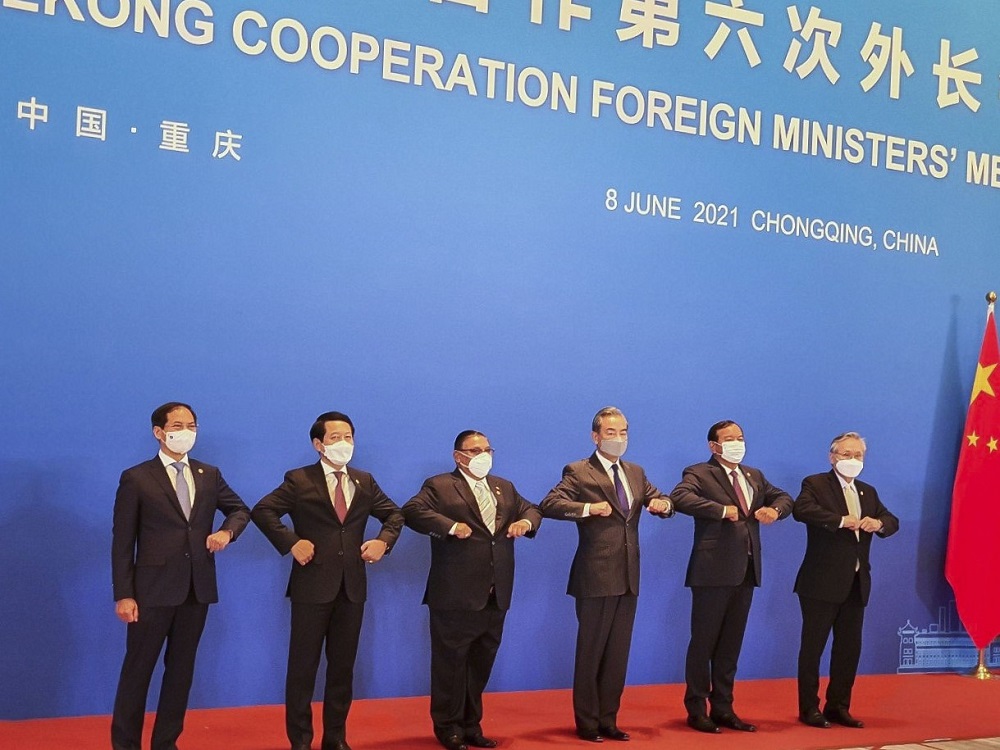
The nations declared such content in the joint statement released at the 6th Mekong-Lancang Cooperation Foreign Ministers’ Meeting concluded on June 8 in Chongqing, China.
The riparian countries namely China, Cambodia, Laos, Myanmar, Thailand, and Vietnam stressed the vital importance of stronger water governance to address water-related issues of common concern, such as local water supply, an ecosystem of the Mekong-Lancang River, adverse impacts of floods and droughts, and other extreme weather events caused by climate change.
The event was co-chaired by China’s State Councilor and Foreign Minister Wang Yi and Myanmar’s Foreign Minister U Wunna Maung Lwin.
Also in attendance were Cambodian Deputy Prime Minister and Foreign Minister Prak Sokhonn, Lao Foreign Minister Saleumxay Kommasith, Thai Deputy Prime Minister and Foreign Minister Don Pramudwinai, and Vietnamese Foreign Minister Bui Thanh Son.
Vietnam’ recommendations
Minister of Foreign Affairs Bui Thanh Son tweeted that Vietnam attaches great importance to strengthen integrated and unified management of natural resources to protect the marine environment, conserve biodiversity and natural marine ecosystems, and actively respond to climate change and sea-level rise.
He wanted to promote cooperation in the management and sustainable use of water resources of the Mekong River through increased sharing of hydrological data, consultation, and development of water resources policy.
“It is necessary to implement joint projects on climate change, natural disasters, saline intrusion as well as strengthening cooperation between Mekong-Lancang Cooperation (MLC) and Mekong River Commission (MRC),” he said.
Son said the riparian countries need to facilitate cross-border trade, especially agricultural and aquatic products, fresh fruits, and timely informing businesses on market access requirements and standards.
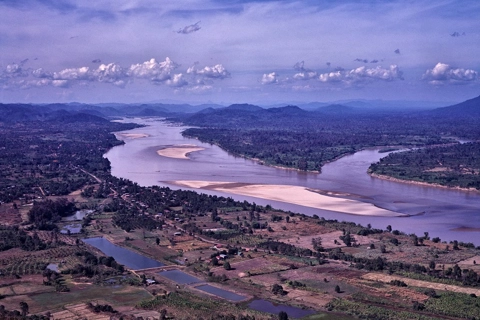
| Mekong River runs through six countries. Image: CGTN |
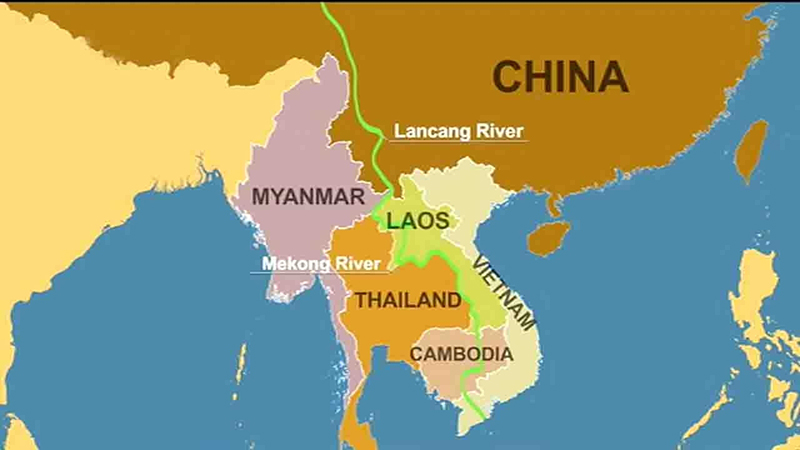
The MLC is a China-led initiative established in 2016 for cooperation among riparian countries of the Mekong-Lancang River with five areas namely connectivity, production capacity, cross-border economic cooperation, water resource management, and agriculture and poverty reduction.
At the 3rd MLC Leaders’ Meeting held virtually on August 24, 2020, China’s prime minister pledged to share more water management data from its portion of the Mekong River with its neighbors in Southeast Asia after US criticism that it was “hoarding” water and hurting livelihoods downstream.
Speaking at the meeting, then Vietnam’s Prime Minister Nguyen Xuan Phuc said sharing the river’s hydrological data throughout the year is believed to be one of the most essential measures for cooperation.
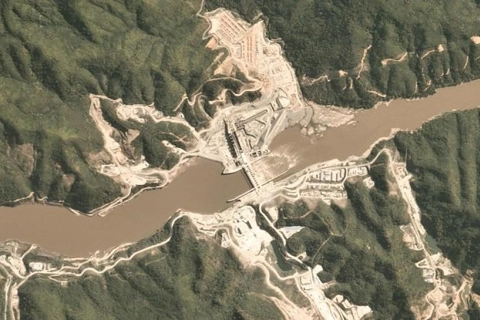
According to Nikkei Asia, China slashed the Mekong River’s flow from Jinghong Dam in January, leaving Southeast Asian communities downstream to cope with falling water levels during the dry season. Communities in lower Mekong countries were caught unawares by Beijing’s move, worsening the plight amid the dry season.
The water levels dropped suddenly since the beginning of January, Nikkei Asia cited Niwat Roikaew, chairperson of Love Chiang Khong Group, a nonprofit environmental campaign in Thailand’s Chiang Rai where the Mekong flows past. “We all know this happened because China closed the dam.”
The Mekong River Commission, an intergovernmental body representing Cambodia, Laos, Thailand and Vietnam, said in its February report that the fluctuating river flow has fallen to “worrying levels”.