Compassion should be spread for the sake of people: Vietnamese president
The event is meaningful as it embodies selflessness and altruism in the face of global conflicts, while symbolizing Vietnam’s journey toward peace, reconciliation, and a future of unity and prosperity.
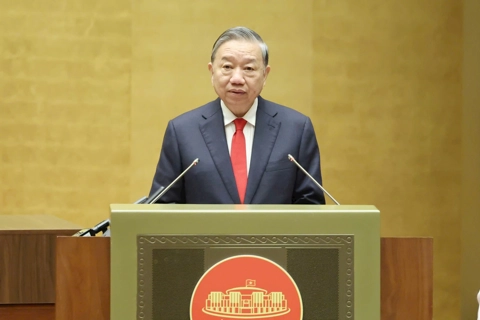
THE HANOI TIMES — Vietnam’s President Luong Cuong highlighted the spirit of altruism when making policies for the sake of the larger community when he delivered a speech today at the opening of the 20th United Nations Day of Vesak Celebrations 2025 in Ho Chi Minh City on May 6-8.
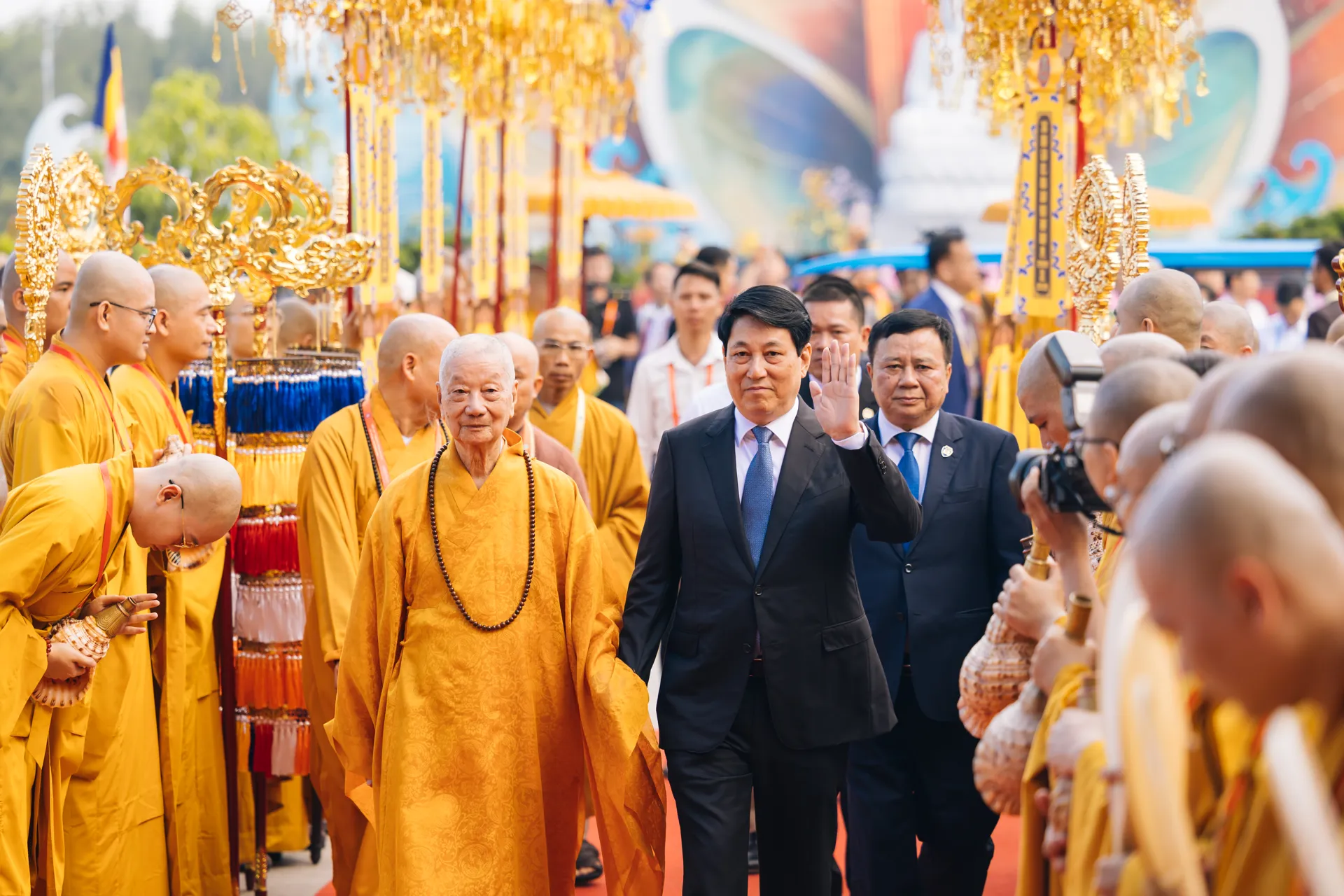
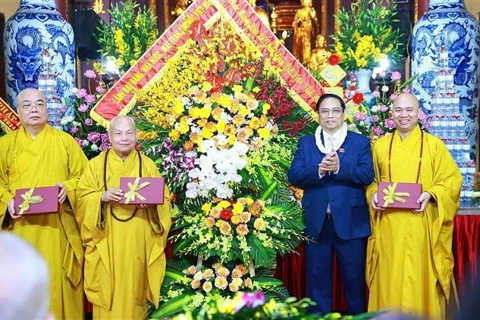
Vietnam's President Luong Cuong and Most. Ven Thich Tri Quang at the opening of the 20th UN Day of Vesak 2025 in Ho Chi Minh City on May 6. Photo: The Organizers
“We should infuse compassion into our policies, bring wisdom into our development strategies, and uphold the spirit of selflessness and altruism. In other words, in all our actions, we should act not out of self-interest but with consideration for the well-being of others,” said the president.
President Luong Cuong said that although the Buddha was born over 2,600 years ago, the core values of his teachings – compassion and wisdom – remain timeless and continue to inspire efforts toward a peaceful, harmonious, and sustainable world.
Buddha taught that genuine peace arises from inner tranquility, he said. Therefore, peace can only be cultivated by transforming each person’s beliefs, which in turn gradually shapes the mindset of society.
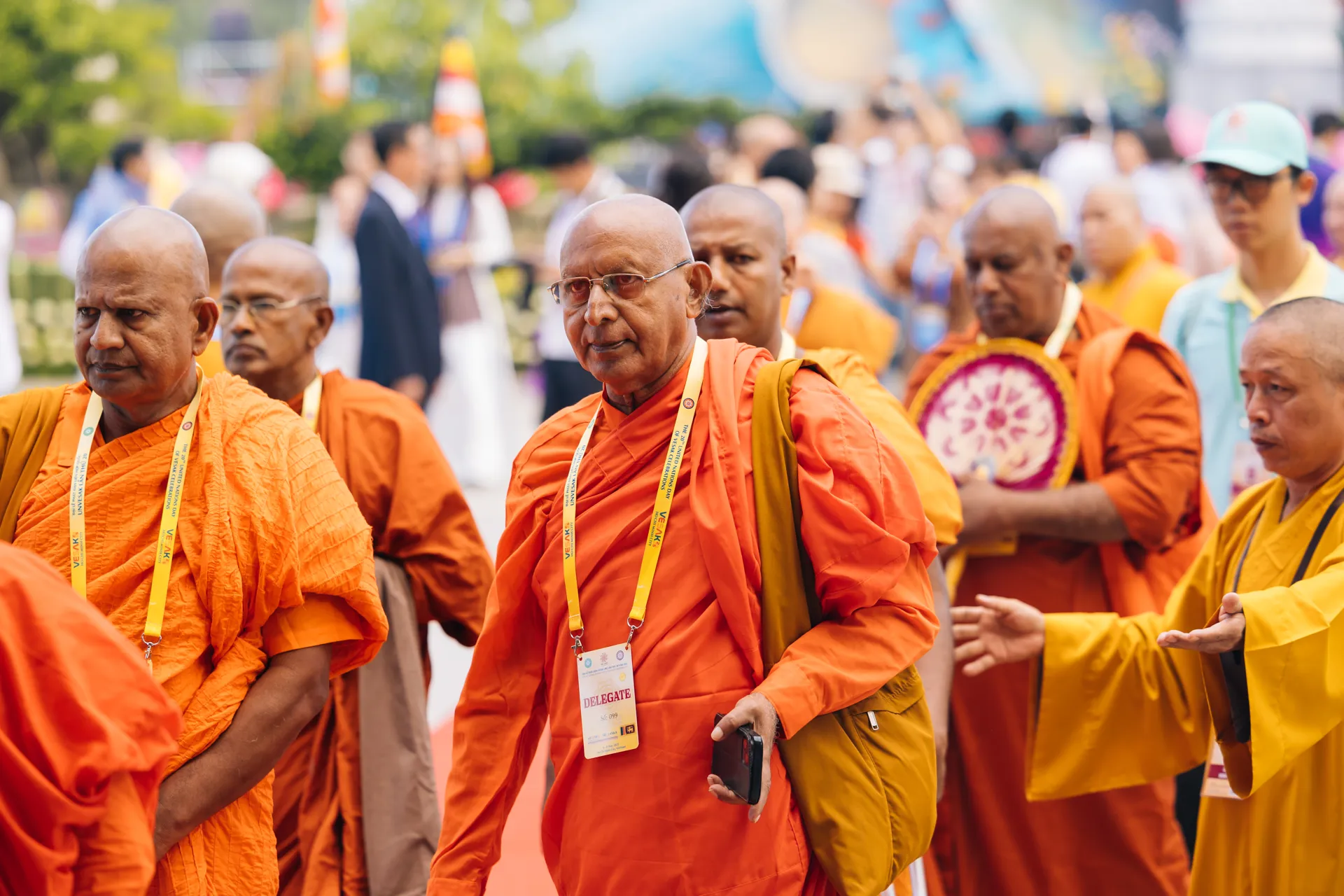
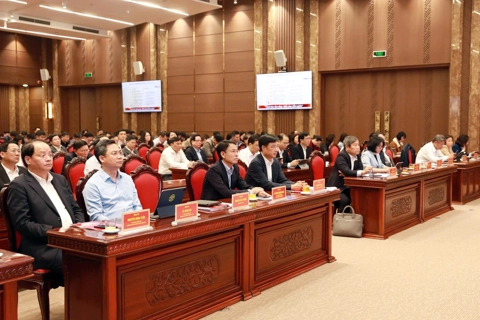
International guests at the event. Photo: The Organizers
Talking about the Vesak 2025, President Luong Cuong appreciated the theme “Unity and Inclusivity for Human Dignity: Buddhist Insights for World Peace and Sustainable Development”, saying that it is a significant message in a world facing pressing challenges such as conflict, inequality, climate change, and a widespread erosion of social ethics.
This year’s theme for Vesak highlights the UN’s commitment to a peaceful and sustainable world by promoting the Buddha’s values of tolerance, compassion, and harmony. This theme aligns with global initiatives, such as the UN’s Sustainable Development Goals.
The Vietnamese president said that this year’s Vesak, hosted in Ho Chi Minh City, is especially meaningful as it follows Vietnam’s 50th anniversary of reunification. It symbolizes the country’s path toward peace, reconciliation, and a future of unity, harmony, and prosperity.
Vesak Day marks the three pivotal events in the Buddha’s life: his Birth, Enlightenment, and Passing into Nirvana. This meaningful occasion brings together millions of Buddhists and people of all backgrounds worldwide to uphold the timeless values of Buddhism: compassion, wisdom, and peace.
Vietnam has hosted the UN Day of Vesak for four times with the first in 2008 and then again in 2014, 2019, and 2025.
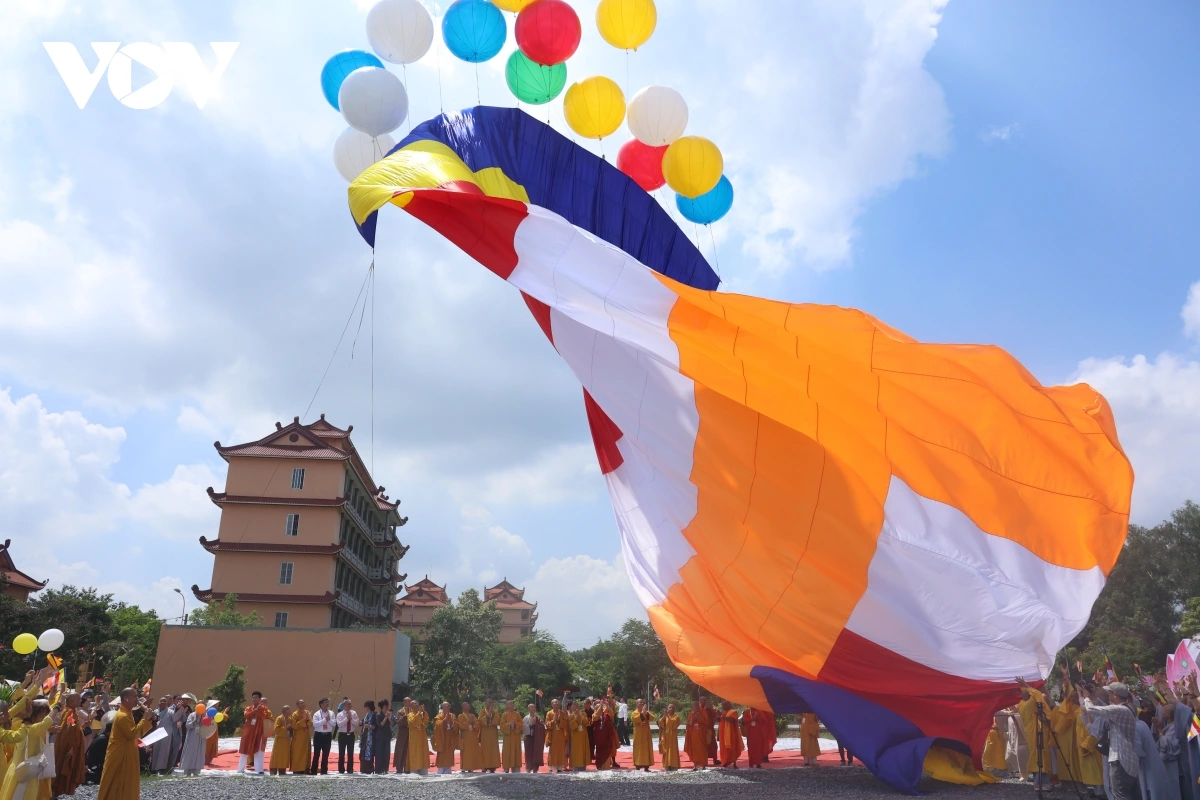
Flag-raising ceremony on May 5. Photo: VOV
Role of Buddism in Vietnam
President Luong Cuong said in Vietnam, Vesak is a major international religious event for Buddhist practitioners and those with a deep connection to Buddhism, including the Vietnamese Buddhist Sangha, the nation, and its people.
Buddhism has been an integral part of Vietnamese culture and history for over 2,000 years. Buddhism has consistently upheld the values of patriotism, tolerance, and goodness, which have influenced the national identity.
Today, the Vietnam Buddhist Shangha continues to support the nation’s development by providing charity and social welfare services engaging in activities of poverty alleviation, disaster relief, environmental protection, and public health. These efforts contribute to achieving sustainable development goals.
He affirmed that the state values and supports all religions, including Buddhism, as long as they operate within the law. He emphasized that religious freedom is a key foundation for national unity.
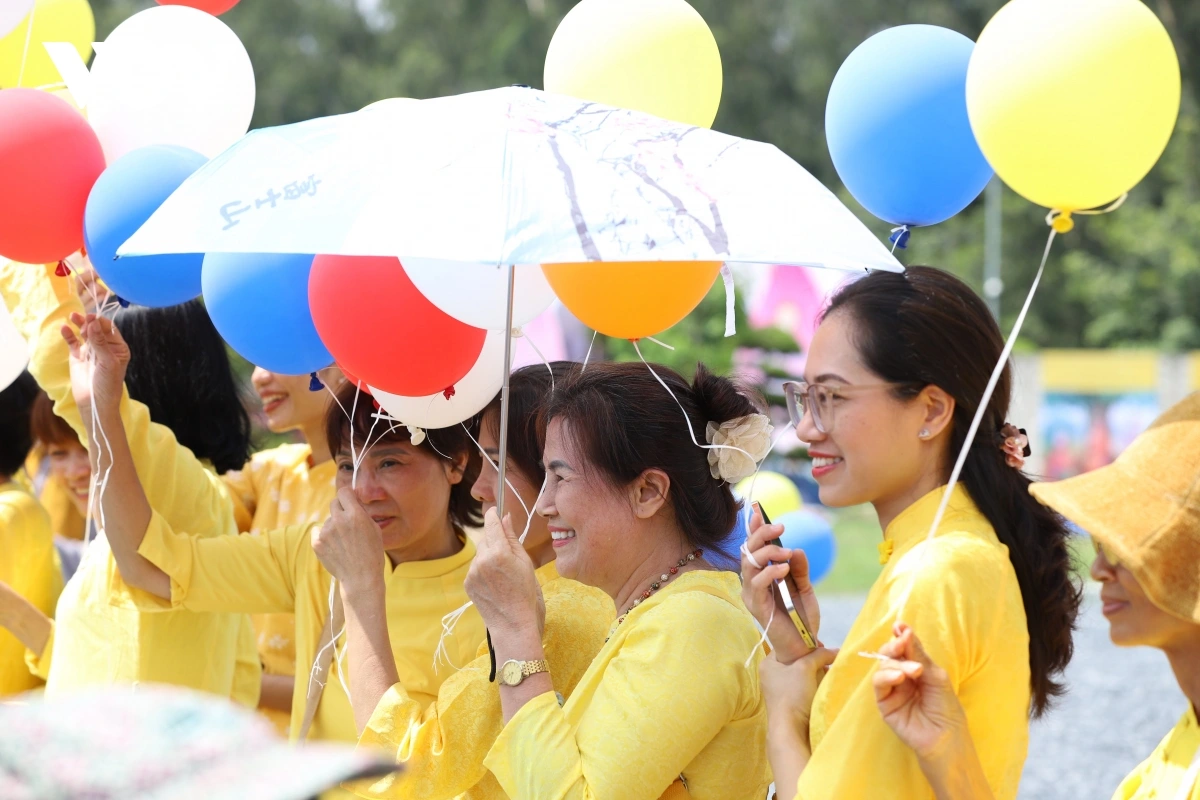
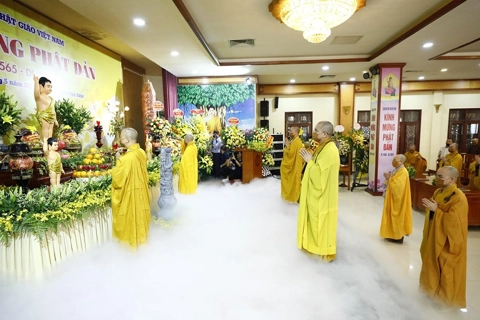
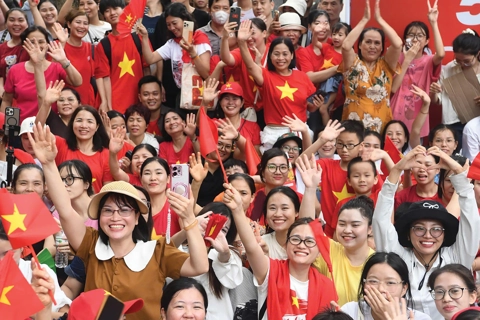
The event attracts a large number of Buddhists. Photo: VOV
Vesak 2025
The 20th United Nations Day of Vesak celebrations took place at the Vietnam Buddhist University in Ho Chi Minh City and gathered nearly 3,000 delegates, including more than 1,200 international ones.
The outstanding delegates include Sri Lankan President Anura Kumara Dissanayake, Nepalese Prime Minister KP Sharma Oli, India’s Minister for Minority Affairs and Parliamentary Affairs Shri Kiren Rijiju, Most Ven. Phra Brahmapundit from the International Council for Day of Vesak, among others.
Speaking at the opening ceremony, Most Venerable Thich Tri Quang, Supreme Patriarch of the Patronage Council of the Vietnam Buddhist Sangha (VBS), underlined unity and tolerance in Buddhist teachings. He said these principles reflect the spirit of compassion, wisdom, and the pursuit of collective peace and happiness, as well as the sustainable development of every country and nation.
“Our Sangha and the global Buddhist community are founded on the principle of the Six Harmonies, which fosters a pure monastic order and a united, resilient, and joyful society,” Most. Ven said.
He affirmed that unity and tolerance are core ethical teachings of Buddhism and enduring guiding principles for our thoughts, words, and actions in creating a loving, peaceful society with fewer conflicts.
He called on all Buddhists to diligently practice, embody compassion, and spread love and wisdom,and illuminate the world with tolerance.
On the occasion of the Day of Vesak 2025, UN Secretary-General António Guterres delivered a message to Buddhists worldwide. He noted that the Buddha’s teachings of compassion, tolerance, and selfless service resonate deeply with the values of the United Nations. In an era of profound global challenges, these timeless principles must guide our shared path forward.
“As we honor this sacred occasion, may we be inspired to bridge divides, foster solidarity, and work together towards a more peaceful, sustainable, and harmonious world.”
The Day of Vesak 2025 covers a series of activities, including raising a 500 500-square-meter Buddhist flag, the largest in the world, at the Vietnam Buddhist Academy in Ho Chi Minh City on May 5. The flag, symbolizing 2,569 years of Buddhism and global unity, reflects the Vesak themes of peace and compassion.
On the same day, the Vietnamese Buddhist Cultural Exhibition opened, displaying 87 national treasures showcasing the richness of Vietnamese Buddhist heritage.
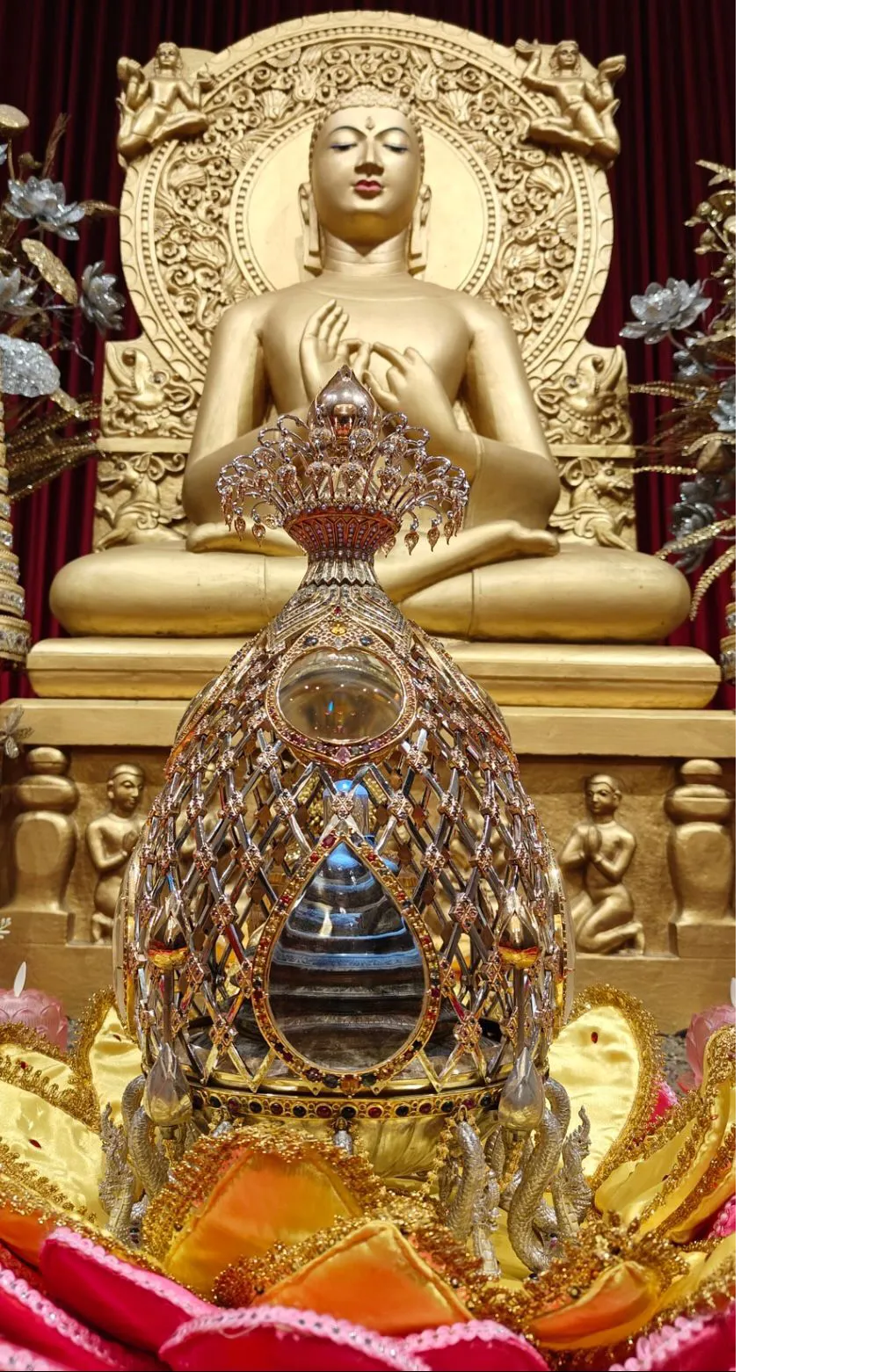
The sarira of Buddha. Photo: Courtesy of the Embassy of India in Vietnam
In the afternoon, the sacred heart relic of Bodhisattva Thich Quang Duc, a Vietnamese venerable who self-immolated in 1963, was formally enshrined at the Vietnam Quoc Tu Pagoda, where it will be open to the public for viewing from May 6-10, after which it will remain at the pagoda permanently. For the past 34 years, it has been kept at the State Bank of Vietnam – Ho Chi Minh City Branch.
The highlight of the UN Day of Vesak 2025 is the procession and veneration of the sarira of Buddha, which was brought from India to Vietnam. This sacred relic, stored at the National Museum in New Delhi, India, will be on veneration in Vietnam from May 2 to 21 at four notable pagodas across Vietnam: Thanh Tam Pagoda in Ho Chi Minh City, Ba Den Pagoda in the southern province of Tay Ninh, Quan Su Pagoda in Hanoi, and Tam Chuc Pagoda in the northern province of Ha Nam.
This first procession of Buddha sarira in Vietnam is expected to draw three to four million.
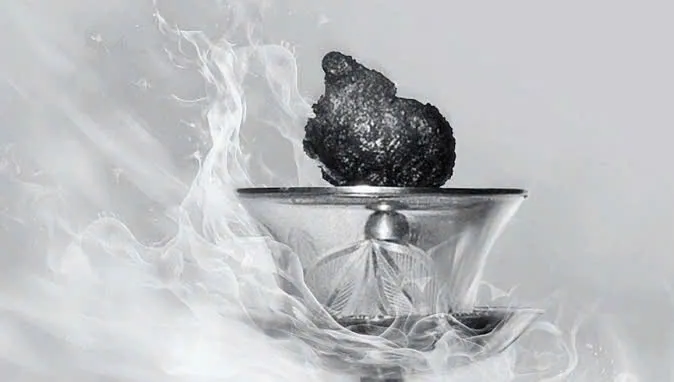
The sarira of Bodhisattva Thich Quang Duc. Photo: Giacngo Newspaper