Cultivation area codes help standardize Hanoi’s farm exports
Cultivation code helps Hanoi's agricultural exports penetrate demanding markets.
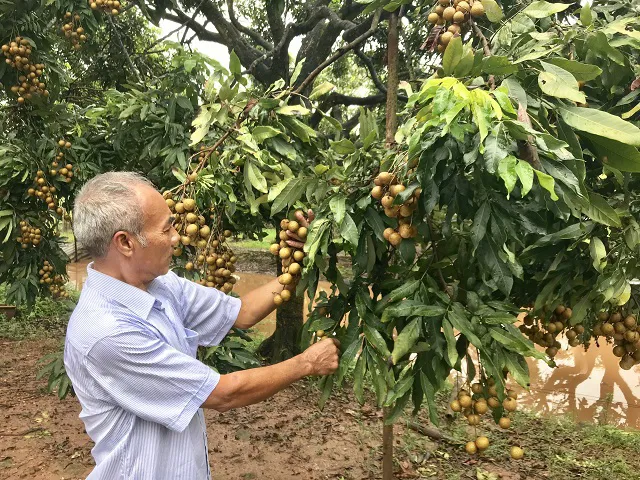
Le Van Bach, a farmer in Hoai Duc District, said that without the planting area code, his late-ripening longan products could only be exported to China.
"Large markets such as the US or Australia have opened up to late-ripening longan. But even if our products meet quality standards, they cannot be exported without the cultivation area code," Bach told The Hanoi Times.
He added that since his late-ripening longan was given the cultivation area code by Hanoi's Department of Agriculture and Rural Development (DARD), the fruit has been exported to the US and Australia. "This has helped Hoai Duc farmers to stabilize production and increase income," Bach said.
Hoai Duc's late-ripening longan has been granted a cultivation area code and meets export standards. Photo: Anh Ngoc/The Hanoi Times |
"The farms that receive the codes must follow good agricultural practices and keep a farm log for traceability," said Phung Thi Thu Huong, General Director of Green Path Vietnam, a company that exports late-ripening longans to the US and Australia.
According to the municipal Department of Agriculture and Rural Development (DARD)'s Deputy Director Nguyen Manh Phuong, Hanoi is promoting agricultural exports by securing plant growing codes, which is a must for the city’s agricultural products to reach global market.
He cited the DARD as saying that a cultivation area code is an identification of a cultivation area that helps to facilitate monitoring and control of production and product quality, while ensuring traceability of origin.
"As of April 2024, Hanoi has granted about 25 cultivation area codes for major agricultural exports. Through regular inspections, DARD ensures that these planting areas meet the requirements of export markets, including Australia, China, the EU, Japan, New Zealand, South Korea, the UK and the US," Phuong told The Hanoi Times.
He underlined that it is one of the advantages for Hanoi's agricultural products to approach strict markets, becoming one of the localities with the potential to export key agricultural products.
The deputy director added that thanks to the issuance of cultivation area codes and quality control of agricultural products, Hanoi's farm exports reached revenues of over US$1 billion in 2023.
At present, Hanoi has 16 coded banana and longan planting areas and four coded packing facilities, each with a daily capacity of 30-50 tons of export products.
"DARD is strengthening professional training for farmers, enterprises and local officials on export market regulations, post-issuance inspection and testing, and strictly controlling the relationship between farmers and exporters to ensure the rights of all parties," Phuong said.
The guava produced by the Thang Loi cooperative in Me Linh district has been exported. Photo: DARD |
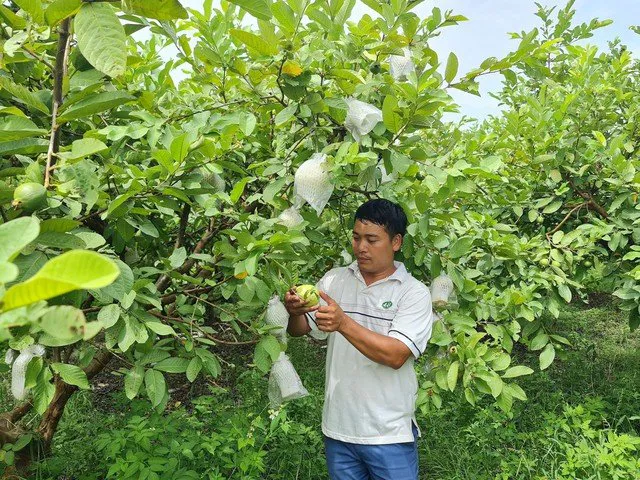
The Thang Loi Clean Fruit and Vegetable Production Cooperative (in Hanoi's Me Linh District) is one of the cooperatives that received a cultivation area code from DARD in 2021.
Nguyen Van Nhap, a member of the cooperative told The Hanoi Times that he always strictly follows the process of caring for exported fruits and using organic fertilizers. "I have to use fertilizers and pesticides that are on the approved list to prevent pests and diseases on the trees," he stressed.
"The planting area codes and strict quality control procedures have facilitated Thang Loi Cooperative's sales. Every year, the cooperative has exported 600-800 tons of bananas and guavas to the Chinese market, contributing to improving the value of agricultural products," said Truong Van Thuong, Director of the cooperative.
Thanks to being granted a growing area code, Dai Hoang longan of Dai Thanh Agricultural Cooperative in the outlying district of Quoc Oai is not only a specialty of Hanoi market, but also consumed at supermarket systems and exported to South Korea, Malaysia, the US and Poland.
Nguyen Van Minh, Director of Van Duc Agricultural Service Business Cooperative in Gia Lam District, said that a growing area code facilitate the control of product quality while ensuring the origin traceability of agricultural products.
Vegetables of Van Duc Agricultural Service Business Cooperative in Gia Lam District. It has exported 300-500 tons of organic vegetables each year. Photo: DARD |
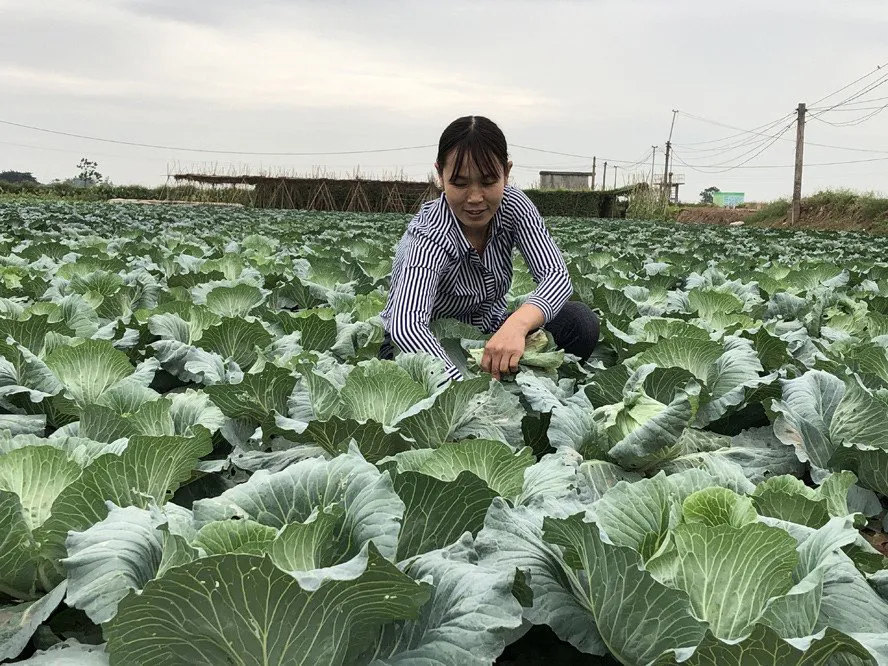
“Van Duc Commune has 220ha of safe vegetables. Besides supplying supermarkets, wholesale markets and neighboring provinces, the cooperative has also exported 300-500 tons of safe vegetables each year to Taiwan (China) and South Korea,” Minh shared with The Hanoi Times.
The city will increase training for agricultural, forestry and aquaculture businesses on quality and food safety regulations and food import and export controls.
"These courses focus on market information, guidance on registering area codes and quarantine regulations, as well as import control procedures in the Chinese, South Korean and Japanese markets," Phuong said.
Hanoi will boost information on free trade agreements and foreign market barriers to improve the quality of agricultural products, meeting the increasing requirements of the export markets.
Phuong also noted that the city will support cooperatives, businesses, and farm owners in applying high technology to the production and processing of key commodities for export.
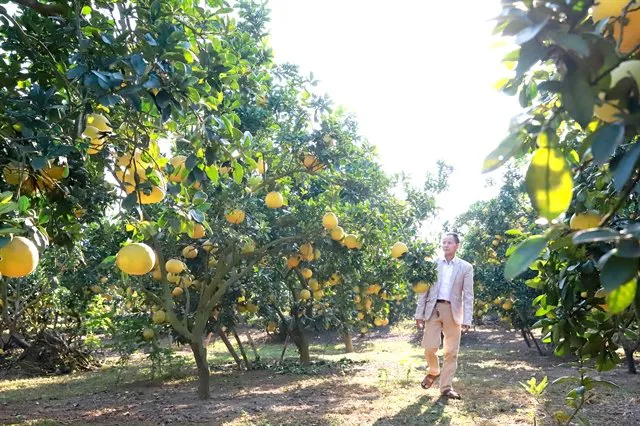
A pomelo farm with 300 trees in Hanoi's Ba Vì district has been granted a cultivation area code. Photo: The DARD |
"To do this, Hanoi would encourage and support planting areas and packaging facilities in producing goods under the requirements of export markets. It also needs to help farmers and cooperatives use e-commerce to access potential foreign markets," the official told The Hanoi Times.
He added that along with the growth in the export value of agricultural products, the agricultural sector needs to increase the number of new planting areas to be coded and also maintain the quality of management of coded cultivation areas.
Phuong underscored the importance of managing the quality of the coded planting areas as well as granting the codes for new planting areas to meet the increasing demand of the world market.
"Regulations on growing areas, cultivation methods, semi-processing and packaging processes are required by major export markets such as China, the US and Australia. Cultivation area codes are the key for foreign markets to open the door for Hanoi's farm produce," the deputy director said.
He noted that the DARD will keep carrying out measures to form production links. Local authorities and State management agencies will also take measures to prevent agricultural products grown in other areas without codes to create fairness.