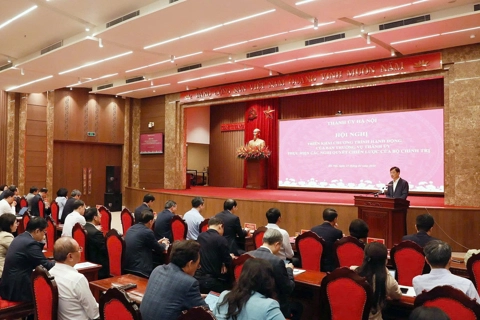
East Hanoi to become a key economic hub: experts
According to planning for 2030, Hanoi and nine other provinces and cities would form a super metropolitan area. In this context, the eastern area would become a busy commercial center in the entire region.
Rapid infrastructure development in eastern Hanoi is expected to turn the area into an economic hub of the capital and the critical economic zone of the north.
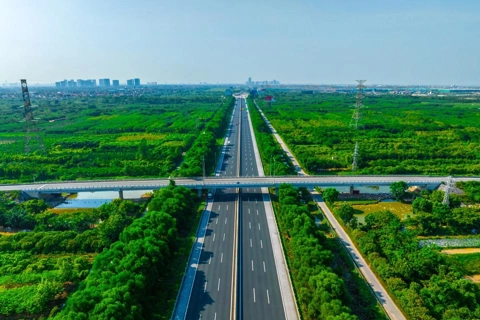
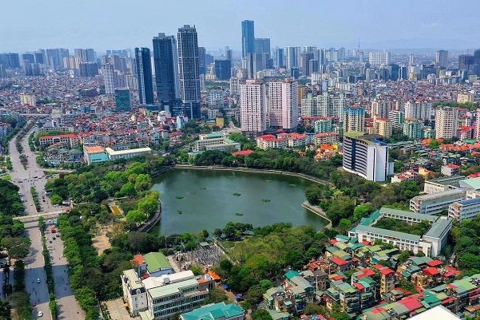
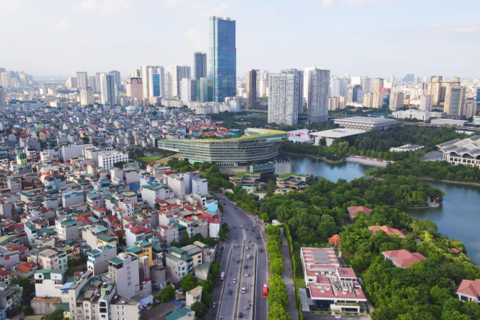
| New infrastructure projects are part of the transformation of Hanoi's eastern area. Photos: The Hanoi Times |
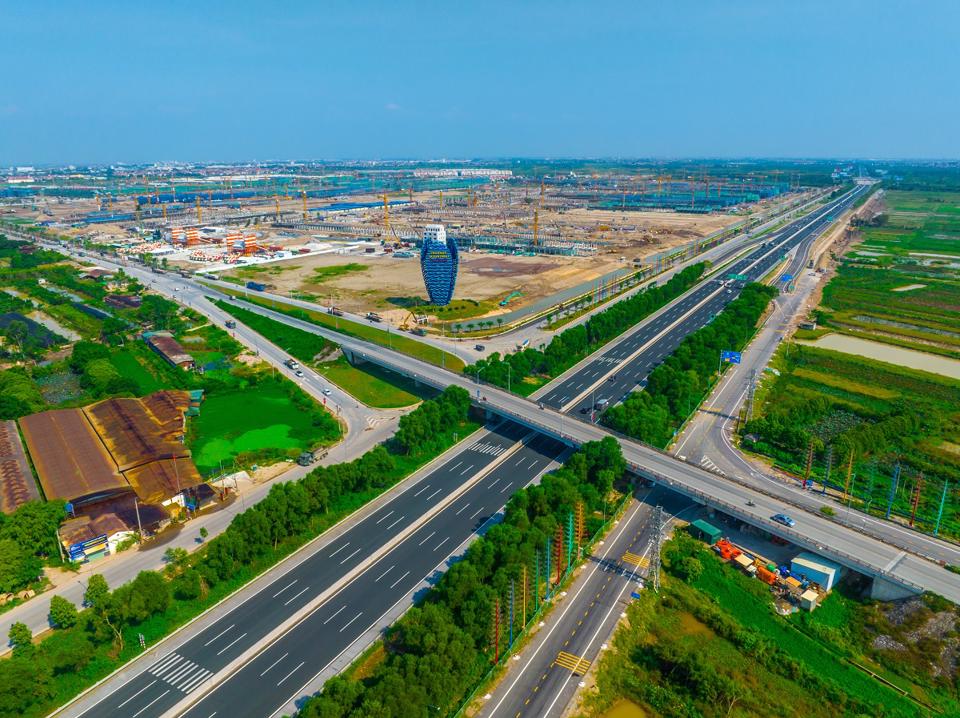
Under Hanoi’s planning until 2030, with a vision for 2050, the eastern area is expected to be central to the city’s development vision.
Gia Lam and Dong Anh, two rural districts in eastern Hanoi, are scheduled to become urban districts by 2025, but in fact, this may materialize just in 2023, as both have met 25-26 of the total 27 criteria.
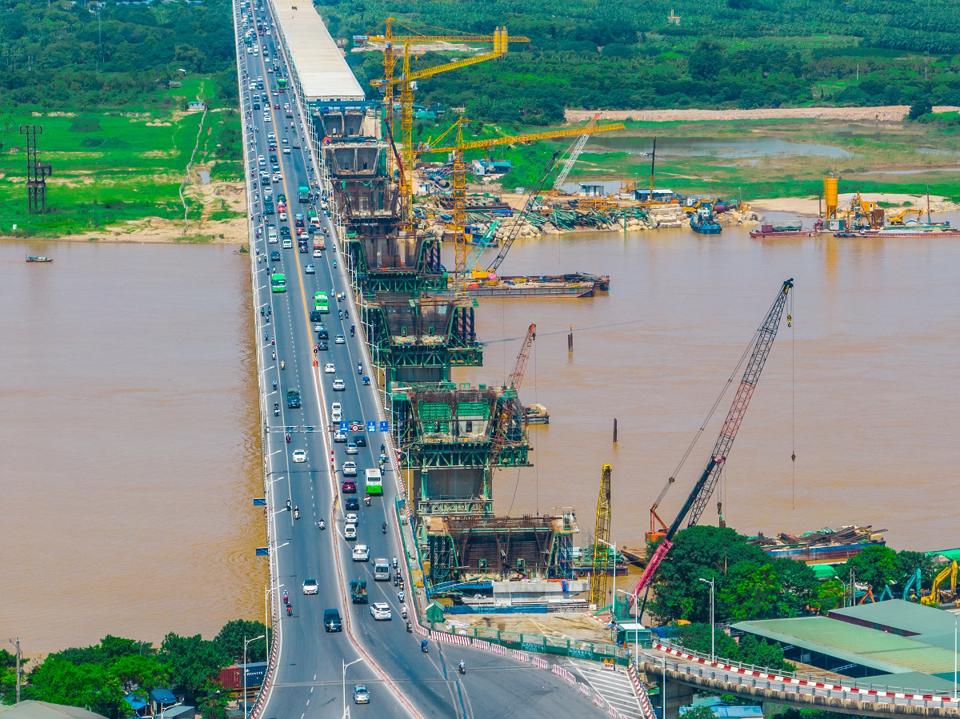
Beyond its administrative boundary, the most significant change in the eastern area comes from large-scale infrastructure upgrades. Following the completion of bridges such as Dong Tru, Nhat Tan, and Vinh Tuy, the construction of the Vinh Tuy Phase 2 Bridge is in the final stage.
The project, with an estimated investment capital of VND2.5 trillion ($105.3 million), will be completed by the end of the second quarter of 2023, six months ahead of schedule.
The local authorities are looking to build more bridges to bolster the connectivity between the two sides of the Red River. The latest one is the Tran Hung Dao Bridge, with a total length of 5.5 kilometers and six lanes. Others are currently in the planning process, including Tu Lien, Me So, Hong Ha, Ngoc Hoi, and Thuong Cat bridges.
Along with an extensive network of bridges, Hanoi’s eastern area also boasts one of the city’s most modern road infrastructure systems. The highlight was the Co Linh junction, which became operational in early 2021.
The project, designed with six lanes with an investment of VND400 billion ($17 million), expands the linkage with major roads such as ring road No.3, Co Linh, Thanh Tri Bridge, and the Hanoi-Haiphong highway.
According to experts, the connectivity of the eastern area to neighboring localities would become even more significant with the introduction of upcoming projects, such as the inter-provincial road Hanoi-Hung Yen, ring road No.3.5, and ring road No.4.
“After more than ten years, Hanoi’s eastern area with inadequate infrastructure system has undergone a major transformation and even surpassed other areas,” planning expert Bui Dinh Truong told The Hanoi Times.
| The Vinh Tuy Bridge Phase 2 is in the final stage of construction. |
A second core area of Hanoi
Looking at the city’s planning, Architect Nguyen Xuan Anh from the Vietnam Institute for Urban and Rural Planning (VIUP) said the eastern area holds enormous economic potential in the short term, especially with modern transport and technical infrastructure system.
“The eastern area would open the door to the entire Red River Delta’s triangle, a key industrial zone with developed cities/provinces such as Haiphong, Thai Binh, Hung Yen, Hai Duong, and Bac Ninh,” Anh told The Hanoi Times.
Anh also pointed out that the area is at the center of the three economic corridors, including the Hanoi-Haiphong, the Hanoi-Lang Son, and the Hanoi-southern region.
“The area would have a major impact on socio-economic growth for Hanoi and neighboring cities in the future,” he added.
In a broader sense, the construction of major roads, especially ring road No.4, would solve the traffic issue and further expand the linkage between Hanoi and regional economic corridors, including the Hanoi-Haiphong-Kunming (China).
According to Anh, the eastern area would become Hanoi’s second core downtown. However, unlike the current city center with historical value, the eastern area would be a new and modern center with dynamism and high connectivity.
“This would become a national trade and financial center with the concentration of major economic and finance corporations, creating positive spillover effects to other localities,” Anh continued.
Sharing Anh's view, planning expert Bui Dinh Truong noted that there had been an explosion of real estate development in east Hanoi, undoubtedly leading to a boom in socio-economic activities.
"According to planning for 2030, Hanoi and nine other provinces/cities would be formed into a super metropolitan area, and east Hanoi in this context would become an active commercial center in the north of the country," Truong said.
"We could soon witness a major change in population and economic activities of an unprecedented scale," he concluded.