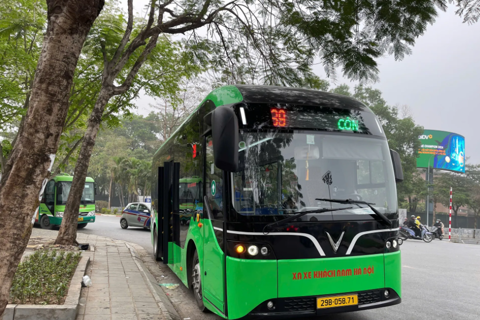
Hanoi may limit gasoline cars via draw or auction
Only with careful preparation and a balanced approach can Hanoi tackle its pollution problems while ensuring that its residents have access to the mobility options they need.
THE HANOI TIMES — The number of gasoline-powered vehicles on Hanoi's roads should be regulated through a draw or auction system to combat pollution and ease the city's growing traffic congestion, local experts have suggested.
However, it requires a comprehensive and well-thought-out implementation plan for success.
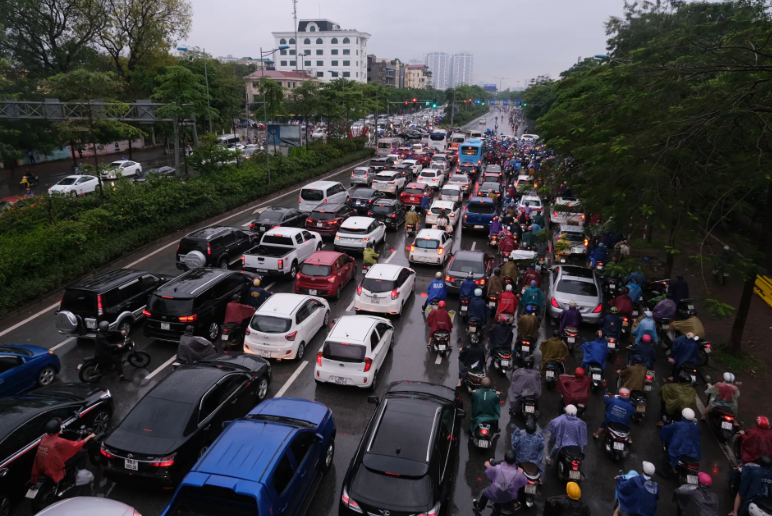
Traffic jam during rush hour in Hanoi. Photos: Pham Hung/The Hanoi Times
Urgency of action
Hanoi is facing a severe air quality crisis, exacerbated by traffic congestion. Statistics from the Hanoi Department of Natural Resources and Environment indicate that with the rising concentration of PM2.5 fine dust, there are an estimated 1,062 additional hospital admissions each year due to cardiovascular diseases and 2,969 admissions due to respiratory illnesses. The quality of life for residents is significantly affected.
To address these issues, limiting the number of private vehicles, especially those powered by fossil fuels, is seen as essential. One of the most widely discussed solutions is a proposal by Dr. Hoang Duong Tung, President of the Vietnam Clean Air Network, who advocates a lottery or auction system to regulate new registrations of gasoline-powered vehicles.
Dr. Tung pointed out that such measures have been effectively implemented in Beijing and Singapore, which face similar traffic and pollution challenges as Hanoi. He believes that a lottery system in Hanoi could help control the number of gasoline-powered vehicles, reduce the strain on transportation infrastructure, and improve air quality.
"However, a robust and well-coordinated roadmap is essential to ensure that public transportation options can effectively meet the mobility needs of residents," Dr. Tung stresses.
The idea has received support from both experts and the public, with many seeing it as an essential step towards protecting the environment and fulfilling Vietnam's commitment to achieve net-zero emissions by 2050. The success of similar schemes in cities such as Singapore and Beijing provides a model that could be adapted to Hanoi's context.
Le Thanh Hung, an office worker from Hanoi's Hoan Kiem District, shared his personal experience of switching to cycling two years ago to reduce both his costs and his environmental impact. "Limiting the number of gasoline-powered cars could significantly improve air quality and encourage more people to switch to electric vehicles or public transport," Hung said.
Despite growing support, the proposal has also raised concerns about its fairness and practicality. Dr. Nguyen Xuan Thuy, a transportation expert, argued that imposing a quota on the purchase of gasoline-powered vehicles at this time is precipitous. Instead, he advocated focusing on developing electric vehicles and supporting policies that encourage this transition, rather than restricting gasoline-powered vehicles.
"The goal should be creating policies that incentivize the purchase of electric vehicles and allow a natural transition," said Dr. Thuy. "Imposing quotas or bans could lead to unintended consequences, creating challenges for residents without providing viable alternatives."
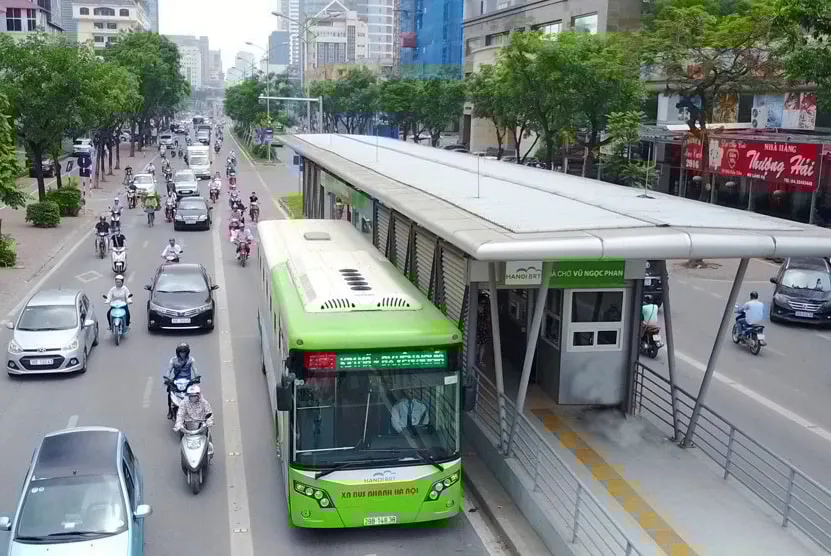
Bus rapid transit (BRT) is among means public transport in Hanoi.
In need of coordinated approach
Experts agree that any policy to reduce the number of gasoline-powered vehicles must be coupled with significant improvements in public transportation infrastructure. Currently, Hanoi's public transportation system, particularly buses, faces numerous challenges, including overcrowding, unreliable schedules, and a lack of integration with other modes of transportation.
Although the city has introduced rail lines, their limited coverage has not yet met the needs of most commuters. In contrast, Singapore, where a vehicle restriction system has been successful, offers a comprehensive and reliable public transport network that integrates buses, taxis, and shared bicycles.
"If Hanoi proceeds with a gasoline vehicle lottery without improving alternative transportation, residents will face significant inconvenience," warned Dr. Thuy. "A clear roadmap and well-coordinated solutions are essential for success."
To assess the feasibility of a lottery system, Hanoi could consider implementing a pilot program in Low Emission Zones (LEZs), such as Hoan Kiem District, starting in 2025, providing an opportunity to test the system, measure its effectiveness, and adjust the policy before expanding it citywide.
Dr. Thuy suggested that instead of imposing rigid quotas, Hanoi could adopt more flexible measures that nudge residents toward more sustainable choices without causing unnecessary social disruption. One possible solution is to levy higher taxes on gasoline-powered vehicles or impose an emissions fee, a model used successfully in cities such as London and Stockholm.
Policies could also be introduced to charge higher fees for high-emission vehicles entering the city center. This would encourage a shift to electric vehicles or public transport, providing a more market-driven approach that avoids the need for restrictive bans or quotas.
Administrative mandates in urban planning are often difficult to carry out, especially after previous projects such as the "three-wheeler ban" and "city center entry fees" were delayed or poorly delivered. Experts suggested that instead of focusing solely on mandates, Hanoi authorities should prioritize improving public transport to reduce dependence on private vehicles.
It should add flexible solutions, such as higher taxes on gasoline-powered vehicles, emissions fees, and significant investment in electric vehicle infrastructure. A pilot program, combined with a well-designed quota system, could help reduce pollution while ensuring fairness and minimizing inconvenience to residents.
Only with careful preparation and a balanced approach can Hanoi tackle its pollution problems while ensuring that its residents have access to the mobility options they need. Bold decisions are needed, but they must be tempered with caution, coordination, and a commitment to making the transition as smooth as possible, the experts emphasized.