From concept to trend: EV tourism gains serious momentum
Traveling in electric vehicles is no longer just a concept or an illusion. It has become a trend. In today's episode of Words on the Street, we'll discuss why EV travel is now easier and more convenient for Vietnamese people.
THE HANOI TIMES — In recent years, a new breed of travelers has emerged on Vietnam’s roads who favor sustainability over speed, and electric vehicles (EVs) have become the most suitable choice and are now carving out their place in the country’s tourism landscape.
From winding through mountain passes to racing across the country in under 30 hours, EV journeys are not only possible but also becoming highly desirable.
But beyond the novelty lies a serious proposition. Should Vietnam’s travelers and its tourism sector embrace EVs as a viable alternative to traditional gasoline-powered vehicles?
Recent accounts and public sentiment suggest that the answer is a resounding yes. The road ahead may be bumpy, but the direction is certain and promising.
The cost of travel, reimagined
One of the most persuasive arguments in favor of electric vehicle (EV) tourism is its affordability. Travelers crossing Southeast Asia in VinFast EVs have reported average charging costs of just VND1,700 (6.5 US cents) per kilometer. This is an astonishing contrast to the costs that combustion engine vehicles would incur for the same trip.
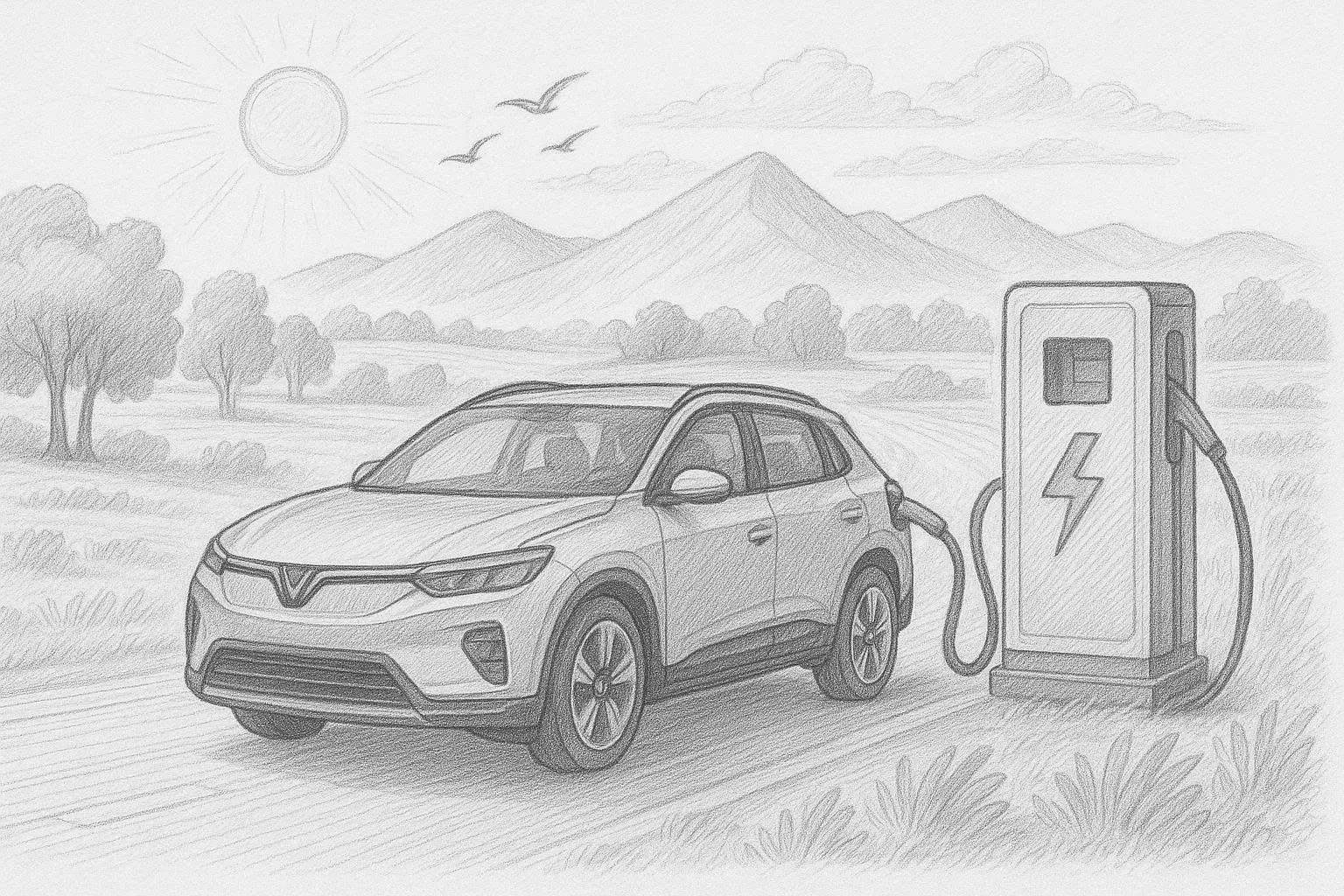
Even more compelling are accounts of cross-country drives completed for the very low cost of only VND1.2 million (US$46), thanks to free charging programs at VinFast stations. Drivers can save up to 70% on fuel costs by using an EV instead of a combustion engine vehicle for the same trip.
While these policies may not last forever, they highlight the economic advantages of EVs when the right infrastructure and incentives are in place.
However, the appeal of EV travel extends far beyond fuel savings. The rhythm of the journey changes.
Regular charging stops, typically lasting 30 to 60 minutes, allow travelers to pause, explore, and connect with lesser-known destinations. These detours often lead travelers to hidden eateries, conversations with locals, and parts of the country they might otherwise overlook.
In a culture that is increasingly drawn to fast-paced travel, EVs reintroduce a kind of mindful exploration that enriches the journey.
There is also an ecological benefit. With zero tailpipe emissions, EVs are a cleaner choice, especially in environmentally sensitive areas such as coastal regions, national parks, and remote highlands.
As Vietnam commits to reducing carbon emissions and building a more sustainable tourism sector, adopting electric transportation becomes a national priority, not just a personal preference.
For travelers who care about leaving a minimal footprint, the EV is a practical and moral choice.
When the road isn’t smooth: infrastructure and interoperability hurdles
Despite these advantages, EV tourism in Vietnam still grapples with real-world challenges. The uneven distribution of charging stations is chief among them.
While metropolitan areas and major highways are becoming better equipped, large swaths of the Central Highlands and rural provinces remain charging blind spots.
Travelers must meticulously plan their routes, considering battery range, terrain, and station availability. This turns what should be a relaxing trip into a logistical exercise.
The issue is further complicated for those driving non-VinFast EVs, a domestic brand. Imported models, such as the MG4 or Tesla, face compatibility issues with the country's charging infrastructure because Vietnam lacks a standardized charging system.
Without universal plug types and payment systems, travelers often have to carry adapters, use slower home outlets, or limit their journeys to well-serviced areas.
These inconveniences can undermine public confidence in electric vehicles (EVs) as a travel-friendly option.
To realize the full potential of electric tourism, Vietnam must invest in robust, inclusive infrastructure. This means accelerating the expansion of fast-charging stations along major travel routes and in popular tourist destinations.
Local governments can facilitate this growth by streamlining permits, offering land-use incentives, and integrating EV infrastructure into broader transportation planning.
Private-sector partnerships are also essential. Hotels, resorts, and rest stops can transform into charging hubs, providing guests with accessibility and reinforcing their commitment to sustainability.
Most urgently, the government must establish national charging compatibility standards to ensure that all EV users, regardless of brand, have equal access to the network.
A cultural shift, already underway
Beyond policy and infrastructure lies a subtle but powerful transformation: the growing cultural embrace of electric travel.
In online forums, travel blogs, and reader comment sections, a consistent sentiment emerges.
For many Vietnamese people, especially the younger generations, driving electric is no longer novel but a lifestyle choice that goes hand in hand with global trends in sustainability, technology, and personal responsibility.
This evolving mindset is reshaping the very meaning of travel. Where speed and efficiency once reigned supreme, EV tourism promotes slowness, serendipity, and deeper engagement.
Charging stops become part of the journey rather than interruptions. Instead of straight lines from point A to point B, the map is redrawn as a network of meaningful pauses and local encounters.
This cultural shift mirrors Vietnam’s broader transition from quantity to quality in tourism. As Vietnam moves away from mass, low-value tourism toward higher-value, experience-driven models, EVs fit naturally into this shift.
They offer a different way to travel.
The success of EV tourism in Vietnam depends on whether these early examples can be scaled up.
For now, enthusiasts, digital nomads, eco-conscious families, and intrepid retirees are blazing the trail. However, for EV travel to reach the mainstream, the experience must become seamless rather than experimental.
This requires reducing uncertainty, expanding infrastructure, standardizing systems, and maintaining public trust in the technology.
Tourism authorities, transportation planners, and industry leaders must also work together to craft a vision of travel that is modern and mindful.
This is about more than just installing more chargers. It's about reimagining how Vietnam moves and welcomes visitors.
EVs are no longer confined to urban streets or showroom floors. They are making their way into the country's mountains, coastlines, and countryside, offering a vision of cleaner, more sustainable travel.
The stories of those who have driven them across provinces and borders are not just anecdotes; they signal what’s possible.
The future of travel in Vietnam does not lie in choosing between progress and preservation. It lies in aligning the two.
EV tourism offers one such alignment. While the road still requires paving, both literally and figuratively, it is a journey well worth taking.