From folk paintings to the stage: Dong Ho through the voices of a new generation
A youth-led program in Hanoi brings together university students to organize a creative cultural program rooted in traditional Vietnamese art.
THE HANOI TIMES — The theatrical production “Dong Ho: Reflections of Life Stories” premiered this week, with students from the University of Social Sciences and Humanities bringing the traditional Dong Ho woodblock printing art to the stage through contemporary theatrical expression.
Originally developed as a classroom assignment, the project evolved into a full-scale stage production, reflecting the perspectives of a new generation seeking to reconnect the public, particularly young audiences, with traditional culture.
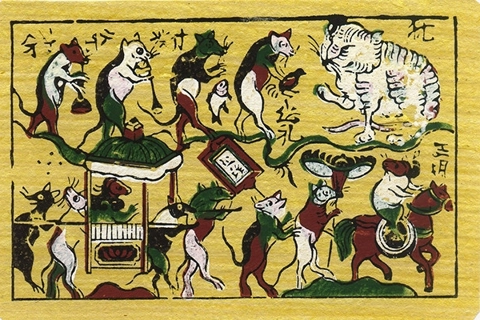
Drawing inspiration from Dong Ho folk art, the performance centers on “The Rat’s Wedding,” reimagining the iconic imagery to examine everyday life and social values through a modern lens.
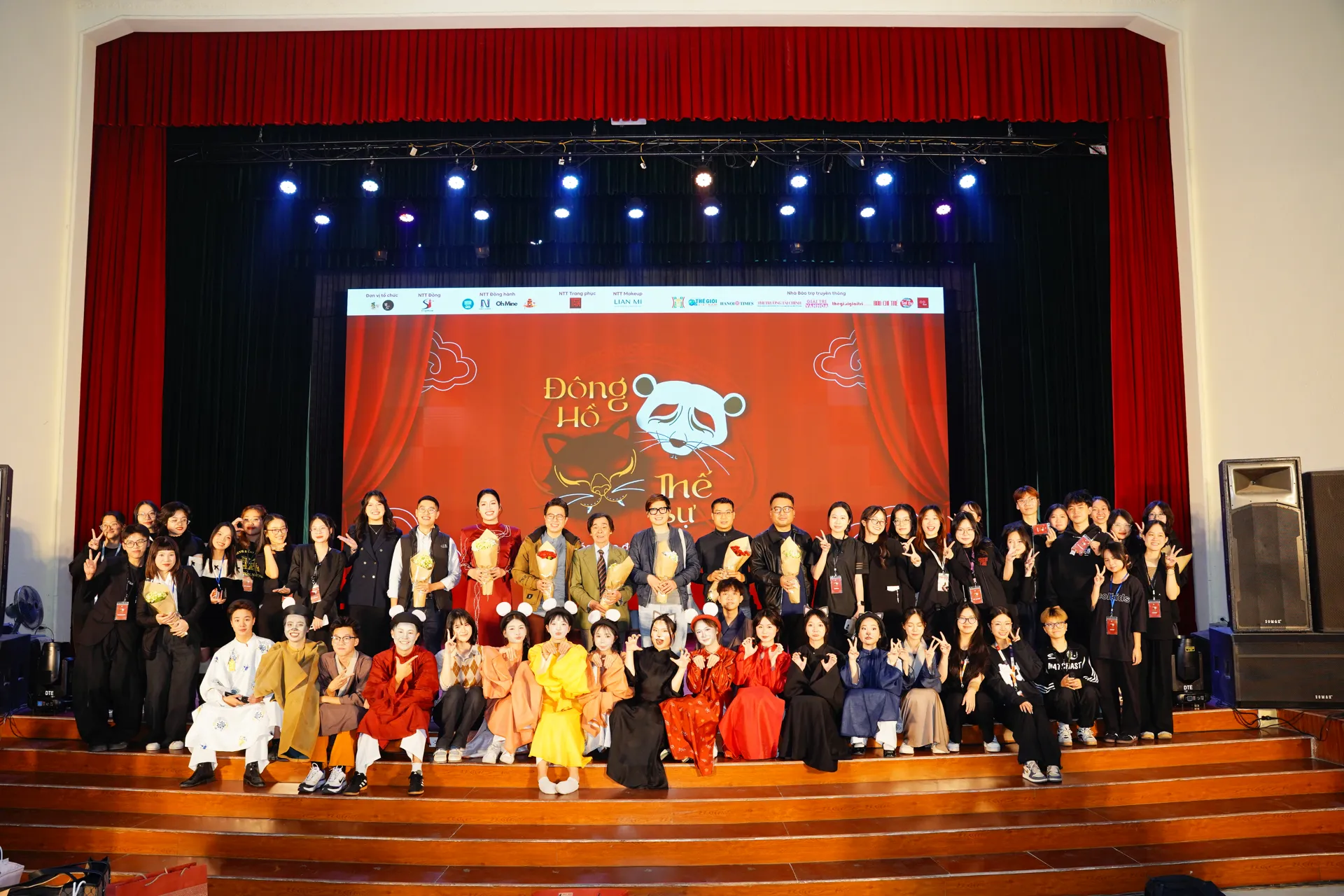
The organizing committee consists of young people currently studying at universities in Hanoi. Photos: Huy Hoang/The Hanoi Times
To prepare for the performance, the creative team traveled to Dong Ho Folk Painting Village in the northern province of Bac Ninh to study the cultural meanings and symbolic language of the paintings.
From these static images, characters and narratives were developed, transforming the visual art form into a dynamic theatrical world shaped by movement, color and emotion.
The story follows a young painter who becomes immersed in the world of “The Rat’s Wedding” while reimagining the artwork. What appears to be a joyful celebration is revealed as a society governed by fear and oppression.
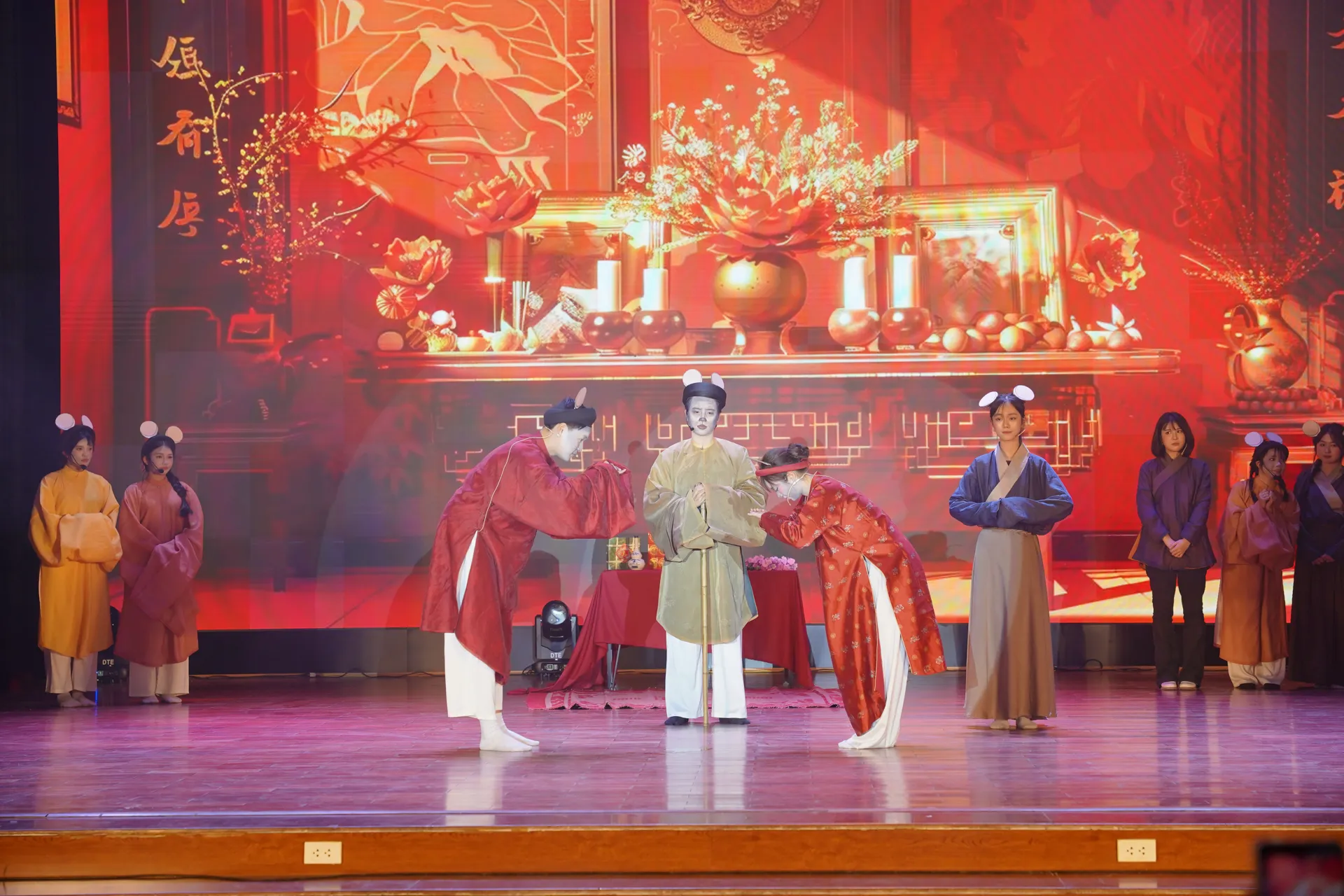
The Betrothal Scene in the play The Rat’s Wedding.
The Cat Mandarin is portrayed as a symbol of tyrannical power, forcing rat villagers into submission and turning the wedding into an act of tribute. When the Cat Mandarin dies unexpectedly, the village descends into chaos and suspicion, with the weak blamed, the innocent sacrificed and power continuing to assert itself through fear and violence.
The climax, in which a wedding and a funeral unfold simultaneously, exposes a recurring cycle of injustice, suggesting that while evil may fall, oppressive systems persist.
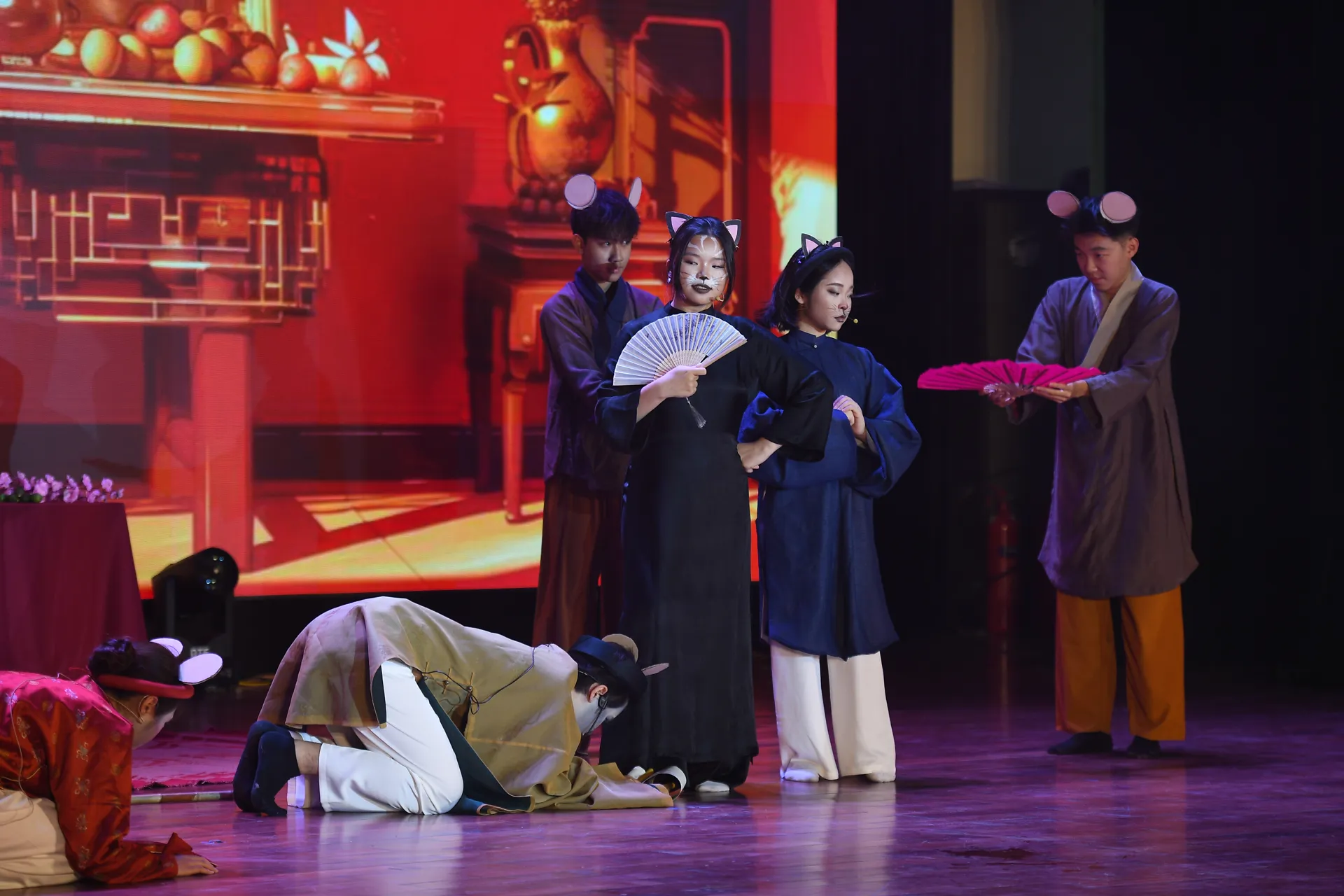
The scene of the Cat Mandarin arriving to collect the wedding tax in The Rat’s Wedding.
Returning to reality, the painter completes her work with a clearer understanding that folk art is not decorative nostalgia but a mirror of society and human behavior. She realizes that creative freedom comes from confronting the past and retelling its truths.
The production places strong emphasis on stage direction and physical performance, with sound and lighting employed to animate the folk paintings on stage.
Theatrical elements function as a narrative language, allowing audiences to experience cultural heritage through multiple senses rather than from a distance. Despite limited resources and experience, the student team pursued continuous revision and refinement to deliver a cohesive and polished performance.
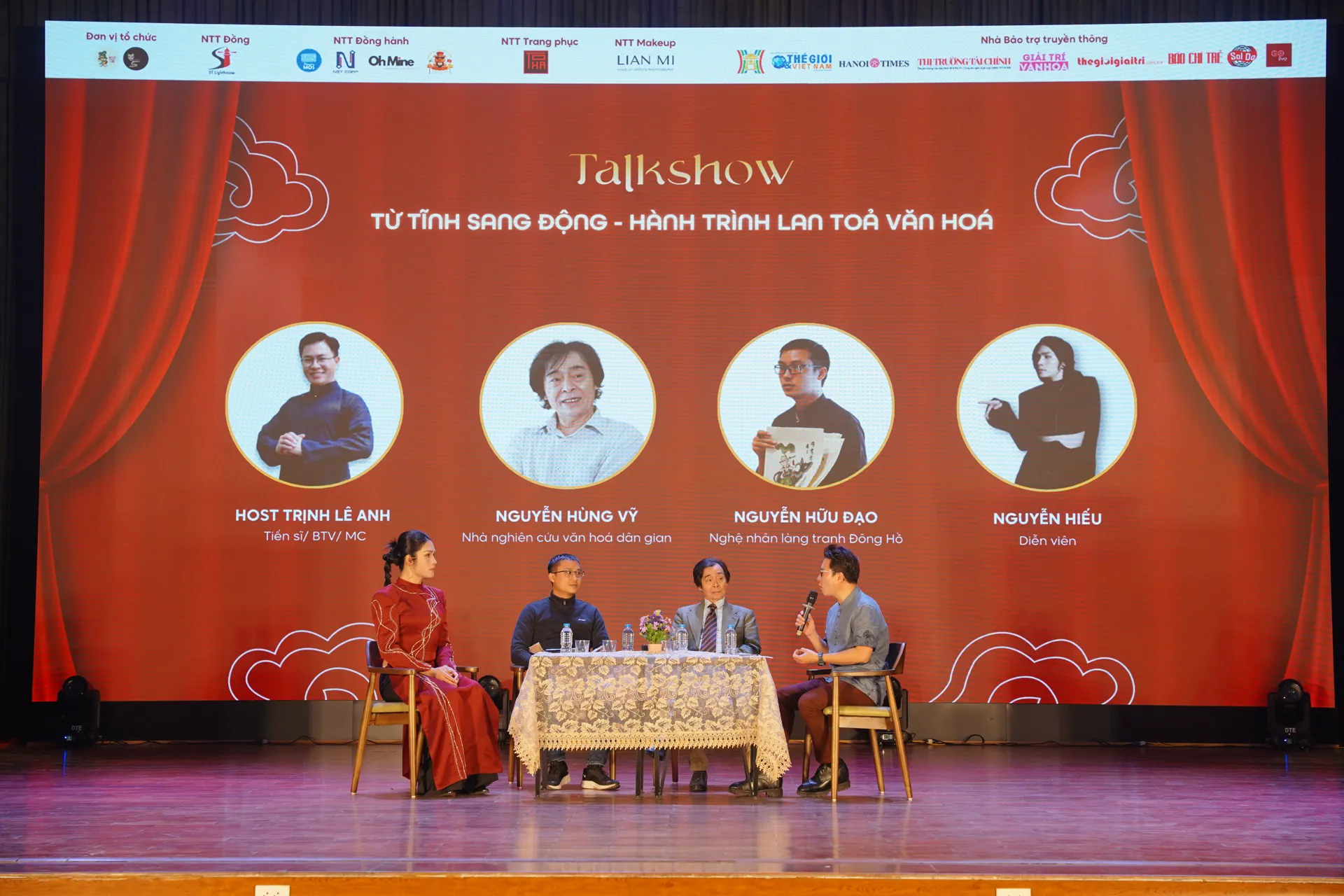
The talk show “From stillness to motion – A journey of spreading values” at the event.
In addition to the performance, the event featured a panel discussion gathering scholars, artists and cultural practitioners. Folk culture researcher Nguyen Hung Vi explored the satirical and symbolic depth of Dong Ho paintings, while choreographer Hieu Nguyen and artisan representative Nguyen Huu Dao discussed the challenges of revitalizing traditional heritage in contemporary contexts. Designed as an open forum, the discussion encouraged critical engagement with the future of cultural preservation and creative adaptation.
The event through the eyes of participants
Nguyen Huu Dao, a Dong Ho folk painting artisan, said his family continues to preserve traditional, fully handmade production methods, despite technological advances that have only helped promote and distribute the craft, not change how it is made.
He noted that Dong Ho paintings once struggled in the market but have survived thanks to dedicated artisan communities. Dao also warned that counterfeit works produced for tourism, often copied from the internet, have confused buyers and eroded the tradition’s cultural value, which lies in the time, skill and devotion of its artisans rather than low prices.
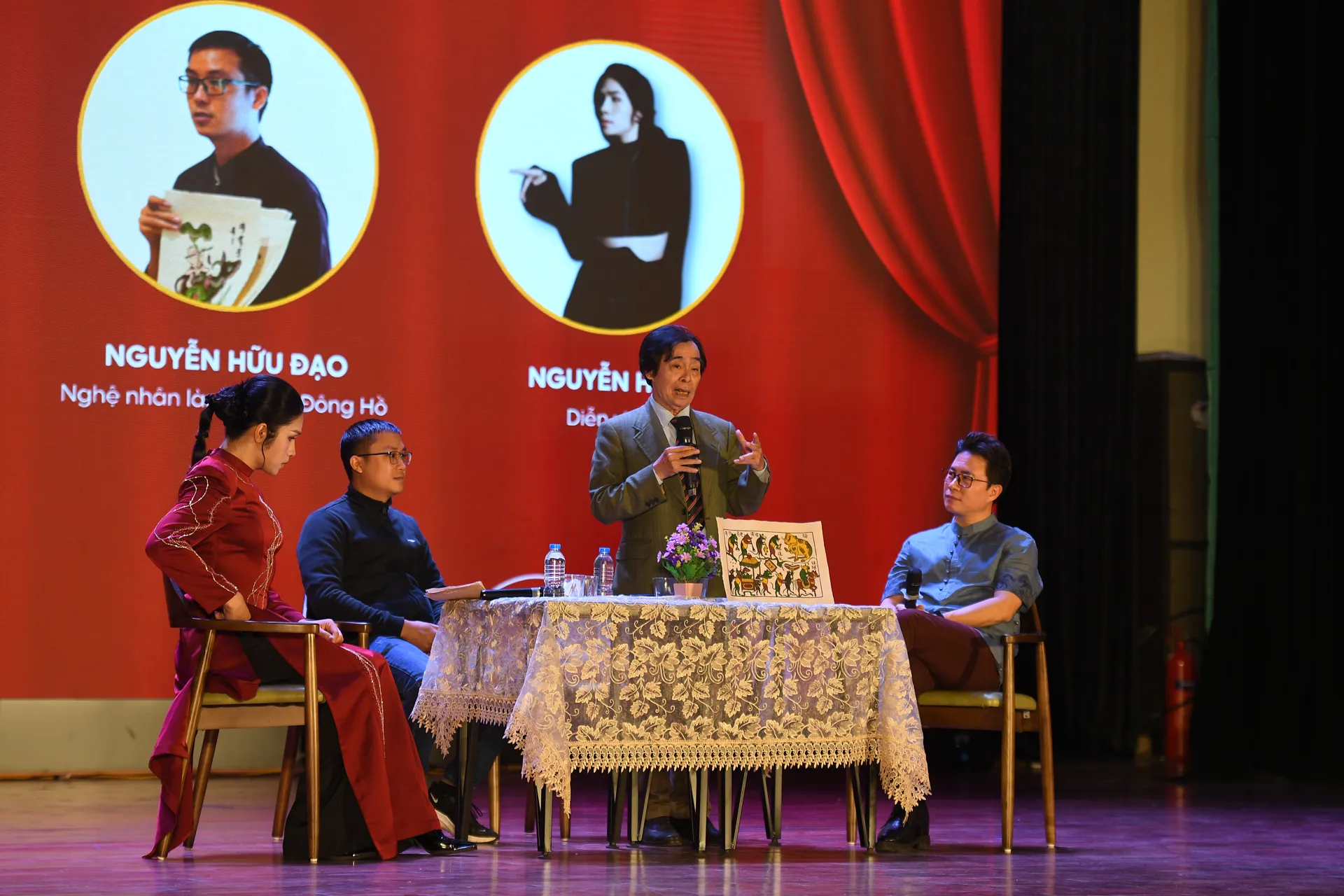
Cultural researcher Nguyen Hung Vy said Dong Ho folk paintings are not unique to Vietnam but belong to the wider East Asian cultural sphere. Through The Rat’s Wedding, Vietnamese culture reflects both cultural exchange and the creative shaping of identity among communities.
The Rat’s Wedding has evolved across painting, carving, printing and theatre, securing a central place in Dong Ho art, with clear symbolism in which the cat represents past officials and local authorities, while the mice stand for the people forced to remain cautious in its presence.
Meanwhile, Director Nguyen Do Tram Anh said "Dong Ho: Reflections of Life" uses an “old mirror” to reflect contemporary moral choices, human values and the cost of silence, aiming to leave audiences questioning and unsettled.
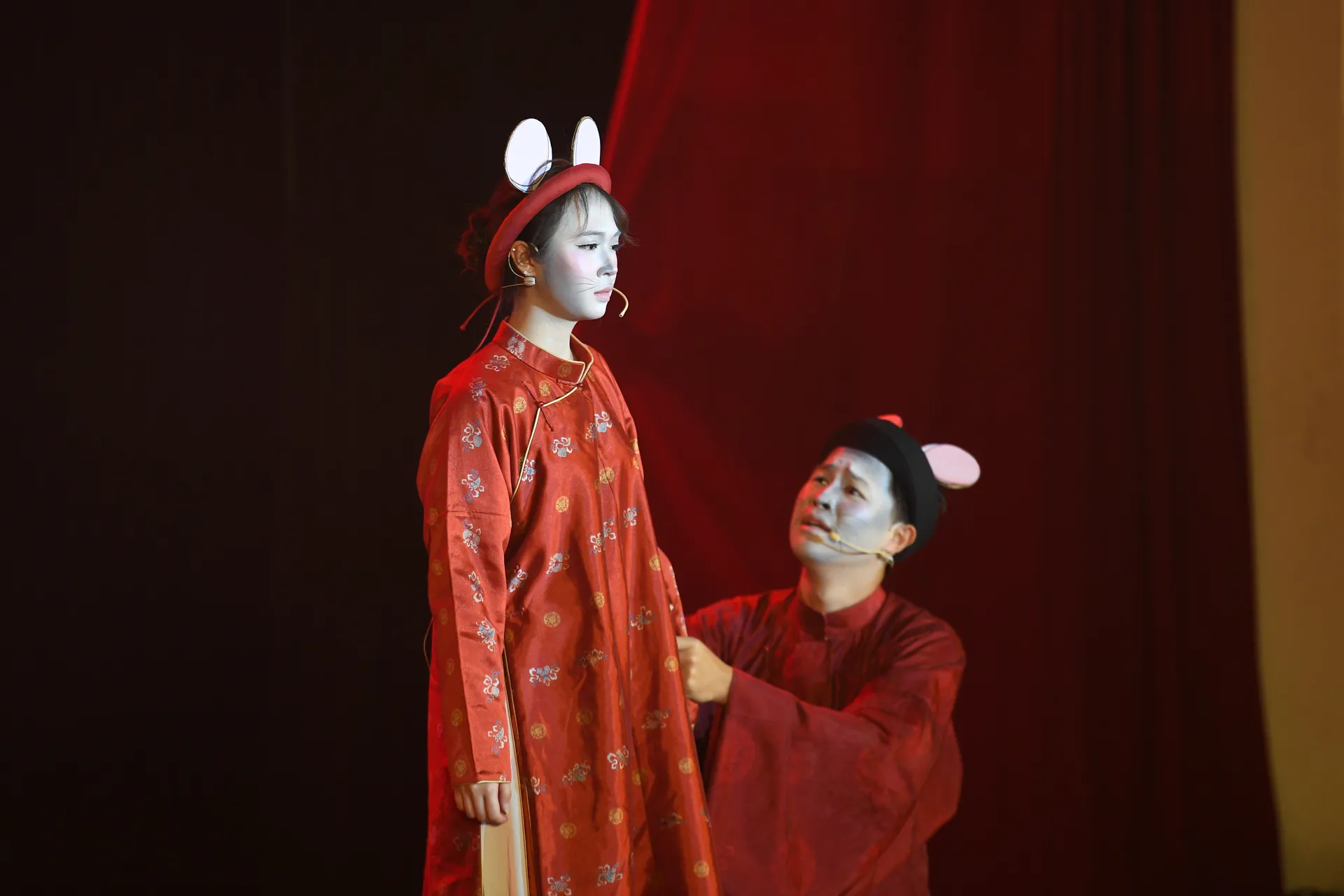
“I hope audiences of all ages watch the play with an open and relaxed mindset,” Linh Dan, who plays the New Bride, said, adding that the staging of The Rat’s Wedding not just a retelling, but a creative way for young people to preserve and spread traditional culture, following UNESCO’s recognition of Dong Ho folk painting as intangible heritage in need of urgent safeguarding.
Do Tran Dang Minh, who plays the New Groom, said he added psychological depth and subtle moral decline to the traditionally gentle character, drawing on Dong Ho imagery and social context to create a performance that blends traditional aesthetics with contemporary sensibilities.
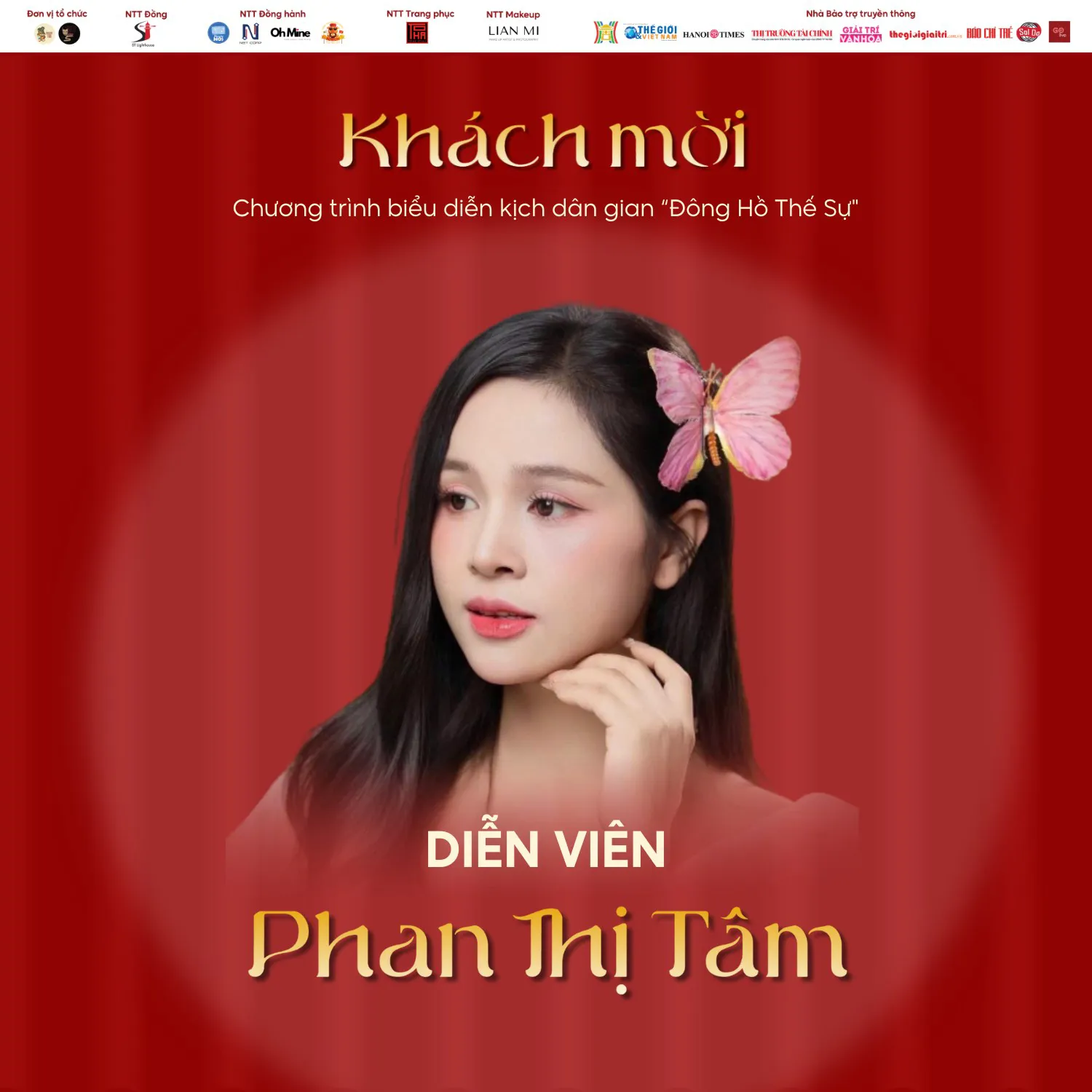
Actress Phan Thi Tam described the performance as vivid and engaging, praising the students’ heartfelt acting and giving them a nine out of ten for effort and preparation.
She said the cast shows strong potential in theatre and cinema and urged young people to keep blending tradition with modern elements to preserve cultural heritage.
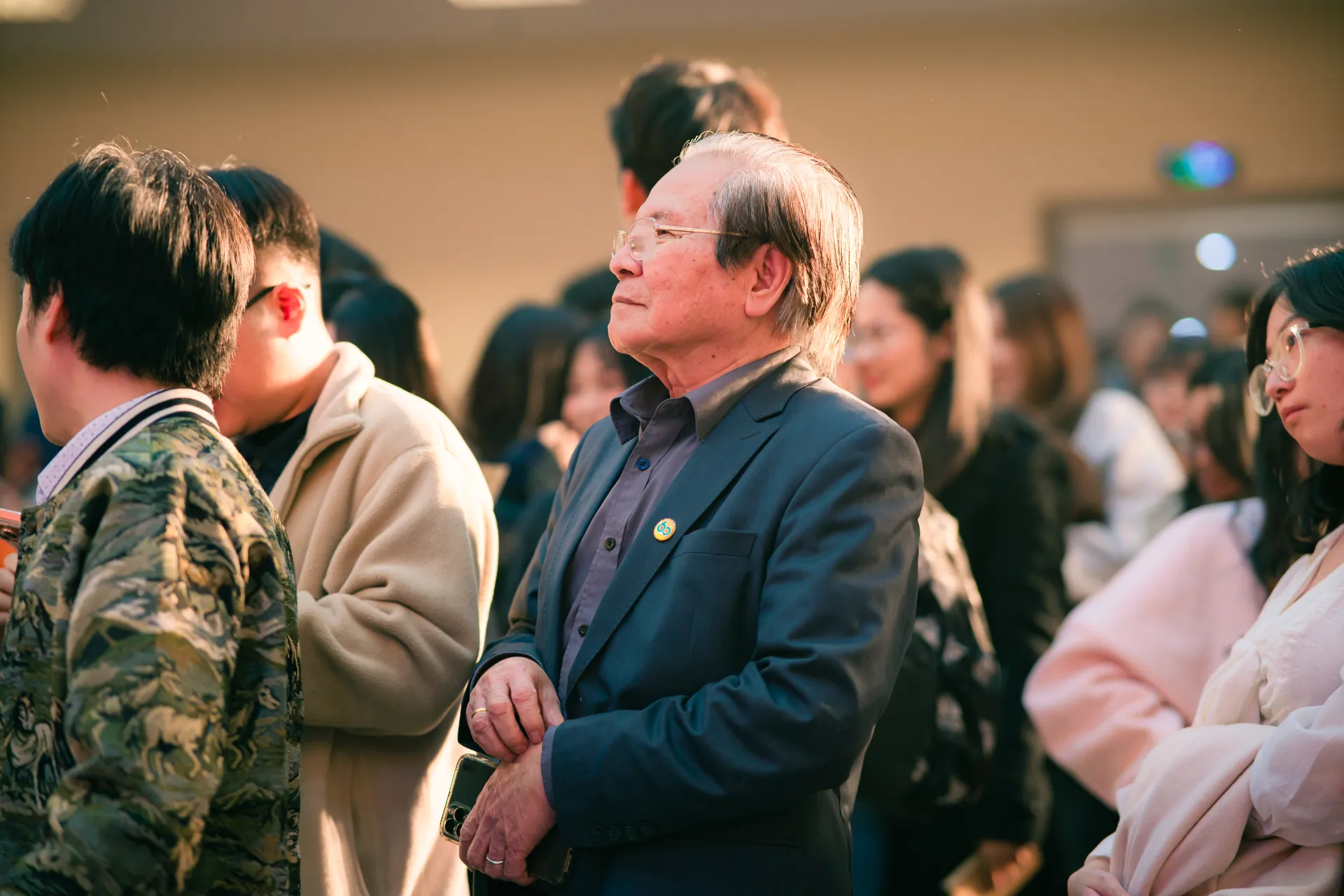
Nguyen Trung Nghia, the grandfather of director Nguyen Do Tram Anh, said that Dong Ho folk paintings have long been a familiar cultural heritage, yet through this play, “I was able to see clearly how the young artists successfully reinterpreted traditional values while integrating the spirit of the present day.”
According to him, “this harmonious connection between the past and the contemporary resonates strongly with the thinking and emotions of Vietnamese audiences today.”
Regarding the performance, Nghia said the play not only recalls stories passed down through generations but also shows strong creativity, using traditional material to convey meaningful messages about life and work in modern society.
He stressed that creativity within traditional arts does not undermine history or cultural values but helps reveal their true essence. For this reason, the younger generation must preserve national cultural identity, which embodies the humanistic spirit and cultural depth of the Vietnamese people.
It's important that "Dong Ho: Reflections of Life Stories" demonstrated the strong interest of Vietnamese youth in preserving and revitalizing traditional culture. Through creative reinterpretation and open dialogue, the student-led project showed that folk heritage can remain relevant when approached with responsibility and imagination.
By transforming Dong Ho painting into a contemporary theatrical language, the event affirmed that cultural preservation is not merely about safeguarding the past, but about enabling tradition to evolve and resonate with younger generations.