“Grey zone” activities cast a shadow over cooperation and peaceful prospects in East Sea
Grey zone activities augment the risk of confrontation, destabilize the governance of regional laws and orders, and undermine international laws.
Failure to adequately address the risks associated with "grey zone" activities could undermine the prospects of cooperation and peace in the South China Sea (or East Sea by Vietnam).
| Overview of the conference. Source: VNA |
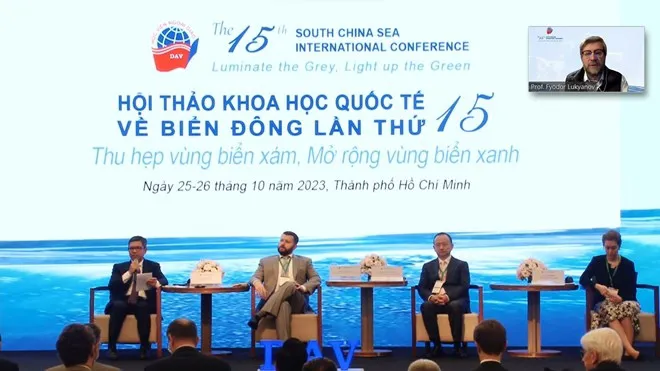
Vice Minister of Foreign Affairs Do Hung Viet emphasized this view during the 15th South China Sea International Conference held in Ho Chi Minh City on October 25-26.
“Over the past 15 years, the situation in the East Sea has become increasingly complicated. Amid the ongoing territorial disputes, competition in maritime domains has expanded in scope and intensity, accompanied by a rapid rise in defense spending, deepening skepticism, and a rising number of risky incidents,” Viet said.
He noted that competition in the region encompasses various dimensions, including surface and undersea areas, the seabed, airspace, outer space, and even the virtual realm, all with potentially far-reaching consequences. Of particular concern is the emergence of "grey zones" at sea.
Viet described "grey zones" as areas characterized by a lack of transparency, precision, and predictability. "Grey zone" activities take place in the ambiguous space between different categories, straddling the areas of civil and military, peace and conflict, lawful and unlawful, and the border between physical reality and cyberspace.
"Grey zone activities significantly increase the risk of confrontation, destabilize the governance of regional law and order, and undermine international law, trust, and the political will necessary for cooperation. If left unchecked, these activities could cast a shadow over the prospects for cooperation, peace, and stability in the East Sea," he noted.
| Delegates at the conference. |
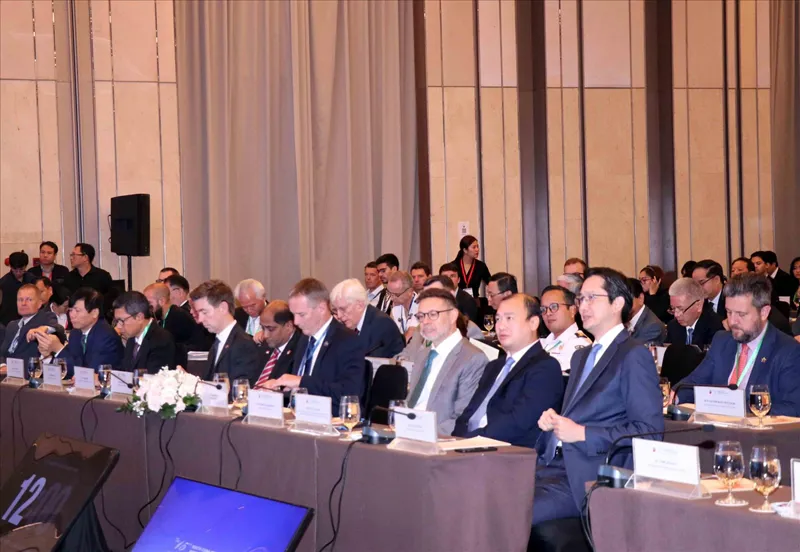
The 15th South China Sea International Conference convened over 550 delegates, who participated in person and online. Among them, nearly 50 distinguished experts from 20 countries and almost 70 representatives of foreign diplomatic missions in Vietnam.
Deputy Minister Do Hung Viet highlighted the significance of this year's theme for discussion "Luminate the Grey, Light up the Green" in the current context. "Luminate the Grey" seeks to enhance transparency and peaceful conditions in maritime spaces, while "Light up the Green" aims to unlock the sea's potential and envision the future by promoting positive collaborative practices across various domains, Viet continued.
In recent years, scholars have observed numerous "grey zone" activities in the East Sea, characterized by meticulous planning by the parties involved and the deployment of advanced equipment such as modern ships, boats, satellites, and drones for collecting and disseminating information. These events have become increasingly risky due to heightened levels of involvement of the parties and the variety of means used.
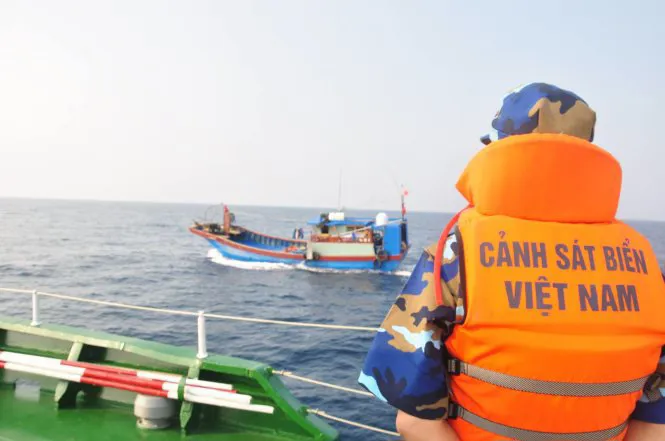
| Vietnam's coast guards patrol the sea. Photo: Minh Phuong/The Hanoi Times |
Dr. Nguyen Hung Son, the Deputy Director of the Diplomatic Academy of Vietnam, noted that events in the East Sea tend to unfold "by design" rather than as “surprises”. This calculated nature of events increases the risk of rapid escalation, making them challenging to control and potentially evolving into international crises.
One example of a "grey zone" activity is the use of irregular forces, particularly maritime militia fleets, to conduct coercive actions at sea. China's unilateral "dotted line" sovereignty claims, in various forms, are also viewed as a manifestation of "grey zone" activities.
Despite the tensions in the East Sea, the region still holds numerous prospects for cooperation. One notable example is a new agreement on the conservation and sustainable use of biodiversity in areas beyond international jurisdiction, to which Vietnam was an early signatory.
"The most valuable lesson learned of the past 15 years is that when a country makes a genuine effort to integrate and abide by international law, it paves the way for greater opportunities for cooperation, dialogue with neighboring nations, and the resolution of overlapping sovereignty claims," Son emphasized.
From the EU's perspective, European External Action Service Acting Managing Director of Asia and Pacific Paola Pampaloni emphasized the bloc's commitment to multilateralism in a global context marked by increasing unilateralism and great power competition.
Pampaloni highlighted the enduring importance of multilateralism as the most effective tool in international relations. She said that this approach benefits all nations, enabling countries to collaborate in resolving disputes and achieving common goals.
She also stressed that multilateralism and international laws are interconnected, and participation in multilateral efforts should not be considered an optional choice.
She added that the EU has a strong interest in the security and prosperity of East Sea coastal countries, as these issues are closely tied to the EU's strategic and economic concerns.
Peace, stability, and cooperation in the East Sea are vital for the EU, and the EU firmly opposes any actions that escalate tensions and undermine the rules-based international order, she noted.
Pampaloni referred to the 1982 United Nations Convention on the Law of the Sea (UNCLOS 1982) as a guiding principle and a beacon for peacefully resolving regional disputes. The EU fully supports the negotiation process led by ASEAN towards establishing an effective, substantive, and legally binding Code of Conduct of Parties (COC) in the East Sea. She emphasized that this COC must be in line with international law and respect the interests of third parties.
Furthermore, Pampaloni reiterated the EU's commitment to effective multilateralism and its support for the principle of ASEAN centrality. The EU has been enhancing its cooperation with ASEAN and its member countries, including Vietnam, in various areas, including capacity building, maritime space awareness, and an increased presence at sea. This collaboration is facilitated through specific programs and projects like Critical Maritime Routes in the Indo-Pacific (CRIMARIO) and the Enhancing Security Cooperation in and with Asia (ESIWA).