Party chief urges Hanoi to break bottlenecks, improve livelihoods
At a meeting with voters in central Hanoi, Party General Secretary To Lam highlighted urgent priorities for the capital, from easing traffic congestion and pollution to strengthening grassroots governance under the two-tier local government model.
THE HANOI TIMES — Hanoi must break long-standing development bottlenecks, especially traffic congestion, pollution and slow urban renewal, with all policies serving the people, Party General Secretary To Lam said on December 15.

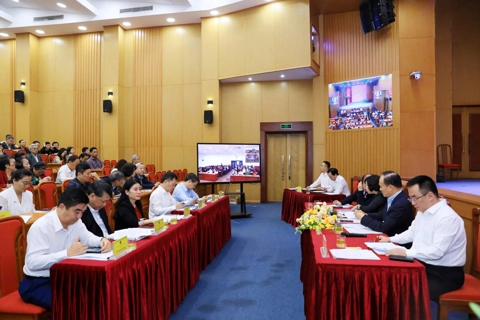
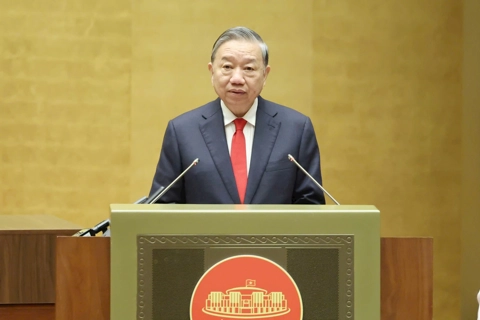
Party General Secretary To Lam addresses Hanoi voters. Photos: Thanh Hai
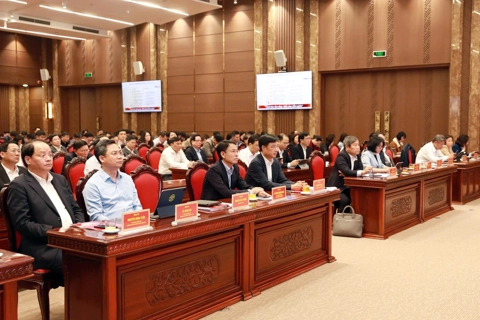
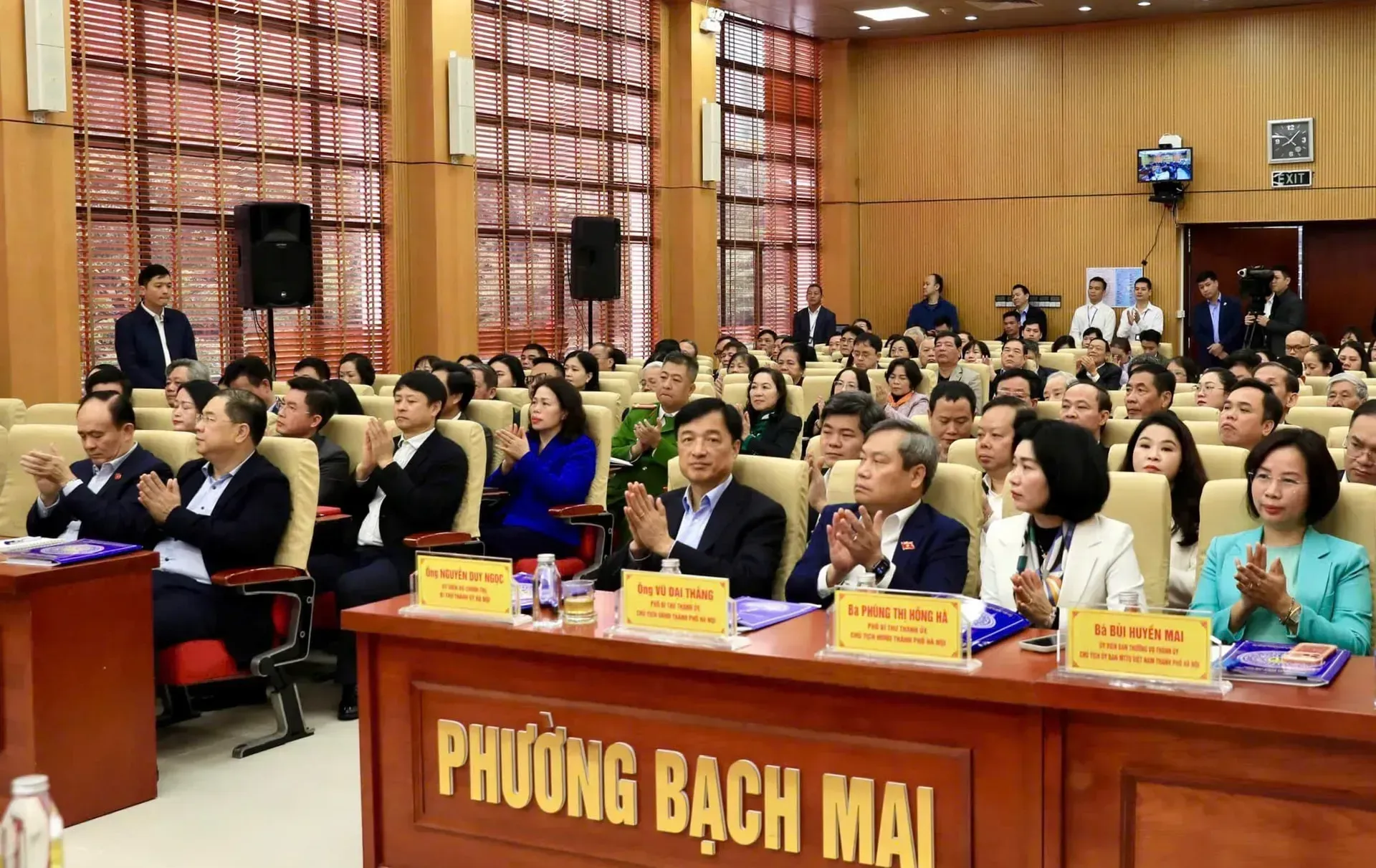
Meeting voters from multiple wards across Hanoi after the 10th session of the 15th National Assembly, Lam said the policymakers had completed the largest legislative workload in its history, creating an essential institutional foundation for national development in a new phase.
He said that the session marked the final voter outreach of the current National Assembly term, a moment that carried both optimism and expectations.
"As the country prepares for a new term, the focus will be on three overarching tasks, including maintaining stability and safeguarding the nation, accelerating development and steadily improving people’s living standards," said Lam.
According to the Party chief, the unprecedented legislative output of the 15th National Assembly reflected the strong sense of responsibility among deputies, effective coordination among institutions and timely, substantive input from citizens on major national issues.
“Listening to voters is a concrete expression of the principle that all decisions must be made in the interests of the people,” said Lam.
Lam said Vietnam faces both favorable conditions and complex challenges, warning that unresolved issues could easily become flashpoints if not addressed early. “This requires a high level of unity across the political system.”
He highlighted the government’s ongoing efforts to enhance the effectiveness of the two-tier local government model, particularly at the commune level, and commended Hanoi for swiftly mobilizing resources and deploying capable officials to grassroots administrations, which serve as the frontline for implementing Party and State policies.
Reviewing socio-economic performance, Lam said the country recorded positive results in the first 11 months of the year, with full-year state budget revenue projected at around VND2 quadrillion, up 30 percent year on year, the highest level to date.
“Thousands of long-delayed key projects have been unblocked nationwide, contributing to improved living standards and ensuring that no one is left behind,” said Lam.
Acknowledging Hanoi’s contribution to these achievements, he praised the capital’s authorities and residents for their renewed momentum as they implement the resolution of the city’s 18th Party Congress.
He urged Hanoi to further consolidate its role as a national leader in economic development and innovation, serving as a testing ground for policies that could later be scaled nationwide.
As for urban traffic, Lam said Hanoi must resolve congestion to avoid turning its advantages into constraints, calling for long-term, transparent planning alongside immediate measures.
He also encouraged the city to continue leading in innovation, including expanding the use of online public services and improving data governance.
On environmental issues, he urged more effective waste collection, comprehensive treatment of wastewater and solid waste and stricter control of pollution sources, coupled with stronger public awareness and enforcement.
“Central authorities and the National Assembly would accompany Hanoi with more decisive policy support,” said Lam.
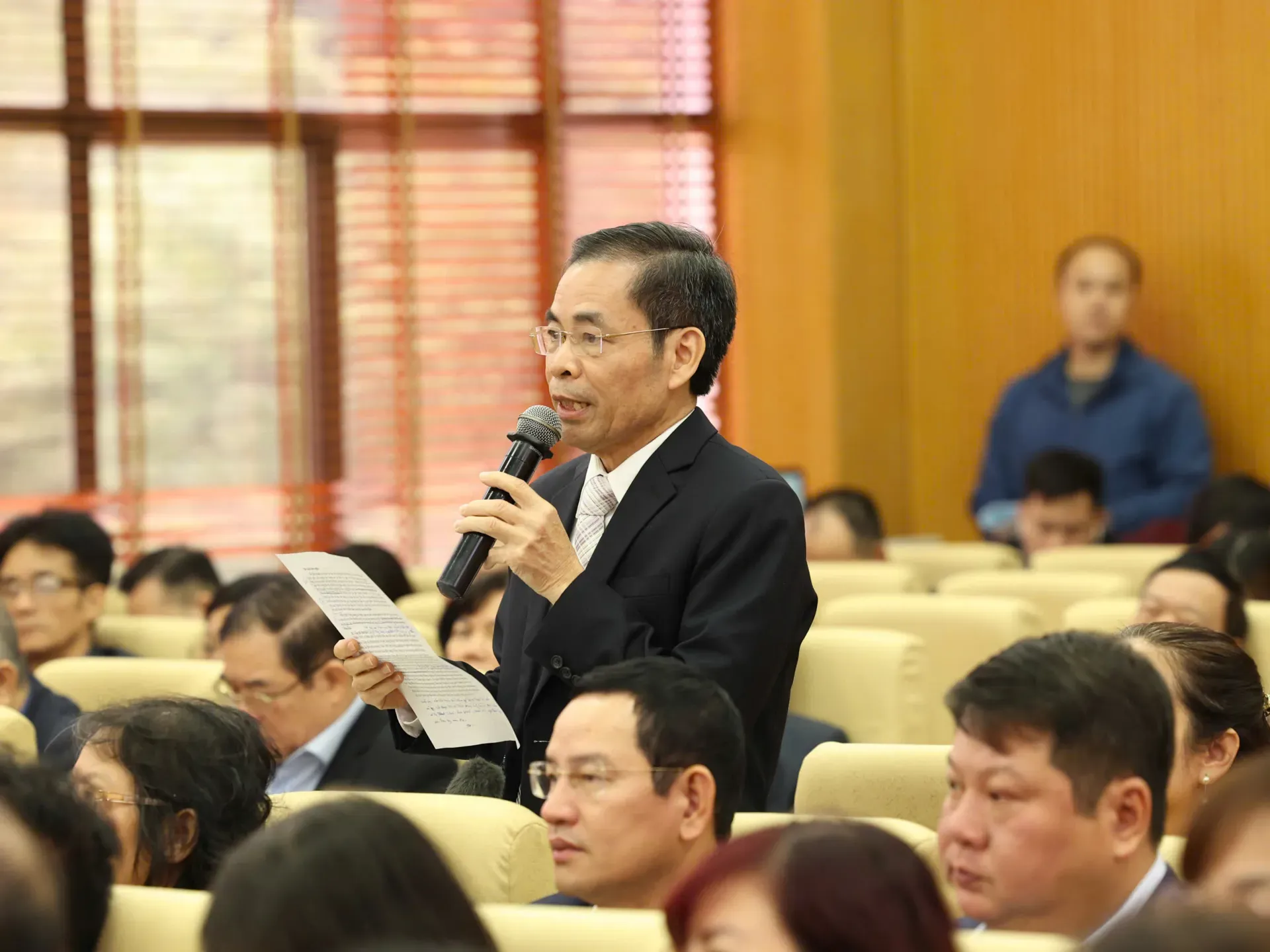
Addressing the voters' concerns, Lam said the government would strengthen protections for citizens in the digital space by improving legal frameworks and fostering digital literacy. In healthcare, he called for close coordination with the Ministry of Health to effectively implement free basic medical services, expand vaccination coverage, promote electronic health records and upgrade grassroots healthcare facilities through digital transformation.
He urged Hanoi to remain proactive and pioneering in implementing policies that prioritize learning, including tuition fee reductions, school expansion and long-term planning to meet the needs of children, while sustaining the capital’s tradition of educational excellence.
On the slow renovation of old apartment buildings, Lam said stronger policies and more effective cooperation are needed, including revisiting planning for stalled projects, resolving long-delayed developments and accelerating the comprehensive redevelopment of unsafe buildings.
He stressed the need for clear timelines, accountability and regular reporting to voters.
Summing up, the Party leader outlined three major requirements for Hanoi in the coming period, including renewing development thinking with a readiness to take responsibility for the common good; focusing on five priorities, including special policy mechanisms, breakthroughs in urban transport infrastructure, innovation and digital transformation, high-quality human resources and a green, safe and civilized living environment; and ensuring that the two-tier local government operates effectively, close to and for the people.
He concluded that voters’ opinions reflect both public expectations and a strong impetus for further reform and decisive action by the National Assembly, central agencies and Hanoi’s authorities, expressing confidence that the capital will continue to uphold its thousand-year cultural legacy while achieving strong, sustainable development.
|
Nguyen Thi Ngoc Trinh, voter from Bach Mai Ward: She said Bach Mai Ward is home to four hospitals, including Thanh Nhan General Hospital, Hanoi Oncology Hospital, Mai Huong Mental Hospital and Hanoi Lung Hospital, which creates favorable conditions for rolling out periodic health checkups for local residents and for Hanoi more broadly. However, she urged the government to direct relevant ministries and agencies to continue investing in upgrading medical infrastructure, adding equipment and strengthening human resources to meet the demand for annual health checkups for the entire population and to avoid hospital overcrowding. She also called for clearer guidelines on periodic health checkup procedures, the completion of a unified and interoperable electronic health data system and greater clarity on the scope of free basic medical services, eligible beneficiaries and the implementation roadmap. At the same time, she stressed the need for stronger public communication on policies, including timely information on checkup schedules, locations and citizens’ entitlements. Dinh Quoc Phong, representative of voters from O Cho Dua Ward: He said many long-delayed projects with very large social resource value remain stalled, resulting in waste. He urged the National Assembly to introduce policies to remove institutional bottlenecks and constraints, enabling localities to apply solutions to resolve these backlogs. This would help create momentum for double-digit growth, unlock resources for projects to be put into use, and prevent the waste of state, business and social assets. Do Van Thuat, voter from Lang Ward: He called on Hanoi to continue prioritizing investment in and completion of transport infrastructure, accelerate road expansion projects, and strictly manage road excavation to ensure proper restoration and longer warranty periods. He also urged greater attention to building flyovers, underpasses and ring roads to improve traffic distribution and ease pressure on the inner city. At the same time, he stressed the need to develop high-quality public transport, especially buses and urban railways, to encourage residents to shift from private vehicles to public transport, alongside stricter penalties for traffic law violations. On environmental issues, he urged tighter control of emission sources, stricter enforcement against environmental violations, and stronger promotion of clean energy and green transport, including the transition from gasoline-powered vehicles to electric ones. He also called for major investment in wastewater treatment infrastructure, the rehabilitation of polluted rivers and lakes, the construction of large-scale modern waste treatment plants, and the expansion of green spaces, parks and street trees. Le Gia Anh, voter from Lang Ward: She urged the government to direct relevant agencies to strengthen inspection and oversight of telecommunications providers, tighten controls on fraudulent messages and calls using AI, and crack down on misleading advertising that harms people’s property and state interests, with violations publicly disclosed through official media. She also called for stricter punishment of counterfeit production and trading, improvements to the legal framework to manage fake and substandard goods and protect consumers, and stronger price controls, including measures to address price manipulation and speculation, particularly in real estate. Nguyen Van Phu, representative of voters from Dong Da Ward: He called on central authorities to introduce additional policy mechanisms to support localities and investors in speeding up the renovation of old apartment buildings. In Dong Da Ward, the approval of the detailed 1:500 zoning plan for the renovation and reconstruction of the Vinh Ho collective housing area and surrounding neighborhoods should be accelerated to meet residents’ expectations for better living conditions. He also highlighted the long-delayed Dong Da Recreational Complex project in Trung Liet area, now part of Dong Da Ward, which has left land unused and degraded the urban landscape. He proposed that the government and the Ministry of Agriculture and Environment reclaim the project, transfer the land to Hanoi for management, and allow the ward authorities to develop a new investment project to rebuild the dilapidated and substandard Quang Trung Primary School to serve local needs. Vu Tung Duong, voter from Giang Vo Ward: He called on central authorities and Hanoi to invest in a synchronized digital infrastructure and data connectivity to facilitate data use across agencies, while gradually standardizing the civil service workforce to better harness digital technology in public administration. He also urged the government and the city to develop a comprehensive plan to respond to climate change, particularly by providing early information on reservoir discharges so residents can proactively take preventive measures and evacuate from high-risk areas when necessary. On air quality, he said improvements require a comprehensive approach, noting that restricting gasoline-powered vehicles is only one of many issues. Authorities should consider providing additional support to residents who are required to switch to electric vehicles, given ongoing economic difficulties. Nguyen Kim Son, voter from Ngoc Ha Ward: He called on central and city authorities to continue bringing together the expertise of scientists, specialists and forward-looking managers to strike a balance between economic growth and people’s well-being. He said this approach is essential to addressing major contradictions hindering development, including rapid economic growth alongside environmental degradation, especially air and wastewater pollution that reduces quality of life; high GDP growth coupled with widening inequality between rural and urban areas, lowlands and mountainous regions; an expanded university system that has not matched quality expectations, leading to a surplus of graduates but a shortage of skilled workers; and the development of high technology while the population’s digital skills remain limited. 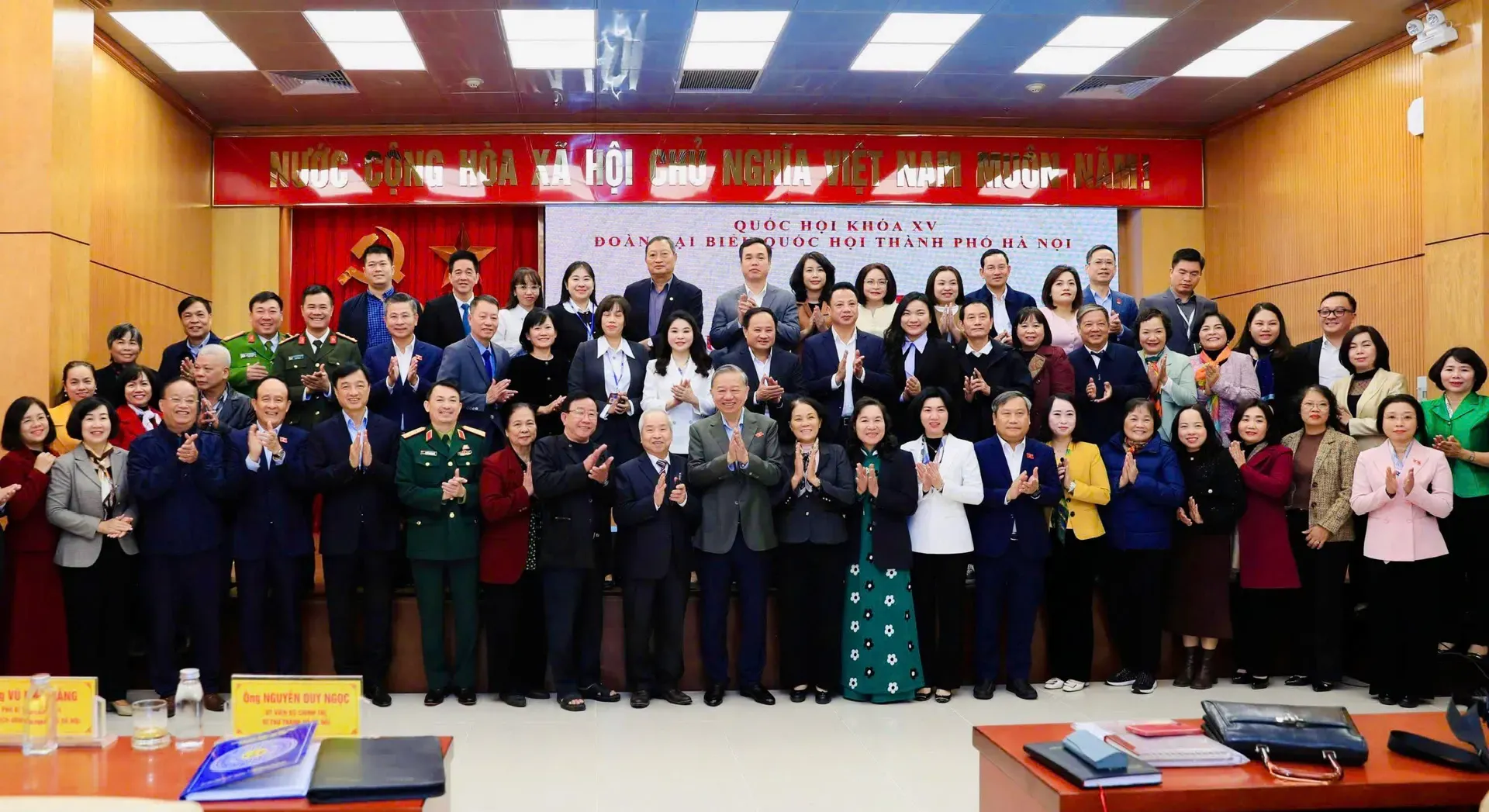
Party General Secretary To Lam and National Assembly deputies take a group photo with representatives of Hanoi’s leadership and leaders and voters from wards in Constituency No. 1 |