Hanoi Innovation Center powers capital’s growth
The city aims to establish itself as Vietnam’s leading innovation hub through the proposed Hanoi Innovation Center, which is designed to foster stronger connections between academic institutions, businesses, and investors.
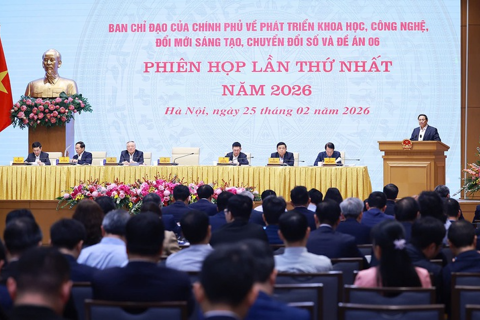
THE HANOI TIMES — Experts at a consultation on August 6 regarding the draft resolution for the proposed innovation center have urged Hanoi to clearly define its funding sources and operational model.
Pham Anh Tuan, Vice Chairman of the Vietnam Fatherland Front in Hanoi, said that as an entirely new model, the Hanoi Innovation Center (HIC) will require transparent and detailed regulations, particularly regarding financial mechanisms, incentives, and stakeholder coordination.
“The project must clarify the organizational structure, authority, and accountability of each party involved, while maintaining oversight over the use of public resources and maintaining long-term strategy,” he said.
He also called on the drafting committee to better integrate the role of Hoa Lac Hi-tech Park and startup incubators into the proposed HIC framework and to explore successful international models.
Tuan also noted the need to carefully consider concerns that the initial charter capital of VND100 billion (US$3.8 million) may not be adequate given the scale and strategic goals of a city-level innovation center. He suggested exploring the possibility of increasing the capital.
Additionally, he recommended clarifying the roles of departments of Agriculture and Environment, and Planning and Architecture, and clearly defining the Department of Science and Technology’s responsibility for overseeing the center’s operations.
According to Tuan, the new center could help overcome existing institutional bottlenecks in Hanoi’s innovation ecosystem.
“By creating a more conducive environment for talent attraction, technology commercialization, and startup support, the HIC is expected to significantly boost the capital’s competitiveness,” he said.

Scientific research at the laboratory of the Nano and Energy Center at the University of Science, Hanoi. Photo courtesy of the university
Meanwhile, Nguyen Hoang Hai, Vice President of the Hanoi Public Passenger Transport Association, said the project aligns with special policy mechanisms in the revised Capital Law.
He backed the proposal to establish the center as a joint-stock company with majority state ownership, saying it's a modern and flexible model that would enable public-private resource mobilization while maintaining state control.
Nonetheless, Hai stressed the importance of transparency and state oversight in corporate governance, warning against symbolic or superficial coordination that fails to energize the broader innovation ecosystem.
He welcomed proposals for flexible incentives in wages, taxes, and hiring international experts, but cautioned that implementation would require central-level guidance for legality and feasibility.
Sharing this view, Nguyen Tien Dinh, former Deputy Minister of Home Affairs, called for more robust mechanisms to ensure outcome-based incentives and prevent ineffective operations.
He also urged clarity on which priority technology sectors the center will support, in alignment with the strategic goals outlined in the 2024 Capital Law.
Regarding legal status, Dinh said that the center should be formed, capitalized, and operated in accordance with Vietnam’s Enterprise Law, as an enterprise-led model rather than an administrative unit.
To align with city policy, he recommended that the resolution clearly define the center’s mission, structure, operations, incentives, and implementation timeline.

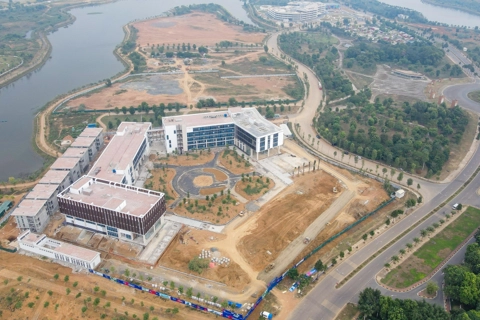
Rendered image of Hanoi's Hoa Lac Hi-tech Park aims to foster technological innovation and entrepreneurship.
According to Tran Dac Trung, Deputy Head of the Management Board of High-Tech and Industrial Parks of Hanoi, HIC will operate as a joint stock company with majority state ownership, established by the Hanoi People’s Committee. It will follow a parent-subsidiary model, with the authority to set up branches and representative offices.
The parent company will lead on policy execution, resource coordination, and partnerships, while the subsidiary, the Hanoi Technology Incubator and Startup Center, will support startups with lab space, consulting, funding access, and commercialization.
The model aims to combine the strengths of the state, businesses, and academia. The Hanoi People’s Committee will provide oversight, CMC Group will manage operations and infrastructure, and Hanoi University of Science and Technology will contribute research and training.
The proposed charter capital is VND100 billion (US$3.8 million), with 70% funded by the city and 30% from shareholders.