Hanoi makes bold plan to revive four "dead rivers"
Hanoi has greenlit an ambitious plan to restore four heavily polluted urban rivers, taking a significant step toward improving the city's environment and creating sustainable urban landscapes.
THE HANOI TIMES — Hanoi has been determined to revitalize four heavily polluted inner-city rivers, namely To Lich, Kim Nguu, Lu, and Set through a newly-approved "Environmental Quality Restoration and Development" plan.
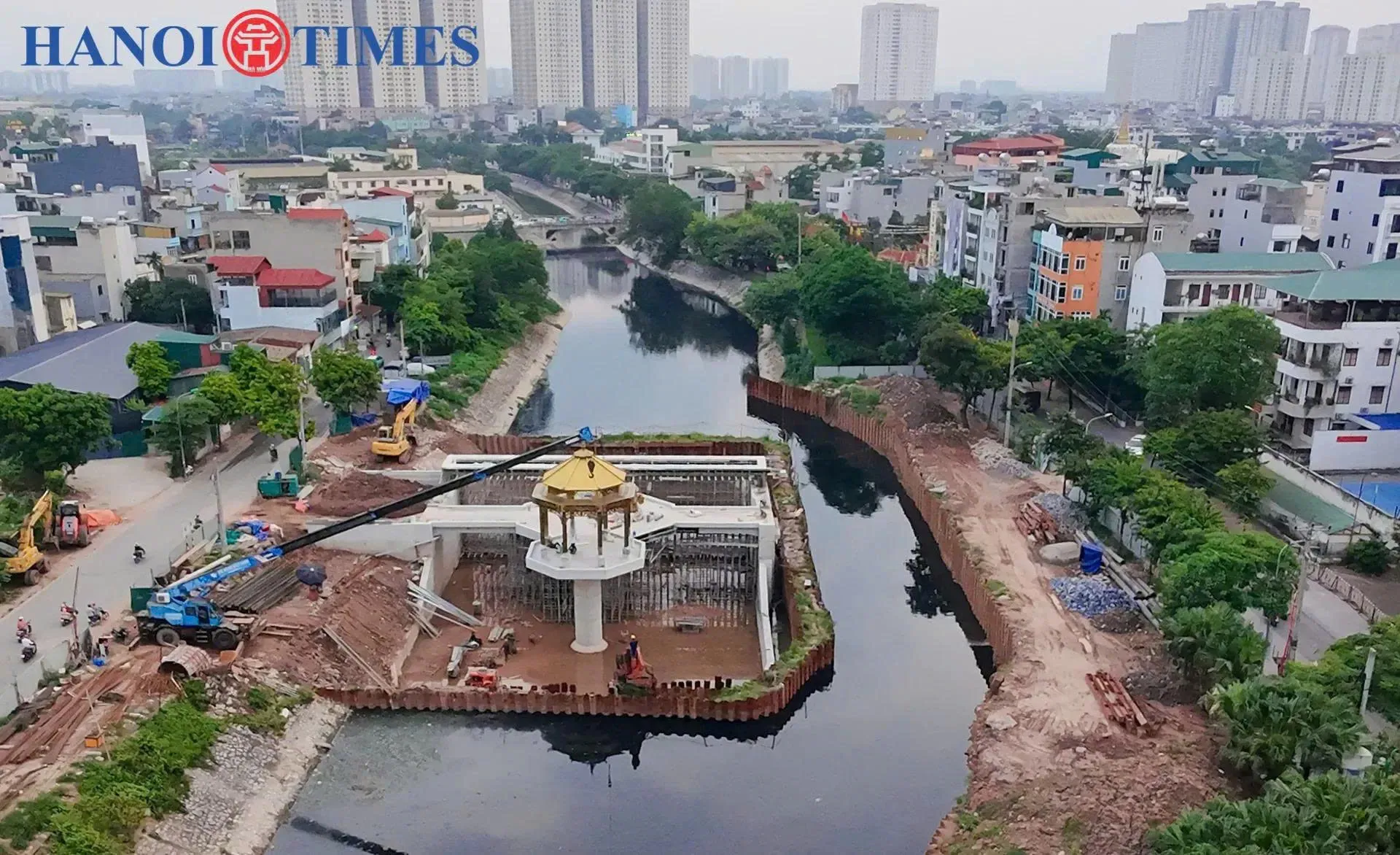
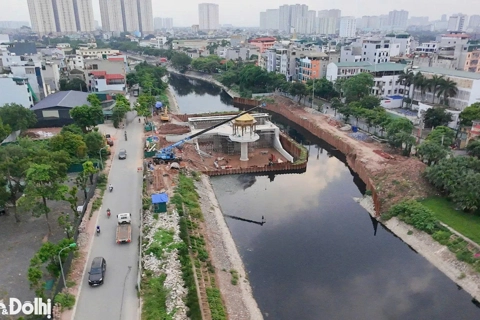
Restoration work on the To Lich river. Photo: Huy Pham/The Hanoi Times
Driven by the city’s Department of Agriculture and Environment, the plan comprises 32 programs and projects scheduled for implementation from 2025 to 2030, aiming to breathe new life into these waterways that have long suffered from rapid urbanization and inadequate environmental management.
According to the department, the city generates between 350,000 and 400,000 cubic meters of domestic wastewater and over 1,000 cubic meters of solid waste daily, but only about 10% of this waste is treated before discharge into rivers, lakes, and ponds.
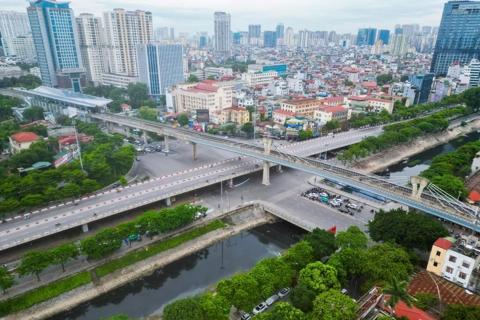
The To Lich River, stretching 14.6 kilometers through six wards, receives approximately 150,000 cubic meters of untreated domestic and industrial wastewater daily, with more than 300 direct discharge points exacerbating pollution.
Similarly, the Kim Nguu (1.2 kilometers), Lu (10 kilometers), and Set (3.6 kilometers) rivers suffer severe contamination, with black, debris-laden waters and low dissolved oxygen (DO) levels signaling ecological decline over the past decade.
These rivers, once vital to Hanoi’s drainage and cultural landscape, have been labeled “dead rivers” due to persistent pollution.
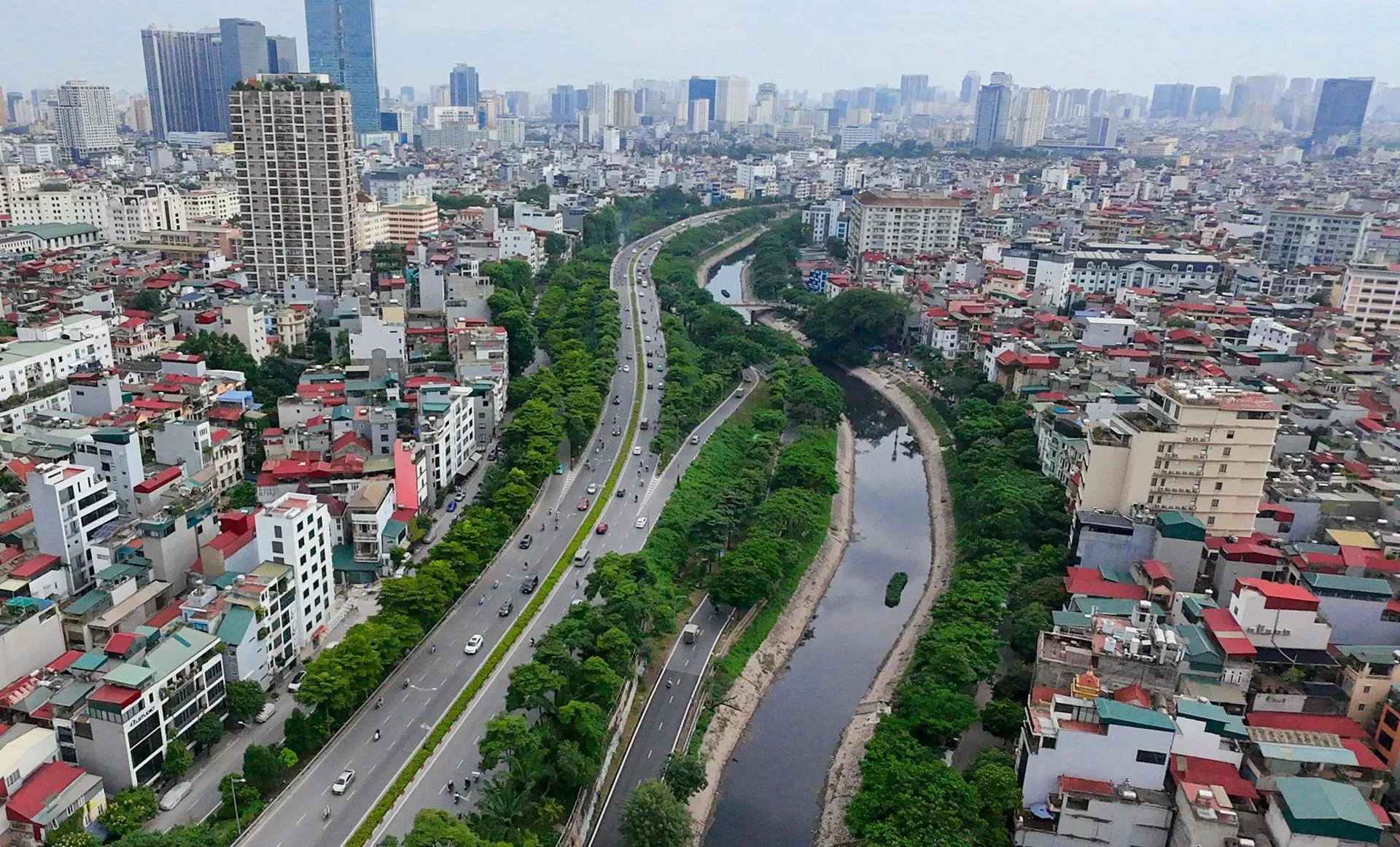
The To Lich River from above. Photos: Huy Pham/The Hanoi Times
The city’s new plan emphasizes four strategic pillars, including pollution control and prevention, development of a balanced ecological river system, urban landscape enhancement, and increased public awareness.
A key component is the Yen Xa Wastewater Treatment Plant. With a daily capacity of 270,000 cubic meters, it will treat wastewater from the To Lich River and its tributaries.
Complementing this is the S1 basin wastewater collection system, channeling sewage from inner-city wards to the Yen So Wastewater Treatment Plant, operational since 2013 with a capacity of 200,000 cubic meters per day. Other facilities, such as the Phu Do (84,000 cubic meters per day), Ha Dong (45,000 cubic meters per day), and Son Tay (20,000 cubic meters per day) treatment plants, contribute to the city’s growing wastewater management network.
Infrastructure and ecological restoration
The To Lich River, a critical drainage artery for Hanoi, is at the heart of this initiative. Progress has been notable, with 45,000 cubic meters of sludge removed from the riverbed between Hoang Quoc Viet Road and Dau Bridge, improving water flow and preparing for clean water replenishment from the Red River starting September this year.
A regulating dam in Thanh Liet ward, 95% complete as of July, is set to begin operations by August 30th. The dam features two-way gates, a pump station, a pedestrian bridge, and an octagonal observation tower, combining functionality with public accessibility.
Two new dams set for construction in late 2025 will improve water flow, as the city redirects major wastewater from the To Lich River to the Yen Xa plant, tightens industrial waste rules, and promotes responsible disposal through public campaigns.
For the Kim Nguu, Lu, and Set rivers, which frequently dry up during the dry season, the plan includes innovative water replenishment solutions to sustain their ecosystems. Experts like Professor Tran Duc Ha, former Director of the Vietnam Institute for Water Supply and Sewerage, emphasize the importance of maintaining a minimum flow rate of 0.3 cubic meters per second to enable natural self-cleaning mechanisms.
Currently, none of these rivers meet this threshold, necessitating clean water supplementation from sources like the Red river. This approach not only supports ecological balance but also ensures water availability for agricultural needs in eastern Hanoi during dry periods.
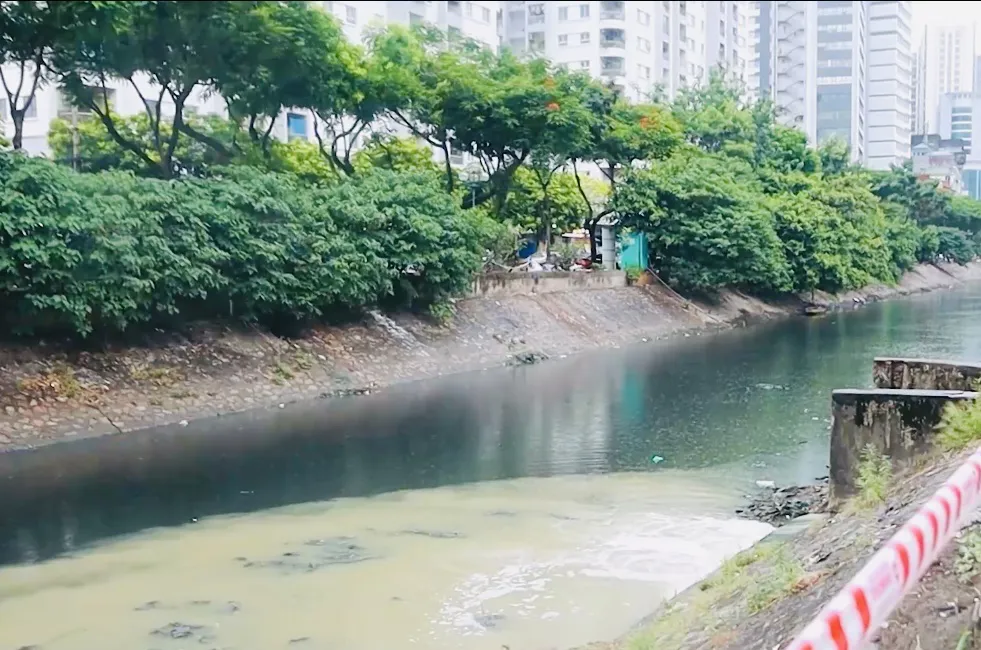
For the rivers like Kim Nguu, the plan includes innovative water replenishment solutions to sustain their ecosystems. Photo: Thuy Chi/VGP
Systemic challenges and the path forward
Despite these advancements, Hanoi faces significant challenges in achieving its vision. Rapid urbanization, population growth, and a combined drainage system, where stormwater and wastewater share the same channels, complicate pollution control.
Approximately 12% of wastewater along these rivers cannot be integrated into the centralized treatment system. Associate Professor Tran Thi Viet Nga from Hanoi University of Civil Engineering stresses the rivers’ critical drainage role is undermined by their current polluted state, requiring a holistic approach that integrates urban planning, infrastructure, and community engagement.
The city’s earlier efforts, such as the 2011 detailed planning for the To Lich river’s banks, have been hampered by unresolved pollution issues. Associate Professor Dao Trong Tu, Director of the Center for Sustainable Water Resource Development and Climate Change Adaptation, warns that without decisive action, pollution will continue to threaten public health and urban aesthetics.
To address this, Hanoi is revising its drainage plan to support its 2020–2030 development goals of becoming a “green, smart, and creative” city. This includes expanding wastewater treatment, tightening environmental regulations, and securing funding through public and legal sources under coordinated oversight.
By 2026, Hanoi aims to complete dam construction and dredging to cut river pollution by 50%, restoring ecological and cultural value while transforming its waterways into green corridors that enhance sustainability, livability, and urban resilience through collective effort and innovation.

The restoration work will soon improve environment in urban areas of Hanoi. Photo: Huy Pham/The Hanoi Times