Hanoi accelerates efforts to revitalize To Lich River
The goal is to ultimately transform the To Lich River into an ecological, cultural, and recreational asset for the city and its residents.
THE HANOI TIMES — Hanoi's To Lich River revitalization project is showing results after six months, with the first regulating dam set to begin operation in August.

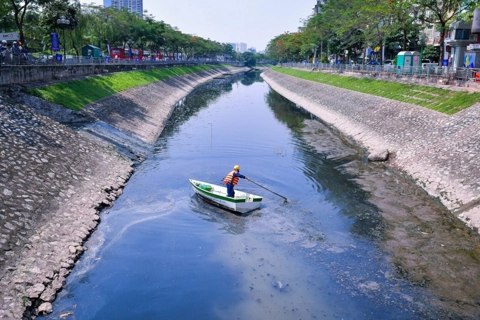
Dredging sludge from the To Lich River has been one of the key tasks actively carried out by the city in recent months. Photos: Quy Nguyen/The Hanoi Times
By early July, Phase 1 had reached several important milestones, setting the stage for the next technical phases.
One of the most notable achievements is the removal of nearly 45,000 cubic meters of riverbed sludge between Hoang Quoc Viet Road and Dau Bridge. This dredging cleared heavily silted areas, improving water flow and paving the way for future replenishment.
Alongside this, Hanoi has almost finished installing a centralized wastewater collection system along the river’s course. Around 26 major discharge outlets have been redirected to the Yen Xa Wastewater Treatment Plant. Key wards such as Kim Giang, Thinh Liet, and Nga Tu So have also completed infrastructure upgrades, sealing direct discharge points into the river.
To further mitigate pollution, stricter wastewater enforcement has compelled industrial facilities to upgrade systems or cease operations, while public awareness campaigns promote responsible waste disposal, laying a solid foundation for the project’s next steps.
As of July 2025, construction of the first regulating dam in Thanh Liet was 95% complete. According to the Hanoi Management Board for Drainage and Environmental Works, the core components — the dam body, two-way gates, pump station, intake basin, and power systems — have been installed.
Final work is now underway on a pedestrian bridge and an observation tower located above the dam. Both are designed to support operations and serve the public. The entire structure is scheduled for completion by August 30, 2025, which is on schedule.
The dam is designed to combine function and form with open architecture, a river-connecting footbridge, and an octagonal observation tower, offering future public space potential and enhancing the urban and ecological landscape.
Meanwhile, preparations for two more regulating dams near Cau Dau and Cau Cot are underway for Q3 2025, with Phase 1 focusing on dams, wastewater collection, water replenishment, and monitoring track for year-end completion, pending continued oversight.
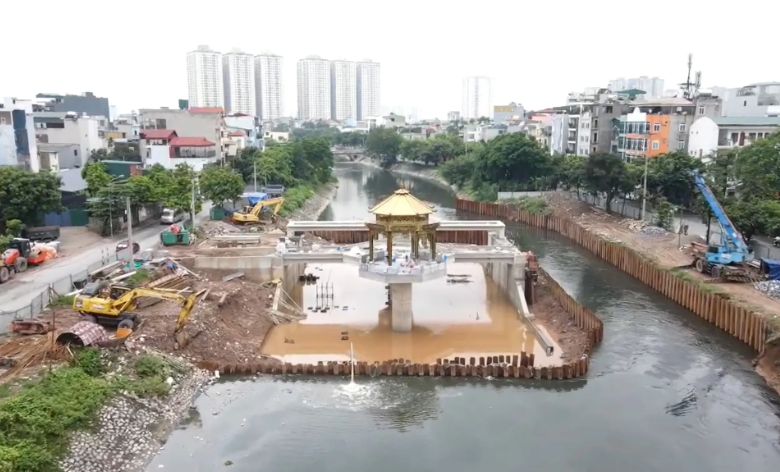
The regulating dam on the To Lich River near Quang Bridge is gradually taking shape.
The next phase will focus on completing the remaining dams and launching clean water replenishment from the Red River, which is scheduled to begin in September 2025 for continuous circulation, improving water quality and recovering the ecosystem.
Further dredging will target remaining silted areas, and anti-erosion measures will be taken to protect riverbanks and ensure community safety. Efforts to connect the remaining wastewater outlets to treatment systems will be accelerated to prevent new sources of pollution.
Experts urge closer coordination among contractors, regulators, and communities, sustained construction efforts, use of modern technologies, and greater public involvement to maintain momentum, ensure success, and foster long-term stewardship.
Environmental specialists emphasize that restoring the To Lich River requires more than technical expertise. It is a comprehensive effort in environmental governance and sustainable urban development. Without consistent and coordinated action, the threat of re-pollution remains significant.
Looking ahead to 2026, Hanoi plans to finalize the dam network and complete dredging along the entire length of the river. The goal is to transform the To Lich River into an ecological, cultural, and recreational asset for the city and its residents.
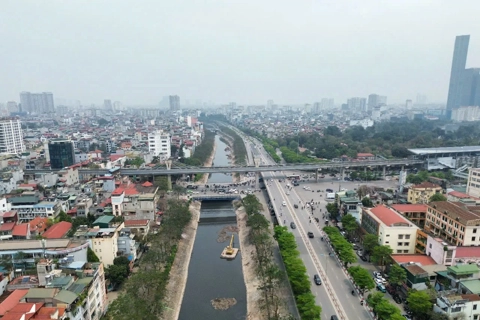
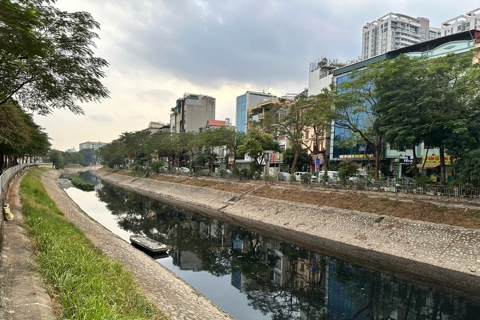
| The To Lich River, stretching about 14 kilometers, runs through six districts of Hanoi. Years of rapid urbanization and limited environmental awareness among some residents have left the river severely polluted, often labeled a "dead river." While local authorities have made multiple efforts to restore it, pollution levels have remained stubbornly high with little visible improvement. Today, the city is adopting a more comprehensive approach in hopes of finally breathing new life into the river. |