To Lich river cleanup in full swing. But is it enough?
To restore the To Lich River, one of Hanoi’s iconic waterways, the city needs more than just dredging mud and collecting waste.
The To Lich River, a tributary of the Red River, embodies a thousand years of Hanoi's history. It has historically played a crucial role in Hanoi's water transportation, promoting trade and contributing to the prosperity of Thang Long-Hanoi.
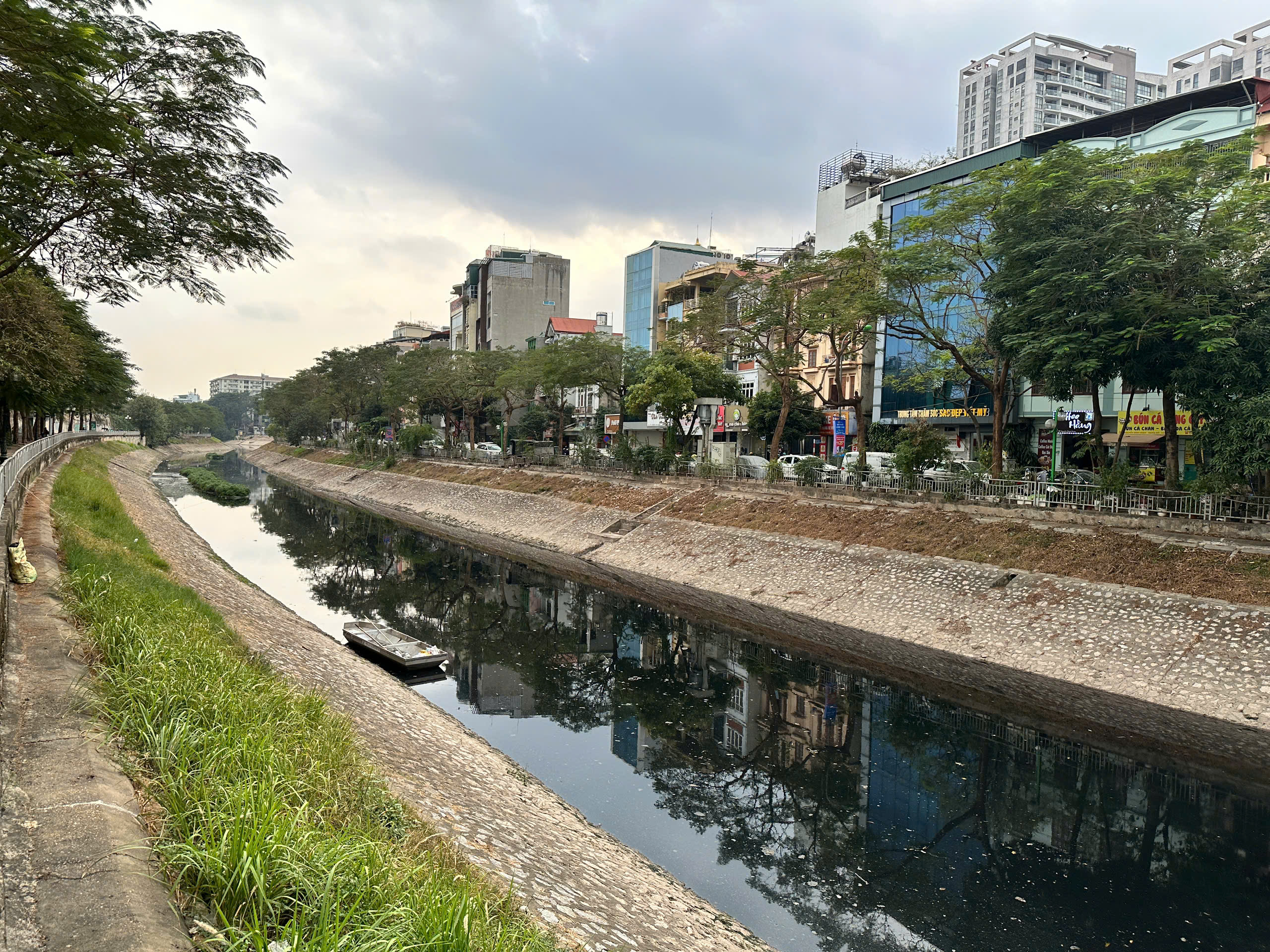
Part of the To Lich River flows through Cau Giay District. Photo: Thanh Luan/The Hanoi Times
Aside from its economic relevance, the river has inspired poetry and art, leaving an imprint on the cultural and spiritual life of the city.
Over time, urbanization has narrowed and polluted the river. Once a scenic waterway, it has become a sewer.
According to Nguyen Hong Hieu, Deputy Director of the Department of Water Resources Management (the Ministry of Agriculture and Environment), the main causes include reduced water flow, the discharge of untreated domestic wastewater, and industrial runoff from factories, craft villages, and industrial clusters along the river's banks without any wastewater treatment.
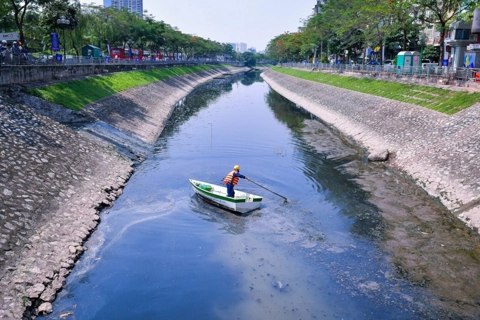
Since February 2025, the Hanoi Drainage Company has been carrying out large-scale dredging to remove 50,000 - 60,000 m³ of silt by August 2025.
Every night, workers dredge a distance of about 60 meters downstream, said Nguyen Van Dien, the contractor. "The goal is to increase the pace to 120 meters per night, mostly at night for safety reasons," he said. "Weather conditions also affect progress, as heavy rains and rising water levels can stop work. The project is expected to be completed before the rainy season."
Trinh Ngoc Son, Deputy General Director of the Hanoi Drainage Company, said dredging is done every year, but it was postponed in 2024 due to the construction of a drainage tunnel under the Yen Xa Wastewater Treatment System project. "This led to a larger accumulation of silt. By the end of April 2025, an estimated 50,000 m³ of silt will be removed, with workers working day and night," he said.
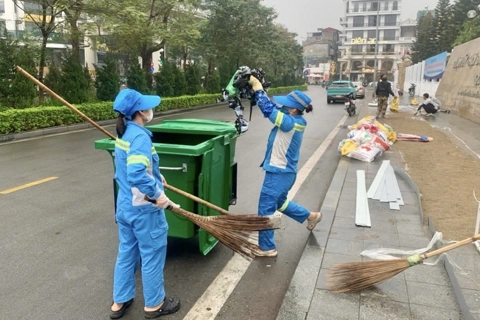
Local governments and residents have also worked to improve the river, including trash collection along the riverbanks and urban beautification projects. The Department of Agriculture and Environment is coordinating with districts along the river to clean up, remove waste, and plant trees and flowers.
In Thuong Tin District, mass clean-up campaigns have removed tons of accumulated waste, cleaned the waterway, and spruced up the landscape. On December 22, 2024, nearly 200 young volunteers cleaned an eight km stretch through Duyen Thai, Nhi Khe, Khanh Ha, and Hoa Binh communes.

The banks of the To Lich River are a favorite track for local joggers. Photo: Thanh Luan/The Hanoi Times
In Dong Da District, authorities have stepped up inspections and enforcement along Lang Road, targeting illegal dumping and environmental violations in Lang Thuong, Lang Ha, Thinh Quang, and Nga Tu So wards. Meanwhile, in Tay Ho District, community clean-up efforts have seen strong participation from residents.
Public awareness campaigns have been reinforced with the installation of surveillance cameras in these districts to prevent illegal dumping. The city also launched the "Bright - Green - Clean - Beautiful" initiative, which encourages waste sorting and minimizes direct discharge into rivers.
Long-term solutions: Technology, water purification, and public awareness
Experts argue that dredging and cleaning alone are temporary solutions. Restoring the river requires rehabilitating its natural flow and treating wastewater before it is discharged into the river.
Hanoi is focusing on completing key wastewater treatment projects. The Yen Xa Wastewater Treatment Plant, a critical part of this plan, has a capacity of 270,000 m³ per day and is expected to significantly reduce the amount of untreated wastewater discharged into the To Lich River. The plant is over 90% complete and will soon be operational.
In addition, the city is planning a VND550 billion (US$21.5 million) project to divert water from the Red River to replenish the To Lich River, helping to restore its flow and improve water quality.
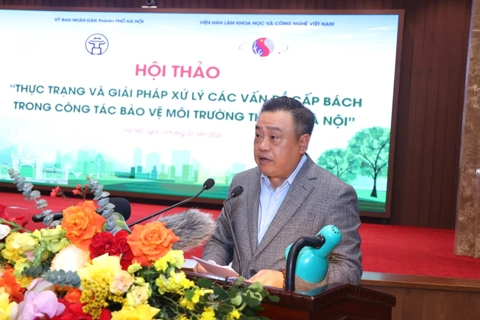
At a workshop organized by the Hanoi People's Committee on March 14, researchers Le Thanh and Nguyen Phuong Quy from the Vietnam Academy of Science and Technology emphasized the need for technology-based wastewater treatment solutions.
Reports from the Hanoi Department of Natural Resources and Environment indicate that the city generates 350,000-400,000 m³ of domestic wastewater and over 1,000 m³ of solid waste daily. Only 10% of this wastewater is treated, and the rest is discharged directly into rivers and lakes.
The experts called for accelerated construction of wastewater collection and treatment facilities in 12 inner-city districts and the expansion of wastewater treatment plants, such as the one at West Lake, to provide clean water for the To Lich River from upstream sources.
Nguyen Viet Anh, Director of the Institute of Environmental Science and Technology at Hanoi University of Civil Engineering, suggested that Hanoi invest in sustainable urban infrastructure. He urged wastewater management through a "circular economy" approach, recycling both wastewater and sludge.
He encouraged the city to adopt policies that promote water and energy conservation, waste collection, and wastewater recycling, while controlling flooding and pollution.
Dao Trong Tu, an expert on Vietnam's rivers, stressed the importance of raising public awareness, especially among residents along the To Lich River. He called for tougher penalties for illegal disposal and encroachment on riverbanks.
"If the authorities take these measures seriously and the public joins the effort, I believe the To Lich River will be back to being pristine," he said.