14TH NATIONAL CONGRESS OF THE COMMUNIST PARTY OF VIETNAM
Log in
Business

Hanoi mulls strategy to reform tax system until 2030

The application of modern and highly automated information technology is expected to create the best conditions for taxpayers to fulfill their tax obligations.

Chairman of the Hanoi People's Committee Tran Sy Thanh on February 28 signed directive No.04/CT-UBND to carry out the strategy to reform the local tax system until 2030.


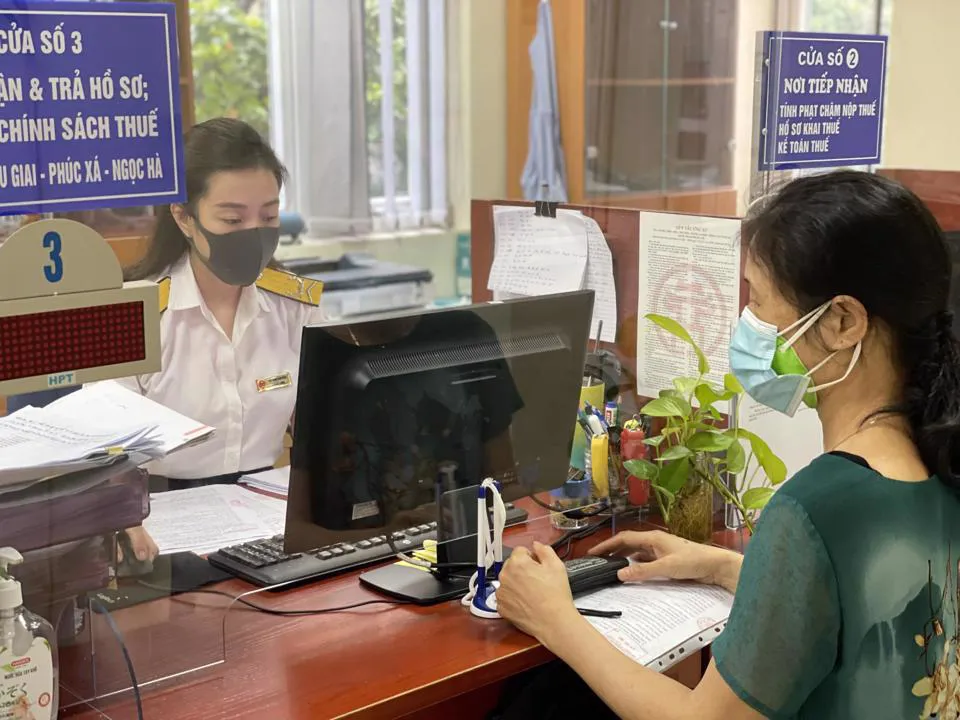
 Locals pay taxes in Ba Dinh District, Hanoi. Photo: Pham Hung/The Hanoi Times

Under the directive, the mayor stressed the Hanoi Taxation Department's need to establish a Steering Committee responsible for implementing the Tax System Reform Strategy to 2030.

The Steering Committee must efficiently reorganize its activities to ensure the timely and effective execution of the tax sector's reform and modernization programs, plans, and contents.

Furthermore, an implementation plan must be drawn up to ensure compliance with the requirements and roadmap of the Ministry of Finance and the General Department of Taxation, in line with the administrative reform program and the city's actual needs.

The Hanoi Tax Department is requested to participate in improving Vietnam's tax policies toward meeting international standards, focusing on anti-transfer pricing, new production and business models emerging in the economy, the digital and sharing economy, smart production, and cross-border transactions.

In addition, tax administrative procedures must be reformed to make them simple, easy to understand and apply while creating conditions that promote production and business development and ensure sufficient revenue for the implementation of socioeconomic development objectives and national security and defense.

Creating best conditions for taxpayers to fulfill their obligations

According to the directive, it is crucial to implement modernization effectively in tax administration. This requires raising awareness of the administrative procedures and professional management processes of tax authorities, renewing and improving the efficiency of the one-stop mechanism for electronic administrative procedures, shortening the processing time for taxpayers, and expanding electronic transactions among businesses and organizations.
The application of information technology in tax administration aligns with ongoing efforts to develop e-Government. This should also include strengthening risk management in tax inspection and examination to prevent and promptly deal with tax fraud, as well as the creation of a competent tax workforce.

The Department of Finance, State Treasury, and Hanoi Customs Department should closely coordinate with tax authorities to implement the Tax Administration Reform Strategy in their jurisdiction, such as modernizing tax collection, authorizing collection orders, and stepping up electronic tax payment.

The application of modern and highly automated information technology is expected to create the best conditions for taxpayers to fulfill their tax obligations.

The Hanoi Tax Department, the Department of Planning and Investment, and the Hanoi Police Department are required to work closely together to simplify administrative procedures, including granting business licenses, tax identification numbers, and business seal registration. The aim is to ensure that organizations and individuals can easily carry out administrative procedures.

The Department of Industry and Trade is also required to collaborate closely with the City Tax Department in supervising representative offices, branches of companies, and foreign traders in the city. The Department will provide the tax authorities with copies of licenses for operation, advertising, trade promotion, and other relevant documents, which will serve as the basis for tax management and collection following regulations.

The Department of Natural Resources and Environment is responsible for enhancing cooperation with tax authorities in providing information and resolving problems related to land policy mechanisms to ensure that land-related budget revenues are fully and promptly collected.

To facilitate national digital transformation, the Hanoi Police Department is requested to work with tax authorities in utilizing the national population database under the Prime Minister in Decision No.06/QD-TTg of January 6, 2022. The agency is in charge of detecting and investigating cases of fraudulent activities, such as the creation of companies to buy and sell VAT invoices or the use of illegal invoices to evade taxes and to control taxpayers who have frozen debts or debts forgiven and recoup tax loss. In addition, the Municipal Police must speed up the processing of tax evasion and fraud cases to discourage people from committing similar acts.
Reactions:
Share:
Trending
Most Viewed
Related news
Hanoi's tax authorities to launch lucky bill program

Hanoi's tax authorities to launch lucky bill program

29 Sep, 21:47

The first selection process for the second quarter would take place on October 15 at the latest, with the invoice’s owner having the opportunity to win prizes of up to VND50 million (US$2,100).

Vietnam Airlines posts record 2025 revenue as international travel fuels profit growth

Vietnam Airlines posts record 2025 revenue as international travel fuels profit growth

Vietnam Airlines reported the highest financial results in 2025, driven by rising international travel and operational efficiency, while outlining ambitious passenger and capacity expansion targets for 2026 amid continued recovery in the regional aviation market.

Hanoi poised to lead low-altitude space economy

Hanoi poised to lead low-altitude space economy

The low-altitude economy is not a distant vision but a reality already taking shape, bringing a rare opportunity for Hanoi to lead the next phase of urban technological transformation.

Vietnam, US to continue reciprocal tariff talks next week

Vietnam, US to continue reciprocal tariff talks next week

Vietnam has reaffirmed its willingness to facilitate greater access for US goods and companies as Hanoi and Washington prepare to hold the sixth round of negotiations on reciprocal tariffs.

Viettel Money added to national public service portal, expanding cashless government payments

Viettel Money added to national public service portal, expanding cashless government payments

Vietnam is expanding cashless public services as Viettel Money joins the National Public Service Portal, helping streamline administrative processing for both citizens and government agencies nationwide.

Vietnam’s online food delivery market jumps 19% in 2025 as duopoly tightens grip

Vietnam’s online food delivery market jumps 19% in 2025 as duopoly tightens grip

Rapid urbanization and app-based lifestyles are reshaping how Vietnamese consumers order meals, with food delivery platforms expanding quickly in 2025 amid rising competition, service innovation and growing reliance on digital channels for everyday dining across major cities.

Four competitive pillars shape HCMC-based international financial center vision

Four competitive pillars shape HCMC-based international financial center vision

Currently ranked 95th out of 120 cities in the Global Financial Centres Index, Ho Chi Minh City aims to reach the top 75 by 2035 and the top 50 by 2045.

FPT opens advanced chip testing plant, deepening Vietnam’s role in global semiconductor chains

FPT opens advanced chip testing plant, deepening Vietnam’s role in global semiconductor chains

FPT has announced the establishment of an advanced semiconductor testing and packaging plant in the northern province of Bac Ninh, expected to begin operations this year, marking a significant step toward completing Vietnam’s semiconductor value chain.

Japanese food companies step up focus on Vietnam market

Japanese food companies step up focus on Vietnam market

As Vietnam’s income levels rise, consumer demand has gradually shifted toward higher-quality and more diverse food products.