Hanoi's NA Deputy calls for sensible tax policy during economic hardship
Even when the pandemic is fully contained, its consequences would last for many years to come.
Vietnam should continue to pursue a sensible tax policy and nurture the recovery of sources of budget revenue via a push for a soon resumption of economic activities.
| National Assembly Deputy Vu Thi Luu Mai. Source: quochoi.vn |
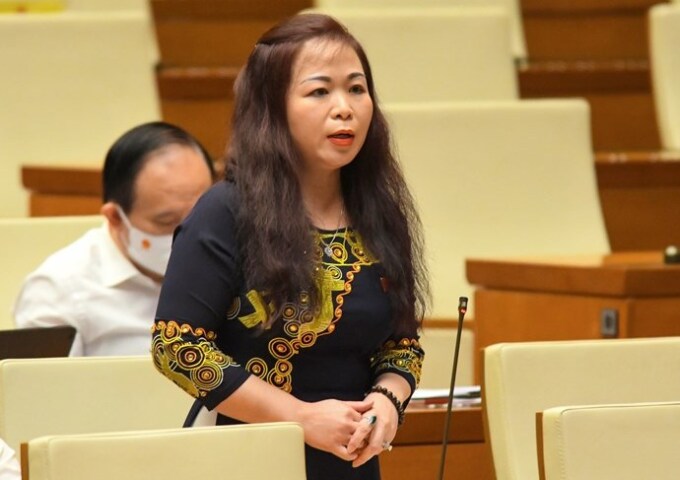
National Assembly Deputy Vu Thi Luu Mai from Hanoi gave the remarks during a NA discussion session held today [November 8].
Mai referred to a recent Government report mentioning the limitations of incorporating social policies into tax management policies, meaning “Government agencies would refrain from tax waiving or lowering in the next three years.”
“The Government should give a serious thought regarding this proposal,” said Mai.
According to the NA deputy, who also serves as the Vice Chairwoman of the NA Finance-Budget Committee, the neutrality of tax policies is necessary, but it would be unfeasible in the current context.
“Even when the pandemic is fully contained, its consequences would last for many years,” Mai suggested.
Meanwhile, the tax cut has been seen as an effective measure to aid economic growth for the past three years. Many deputies have voiced their support for a tax waiving program in case the NA approves a resolution on a new stimulus package in 2022.
Mai also expressed concern over the widening income gap, especially as the most socially vulnerable groups and also the poorest are hit the hardest by the pandemic.
She cited a recent report by the World Bank that such a gap would be further widened without effective and drastic solutions. A report from the General Statistics Office revealed the gap between the richest and poorest in 2016 was 9.8 times, which had been increased to 10.2 in 2019, and down to 8 in 2020.
“A comprehensive survey is needed to have a better insight on the actual social situation and difficulties that the people are facing. Existing social relief programs delivering a few hundreds of dollars to a person are significant, but they are only short-term solutions,” Mai said.
“Only when there is a long-term approach to create stable and sustainable jobs for the people then we can reduce the income gap,” Mai said.
| A Deputy and Chairman of the Hanoi Labor Federation Nguyen Phi Thuong. |
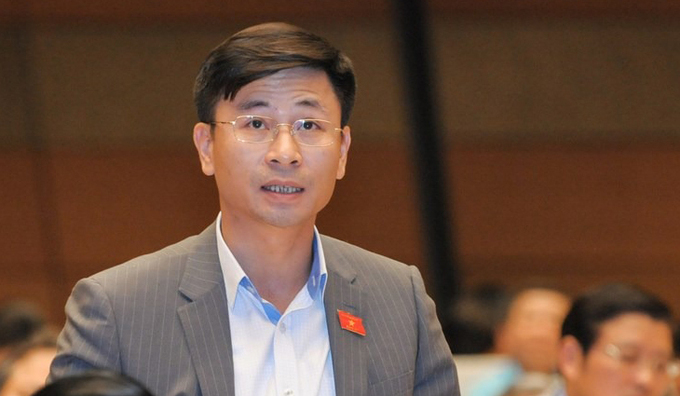
Meanwhile, NA Deputy and Chairman of the Hanoi Labor Federation Nguyen Phi Thuong pointed to the fact that the fourth Covid-19 outbreak has dealt a major hit on companies operating in industrial parks, which resulted in hundreds of thousands of businesses temporarily suspending operation and millions of people losing jobs.
“The pandemic has exposed many social issues, especially housing issues for workers,” Thuong said.
He added the majority of workers coming to major cities are renting houses of bad conditions with high risks of infection, environmental pollution, and insecurity.
“There should be more policies to address social housing, including special mechanism in building houses for workers or people of low income,” he noted, saying the labor federation could join the policy-making process, or support a financial package from the Government for this purpose.
Thuong said the majority have no savings once they are thrown off the payroll, which means the income is too low for them to save for future spending.
He suggested the Government push for a salary-raising scheme, noting such a move has been stagnated for the past two years.
More breakthrough solutions for enterprises
Deputy Hoang Van Cuong, Vice Principal of the National Economics University, warned the Vietnamese economy may face risks of lagging behind during the global economic recovery process.
“It is imperative for the Government to have breakthrough measures to address the ongoing hardship that the business community is facing,” Cuong said.
| Deputy Hoang Van Cuong, Vice Principal of the National Economics University. |
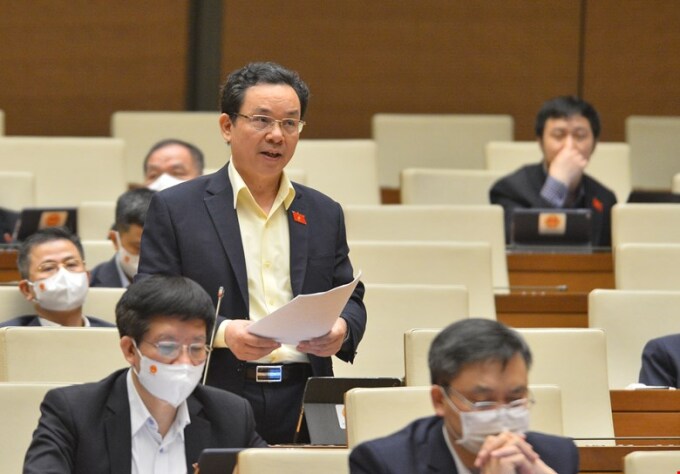
Cuong suggested a policy that allows businesses to access loans at lending rates close to the inflation rate, noting business operations in the post-pandemic period are of huge risks and profit could not cover the current high-interest rates in the market.
In addition to public investment to boost growth, Cuong expected the Government to have a mechanism of ordering local firms for products in priority fields including railway, maritime economy, and digital transformation.
According to Cuong, given the country’s geographic nature, most large cities in Vietnam are in need of developing urban railway projects.
“Vietnam should not seek loans and hand over the construction for foreign contractors to build separate urban railway projects. The long-term consequences would be the lack of consistency and incompatibility between projects, as well as dependence on foreign suppliers,” Cuong added.
Given the Government’s contract order and commitment for market shares, Cuong expected local firms would be active in cooperating with foreign investors and contribute to the modern domestic railway industry.
Meanwhile, Cuong stressed the necessity to form maritime logistical chains with connection to international seaports.
“Van Phong seaport could become an international transit hub comparable to Singapore,” he said.
Not only such ports could help Vietnam realize its potential in the maritime economy, but also create the foundation to ensure national security and sovereignty in the South China Sea, Cuong said.
The third priority is the significance of successful digital transformation for Vietnam to create breakthroughs in Industry 4.0.
“Vietnam’s own digital infrastructure and technologies that could provide the country a jumpstart and protect national digital assets,” he said.
In this regard, Deputy Nguyen Thi Mai Phuong from Gia Lai Province said Vietnam is still lacking a comprehensive legal framework for digital transformation.
“Without sufficient legal basis, Vietnam would face huge challenges to realize the goal of the digital economy making up 20% of the GDP by 2025,” she said.