It's imperative for Hanoi to develop public transport: Experts
Experts stress the importance of changing travel habits among residents.
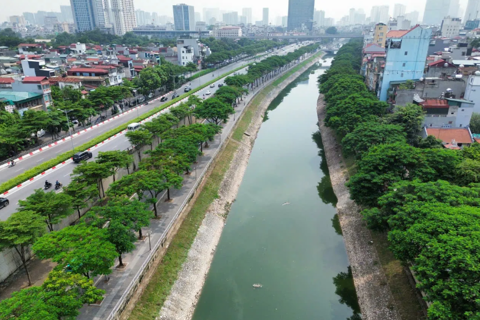
As vehicle emissions are one of the main causes of air pollution in urban areas, experts have said Hanoi needs to change the habits of residents by developing a mass transit network to reduce the aforementioned source of carbon dioxide.
Dr. Phan Le Binh, a traffic expert, talked with The Hanoi Times that although Hanoi has piloted emission control through a registration system, the most fundamental solution is to change people's vehicle usage habits.
"Nowadays, even when traveling short distances, people often use private vehicles instead of choosing buses, so many vehicles are operating simultaneously, especially in central districts," Binh said.
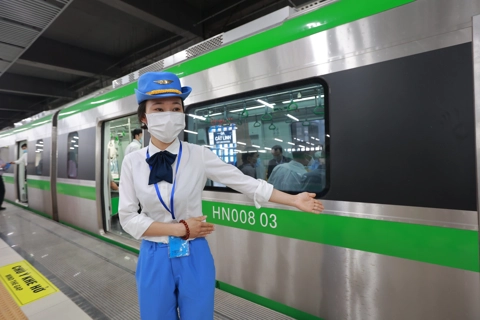
He stressed that the city needs to develop the subway and skytrain systems into a public transport network that is conveniently connected and meets people's travel demands.
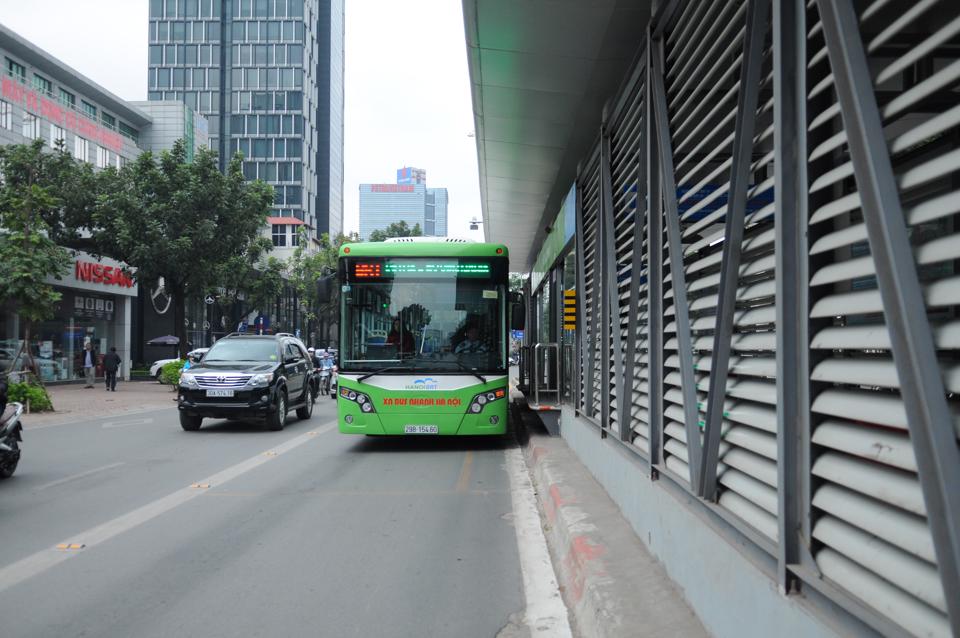
Using public transport contributes to reducing traffic congestion and environmental pollution. Photo: Pham Hung/The Hanoi Times |
"In addition, Hanoi needs to move schools and public offices out of the downtown soon to alleviate the population density in the city center," Binh told The Hanoi Times.
To encourage the development of vehicles using environmentally friendly fuels, such as electric bikes/motorcycles/cars, the Vietnam Chamber of Commerce and Industry (VCCI) has proposed a lower power tariff for this mode of transport when consulted on the Prime Minister's Draft Decision on electricity retail tariff.
Accordingly, VCCI believes that electric vehicles are being encouraged by the Vietnamese Government to help reduce air pollution in urban areas. However, the current price mechanism has not favored the use of electric vehicles.
"Research in developed countries shows that some utilities have started to offer pricing packages specifically for electric car charging. Therefore, VCCI proposed to the drafting agency to consider offering a lower price for the group of customers using electric vehicles. The electricity price will be divided according to the time of day," Binh added.
He noted that developing electric vehicles and infrastructure for this means of transport are aimed at reducing the environmental pollution.
According to Assoc. Prof. Dr. Nguyen Van Son, an expert from the Institute of Occupational Health and Environment, transportation is the leading cause of air pollution in urban areas, accounting for 70% of the total amount of dust and emissions to the atmosphere.
"This source of pollution has a negative impact on public health, causing some 3.8 million premature deaths a year. Among them, 20% are due to respiratory diseases and cancers related to dust exposure. In addition, people you would run into a number of problems related to diabetes, cardiovascular issues, lung, and liver; and suffer strokes and hormonal disorders," Son shared with The Hanoi Times.
Therefore, he emphasized that Hanoi needs to promote the development of vehicles using green fuel and public transport to reduce traffic congestion and environmental pollution.
According to the Hanoi Committee of Traffic Safety, the total number of vehicles registered in the city as of November 2022 has reached nearly 8 million vehicles, including more than 1 million cars and over 6.5 million motorcycles, only 183,000 are electric motorbikes.
However, the number of newly registered vehicles continues to increase. Specifically, from the beginning of the year to November, the city has registered almost 282,000 vehicles, which means that air quality will continue to be threatened, the committee warned.