Hanoi promises tax exemptions, deductions after Yagi storm
The move is aimed at helping local taxpayers to recover from the tropical storm's aftermath.
The Hanoi Department of Taxation will provide payment deferrals, exemptions, and tax reductions for taxpayers affected by natural disasters, in a move seen as supportive and to alleviate difficulties for businesses and taxpayers in the city.
| A factory damaged by Typhoon Yagi in Hanoi. Photo: The Hanoi Times |
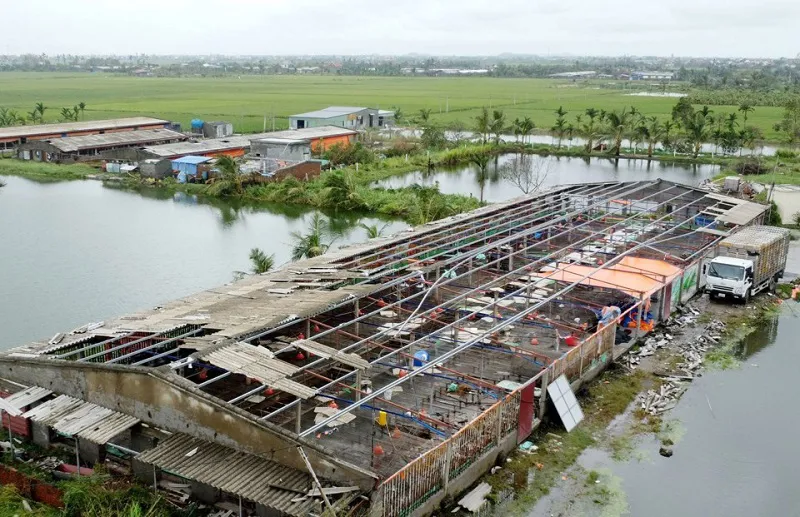
In a recent open letter to businesses in the capital, the agency acknowledged that Typhoon Yagi had caused significant damage to organizations, individuals, and businesses, with long-term implications for their recovery.
Accordingly, the exemption from interest on arrears and fines for administrative tax offenses may be reduced or waived for taxpayers who are unable to submit their tax returns on time due to natural disasters, calamities, epidemics, fires, or unforeseen accidents.
Taxpayers are still required to pay interest on arrears as prescribed, but interest may be waived in cases of force majeure.
If taxpayers are fined for tax violations and suffer losses due to force majeure, the fine may be waived. The total amount of the fine exemption will not exceed the value of the damaged assets or goods, after deducting insurance or compensation, if any.
In addition, tax payment deferral will be considered based on taxpayers' requests if their material damage directly affects their operations, which constitutes force majeure. The tax deferral period will not exceed two years from the tax filing deadline.
Specific exemption and reduction policies apply to different types of taxes. VAT and input tax on goods and services used for the production and trade of VAT-liable goods and services are fully deductible, including VAT on lost VAT-liable goods that are not compensated.
A tax reduction may be granted to special consumption taxpayers who face difficulties due to natural disasters or unexpected accidents.
The reduction will be determined on the basis of actual losses, but will not exceed 30% of the tax payable for the year in which the loss occurs, and will not exceed the value of the damaged assets, after compensation, if any.
For corporate income tax purposes, if a company incurs uncompensated expenses related to losses caused by natural disasters, epidemics, fires, or other force majeure, these expenses are deductible when calculating taxable income.
Taxpayers who find themselves in difficulties due to similar causes that affect their ability to pay taxes may have their personal income tax reduced in proportion to their losses, but the deduction will not exceed the tax due.
In the case of non-agricultural land use tax, taxpayers who are affected by force majeure events and whose damage to land and property exceeds 50% of the taxable value, or between 20% and 50%, may be entitled to a tax reduction.
The Hanoi Department of Taxation's latest move is in line with the Prime Minister's directive issued on September 10 to implement policies on tax deferrals, exemptions, and reductions for organizations, individuals, and businesses affected by storms and floods by the law.