Hanoi’s village seeks World Crafts Council recognition
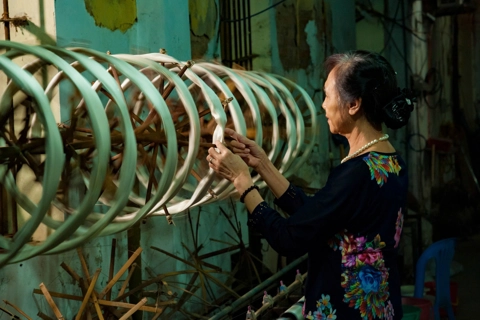
Home to hundreds of mother-of-pearl and lacquerware artisans, including many nationally recognized, Chuyen My continues to exemplify the resilience and creativity of Vietnam’s traditional villages.
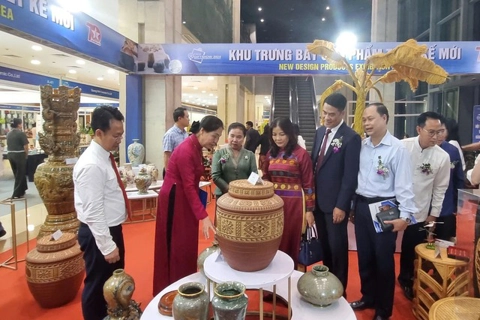
THE HANOI TIMES – Hanoi’s 1,000-year-old Chuyen My Mother-of-Pearl Mosaic Craft Village is working toward international recognition as it prepares to join the World Crafts Council's Global Creative Cities Network.
The Hanoi Department of Agriculture and Environment, during a working session on August 5, emphasized that authorities in Chuyen My Commune must complete several key infrastructure and cultural projects within this month to support the commune’s bid for international recognition.
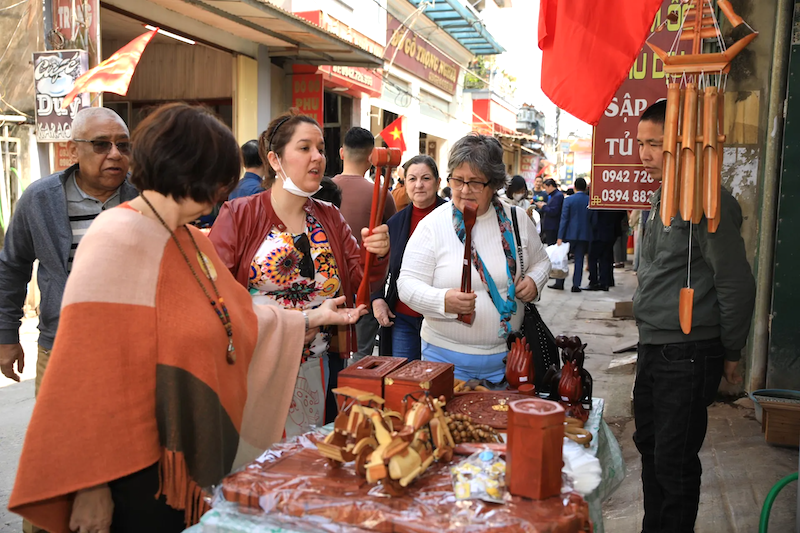
Foreign visitors at Chuyen My Mother-of-Pearl Mosaic Craft Village. Photo: Nguyen Truong/Kinh te & Do thi Newspaper
The department also instructed the commune’s authorities to finalize their application dossier and meet the criteria set by the World Crafts Council (WCC) for membership in its prestigious global network.
In addition, the commune must complete physical upgrades and highlight the cultural value of each handcrafted item by organizing thematic displays, sharing the stories behind each product, and maintaining a clean, green, and well-managed village environment.
Speaking at the meeting on August 5, Hoang Thi Hoa, Head of the department’s Rural Development Division, said becoming a member of the global network will open up opportunities for branding, international promotion, and development of local products.
“It will also strengthen Hanoi’s international integration in preserving and innovating traditional cultural values,” she said.
Nguyen Thi Thuy Huong, Vice Chairwoman of Chuyen My Commune People’s Committee, said the commune is currently building a traditional craft room and guest reception space at the village’s ancestral temple. Artifacts, historical photographs, official certificates, and drawings by artisans are being collected for public display.
At the same time, a museum-cum-meeting space is under construction at the local OCOP [One Commune One Product] Design and Innovation Center to house illustrated legends, historical narratives, and craft demonstrations.
The commune also launched two vocational training points and identified key locations for assessment, such as the ancestral temple, Trung Hamlet’s church, the Thon Thuong Craft Village Association, and households actively engaged in production.
Participants at the meeting also discussed additional efforts needed to meet WCC criteria, including artifact preservation, environmental sanitation, and logistical preparation for the upcoming evaluation.
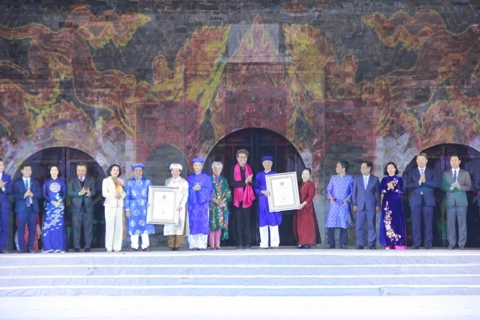
In late 2024, Hanoi's Bat Trang Pottery Village and Van Phuc Silk Village became the first traditional crafts communities in Vietnam to gain membership status from the World Crafts Council.
|
Hanoi is home to 1,350 craft villages, preserving 47 out of Vietnam's 52 traditional trades. To support their growth, the city is rolling out a comprehensive development plan for 2025-2030, with a vision to 2050 to boost product quality, expand global reach, and celebrate cultural heritage through international cooperation. The Hanoi Department of Agriculture and Environment is working closely with the World Crafts Council to showcase local craftsmanship at major global exhibitions, enhance production capacity, and offer specialized training. By the end of this year, Hanoi aims for craft villages to contribute 8.5% to the city's industrial output. Infrastructure in 50 villages will be upgraded, and pollution in the most affected areas will be addressed. Looking ahead to 2030, the city plans to support over 10,000 businesses, create 50,000 rural jobs, and boost handicraft exports by 5%-8%, reinforcing its position as a hub of traditional craftsmanship. |