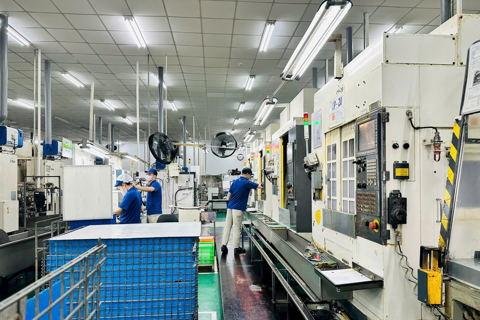
Hanoi selected as headquarters of Vietnam National Multi-Project Wafer Coordination Center
Hanoi is consolidating its role in Vietnam’s high-tech strategy as the country accelerates efforts to build a self-sustaining semiconductor industry. A newly established national platform will support chip development from design to pilot production, while strengthening talent pipelines and global partnerships.
THE HANOI TIMES — Hanoi will house the Vietnam National Multi-Project Wafer Coordination Center, a national hub created to support chip design, pilot manufacturing, talent development and international cooperation as Vietnam builds a complete semiconductor ecosystem.
Under a newly issued decision by the Ministry of Science and Technology, the facility will operate as a public service unit under the ministry’s Authority of Information Technology Industry.
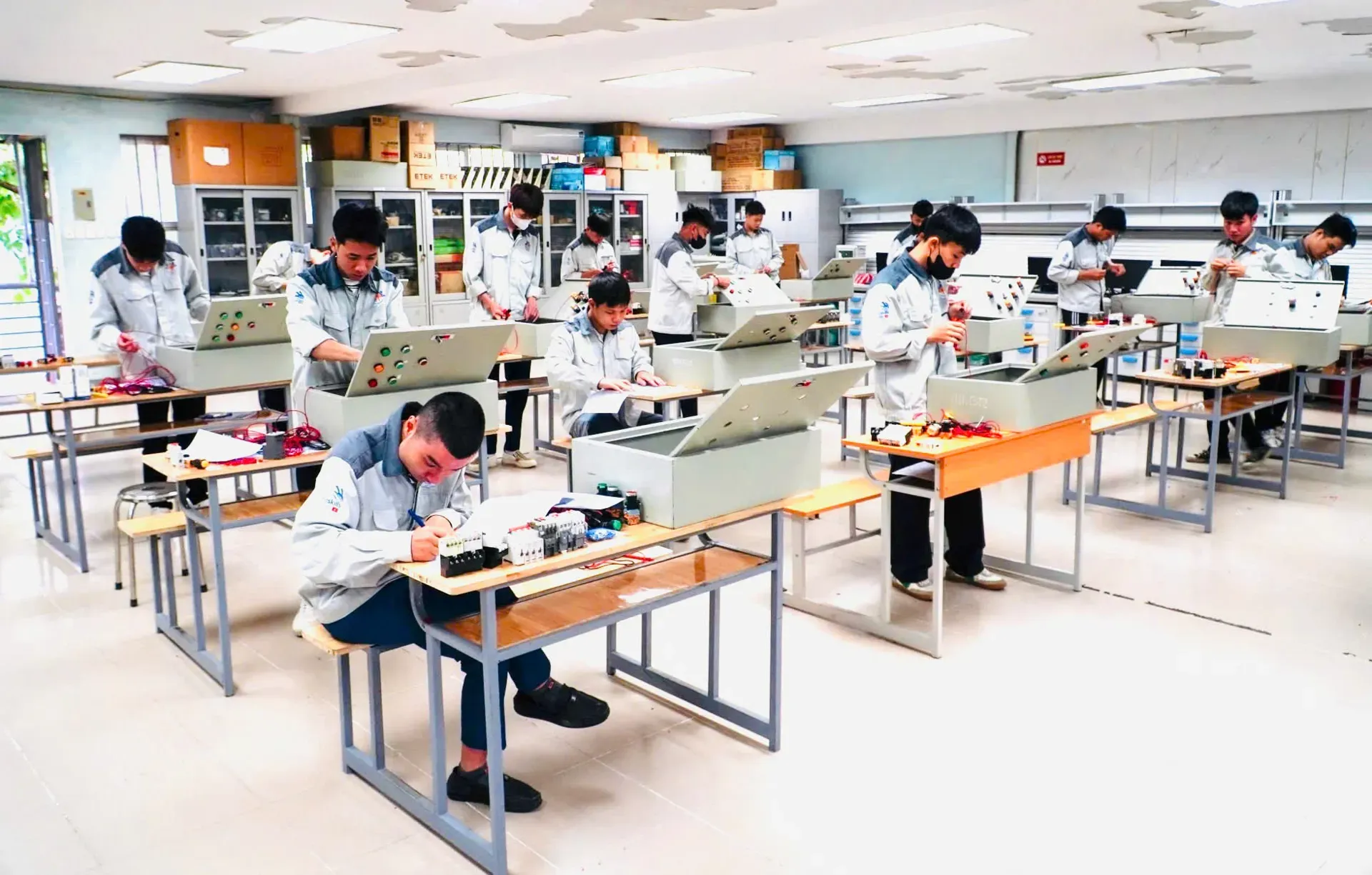
Students learn about semiconductor industry at the Hanoi Unversity of Science and Technology. Photo: Tran Oanh/The Hanoi Times
This national unit will provide essential tools and infrastructure for semiconductor design, including electronic design automation software, design libraries and technical support throughout the chip development cycle.
It will also coordinate pilot manufacturing activities to narrow the gap between design and early-stage production.
A core task of the platform involves linking with fabrication plants, packaging and testing facilities and technology partners to support pilot chip output.
By strengthening these connections, Vietnam aims to lower entry barriers for local designers and startups while improving access to global manufacturing capacity.
Beyond production support, the initiative will play a leading role in workforce development.
It will organize training courses and hands-on programs, while working closely with universities to strengthen semiconductor design education and applied learning. These efforts aim to build a deeper pipeline of skilled engineers for the industry.
The national facility will also assist startups and enterprises seeking to commercialize semiconductor products.
Support will include links to investment funds and national financing programs, post-fabrication testing and performance evaluation and technical validation services to improve market readiness.
International cooperation stands as another central pillar of the institution’s mandate. It will develop global partnerships by building networks with organizations, institutions and enterprises from leading semiconductor countries.
At the same time, the platform will promote data sharing and open technologies by encouraging the development of open chip-design libraries and fostering a knowledge-sharing community among designers and researchers.
In line with legal regulations, the public service unit will deliver pilot manufacturing services, provide access to design software, share intellectual property design libraries, conduct technical verification and offer training and testing services to support semiconductor development nationwide.
The Vietnamese government identifies semiconductors as a strategic technology critical to boosting national competitiveness, driving economic growth and strengthening Vietnam’s global standing.
Vietnam’s advantages include its strategic position in Southeast Asia, proximity to major global chip manufacturing centers and its ability to attract supply chain relocation during global restructuring.
A high level of economic openness and an extensive network of free trade agreements further enhance the country’s appeal to global technology corporations.
According to the Ministry of Science and Technology, Vietnam hosts more than 170 foreign-invested semiconductor projects with total registered capital of nearly US$11.6 billion, concentrated mainly in chip design and packaging and testing.
The country is also home to about 60 chip design firms, eight packaging and testing projects and more than 20 companies involved in materials and equipment manufacturing and supply.
Vietnam benefits from a large electronics manufacturing base, with hardware exports exceeding $132 billion in 2024 and a young technology workforce of about 1.9 million people, including more than 7,000 chip design engineers.
Major semiconductor producers operating in Vietnam include Samsung, Intel, Amkor, Foxconn and Hana Micron, all of which continue to expand their presence.
Other global technology leaders such as NVIDIA, Qualcomm, Coherent and Marvell have selected Vietnam as a strategic base for semiconductor research, development, manufacturing and supply chain expansion.