Hanoi showcases craft village heritage at Great Souvenirs 2025
The fair runs until August 17 at the UNESCO-recognized Thang Long Imperial Citadel, Ba Dinh Ward, Hanoi.
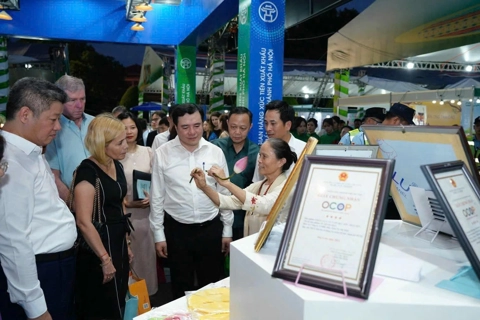
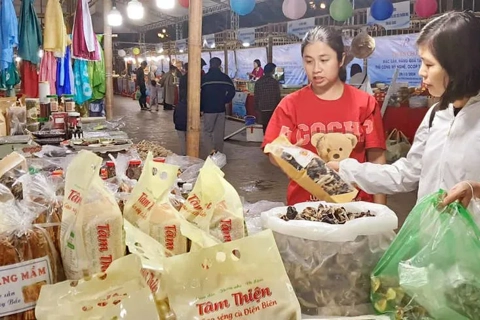
THE HANOI TIMES — Hanoi Great Souvenirs 2025 is welcoming visitors to a vibrant celebration of craftsmanship, culture, and creativity, with 100 booths featuring One Commune One Product (OCOP) goods and finely handcrafted items from across the city.
Held at the historic Imperial Citadel of Thang Long, the event offers not only a shopping experience but also an immersive journey into the capital’s centuries-old traditions.
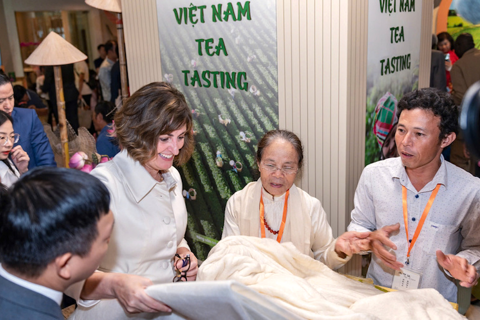
Visitors can explore an extensive array of displays, try their hand at traditional craft-making in demonstration zones, and wander through cultural and artistic spaces that reflect the essence of Hanoi, a city of a thousand years of civilization, a city for peace and a UNESCO Creative City.
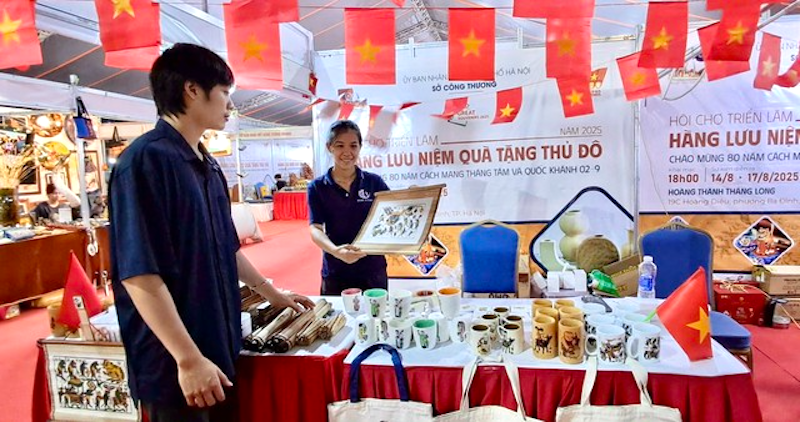
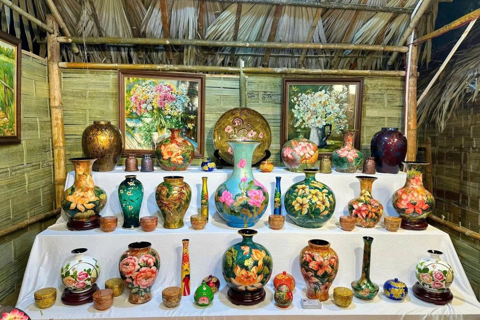
A booth displaying handcrafted items at the fair. Photos: VGP
The event displays finely crafted products, promoting the image of the capital as a City of a thousand years of history and civilization - City for Peace - Creative City.
Beyond exhibitions, the fair connects handicraft businesses, identify market trends, and develop signature gift lines.
Craft expert Vu Hy Thieu said Vietnam lacks compact, travel-friendly products for tourists and it should have specialized items that are both intricate and easy to carry.
The fair also offers Hanoi’s craft villages a chance to tap into emerging consumer trends, especially eco-friendly products that combine cultural elements with practical uses.
Speaking at the opening ceremony on August 14, Vo Nguyen Phong, Director of the Hanoi Department of Industry and Trade, said that Hanoi is a convergence of the nation’s cultural heritage.
Known for its rich architecture, world-famous cuisine and unique handicrafts, the city is home to artisans whose skills have been honed over generations.
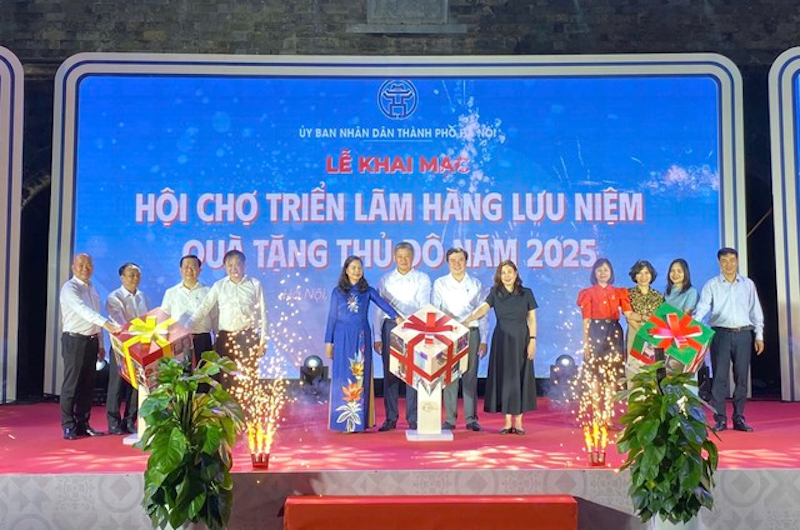
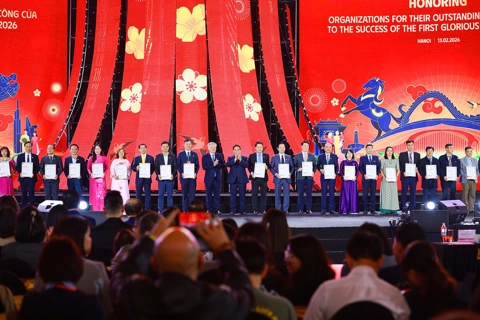
Deputy Minister of Industry and Trade Nguyen Sinh Nhat Tan and Vice Chairman of the Hanoi People's Committee Nguyen Manh Quyen cut the ribbon to open the fair.
Hanoi is home to more than 1,350 craft villages, with around 176,000 households engaged in traditional trades, accounting for 45% of all craft villages nationwide. Key sectors include woodworking, bamboo and rattan weaving, ceramics, glassware, textiles, embroidery, basketry, and small-scale metalwork.
Many of these products have successfully penetrated demanding markets such as the United States, the European Union, Japan, Russia, and the Middle East. Beyond their export value, they serve as cultural ambassadors, embodying the craftsmanship, creativity, and traditions of Vietnam.
These craft village products preserve cultural identity and generate jobs, increase incomes, and make a significant contribution to the export turnover of both Hanoi and Vietnam as a whole.
The Hanoi Great Souvenirs 2025 is part of a series of celebrations marking the 80th anniversary of the August Revolution (August 19) and National Day (September 2).
The choice of the Imperial Citadel of Thang Long as the venue adds symbolic weight. Being a UNESCO World Heritage Site, the citadel is a living testament to the resilience and sophistication of Vietnamese culture. Hosting the fair within its ancient walls not only enhances the visitor experience but also connects each handcrafted item to a larger historical narrative.
Visitors can witness artisans at work in live demonstrations, shaping clay, weaving rattan, embroidering silk, or carving wood. Interactive activities allow tourists, especially younger generations, to try traditional techniques under the guidance of masters, creating a personal and memorable link to Hanoi’s heritage.
Organizers hope Hanoi Great Souvenirs will become an annual tourism highlight, attracting domestic and foreign visitors alike. The vision is to turn the event into a signature cultural festival that boosts local consumption, strengthens the craft village brand, and keeps traditional skills alive for future generations.
As Hanoi navigates the challenges of globalization, events like this underline an important truth: heritage is not static. It evolves, shaped by new ideas, technologies, and consumer preferences, yet retains the soul of its origins.
For tourists strolling through the fair’s colorful aisles, each handcrafted item carries the warmth of the artisan’s hand, the depth of Vietnam’s cultural memory, and the promise that Hanoi will remain, as it has for centuries, a city where tradition and creativity meet.