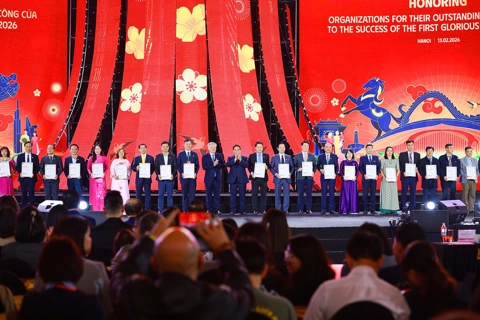
Hanoi strengthens three-pillar collaboration to develop human resources
Hanoi is strengthening State-business-school collaboration to develop a skilled workforce and boost industrial competitiveness.
THE HANOI TIMES — Collaboration between the State, businesses and schools – the “three pillars” – is vital to building a skilled workforce for Hanoi’s industries and advancing Resolution No. 71-NQ/TW on breakthroughs in education and training.
Nguyen Van, Vice Chairman of the Hanoi Supporting Industry Business Association (HANSIBA), shared his views with Cong Thuong (Industry and Trade) Newspaper.
Why do many enterprises in supporting industries and key sectors struggle to recruit skilled engineers and technicians?

Nguyen Van, Vice Chairman of the Hanoi Supporting Industry Business Association
Hanoi’s key industrial enterprises are expanding steadily, with 103 companies recognized for their core products. They drive GDP growth, boost exports, and lead the city’s industrial development.
A decisive factor for their sustainable growth is access to skilled human resources.
A decisive factor for sustainable growth is access to quality human resources. Skilled workers with expertise, creativity, and the ability to master modern technology are essential for higher productivity, market expansion, and brand building.
However, many businesses face difficulties in recruitment.
For instance, ETEK Automation Solutions JSC, a leading automation company, often spends three to four months hiring a qualified engineer. Rising demand, competition from foreign-invested firms, and labor migration to southern Vietnam make recruitment even harder.
Vietnam Han High-Tech Manufacturing JSC, which produces network cables and fire-resistant electrical wires, also depends heavily on high-quality staff to sustain growth and brand reputation. Finding suitable talents remains difficult.
For small and medium-sized enterprises, the problem is even clearer. Training programs often fail to match real business needs, while top graduates tend to choose larger corporations.
How should schools and businesses design “tailored training” programs to achieve real results?
With rapid technological change, digital transformation, and deeper global integration, high-quality human resources are more critical than ever.
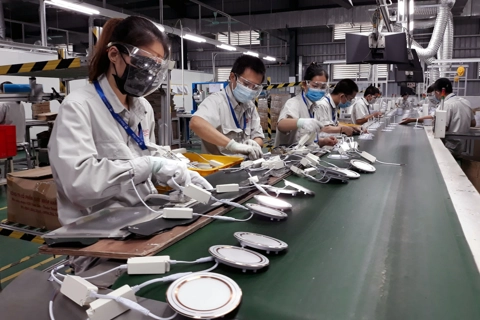
Many graduates lack practical skills, foreign language ability, and familiarity with modern production lines. Businesses must spend time retraining them, showing the urgent need for stronger cooperation between schools and employers.
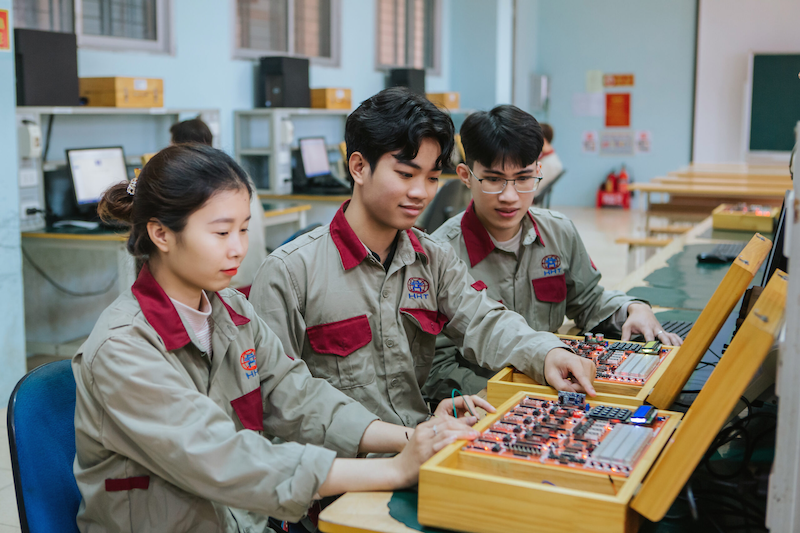
Students from the Hanoi High-Tech Vocational College. Photo courtesy by the college
Many graduates lack practical skills, foreign language ability, and familiarity with modern production lines. Businesses must spend time retraining them, showing the urgent need for stronger cooperation between schools and employers.
For industrial enterprises, human resources are not only the backbone of production but also a strategic asset shaping competitiveness, innovation and integration capacity. They need workers who can quickly adapt, master new technologies, raise productivity and meet international standards.
Companies should work with schools to design curricula, close the gap between theory and practice and deliver industry-ready training. Businesses can also contribute by teaching or sharing real-world experience.
Most importantly, a sustainable cooperation framework must be built among three key players: the State as policy enabler, schools as trainers and businesses as both users and partners in workforce development.
This tripartite model will help create a skilled workforce for Hanoi’s core industries, enhance competitiveness and support the city’s integration into global markets. It also directly contributes to the Politburo’s Resolution 71-NQ/TW on breakthroughs in education and training, signed by Party General Secretary To Lam on August 22, 2025.
To achieve breakthroughs in workforce development, how should the State, businesses, and schools coordinate?
Coordination must move from discussion to practical action. In 2024, the Hanoi Department of Industry and Trade organized a conference connecting core industrial enterprises with universities, colleges and vocational schools.
This event produced multiple agreements that laid the foundation for stronger workforce development. This year, the model advanced further with on-site recruitment, allowing companies to meet candidates, receive applications, hold interviews and hire directly at the event.

A job fair at the Hanoi College of Electronic and Electro - Refrigeratory Technics' event on September 11. Photo courtesy by the school
Students also benefited by showcasing their skills and securing real job opportunities. Training institutions began inviting businesses to help design curricula, ensuring that theory, practice and professional skills match industry needs.
A standout example is East Asia University of Technology, which has invested in modern laboratories that meet international standards. Its students gain hands-on training and many companies value their practical skills and professionalism.
The business community has also played an active role. Since its founding four years ago, the Hanoi Association of Main Industrial Products (HAMI) has focused on linking enterprises with schools.
Similarly, HANSIBA and its members, with support from the Hanoi Department of Industry and Trade, have strengthened connections with vocational institutions to ensure a steady supply of skilled workers.
As a result, many graduates from schools such as Hanoi High-Tech Vocational College, Hanoi Community College, and Hanoi College of Electronic and Electro-Refrigeratory Technics are now part of a young, creative and capable workforce serving industrial production and supporting industries.
The demand for skilled labor remains high. Closer cooperation between the State, businesses, and schools is vital for Hanoi’s sustainable growth and successful global integration.
Strengthening this “three-party linkage” will help realize national policies and build a stronger capital.
Thank you for your time!