14TH NATIONAL CONGRESS OF THE COMMUNIST PARTY OF VIETNAM
Log in
Business

Hanoi suburb helps OCOP overcome raw material shortages

Many localities in Chuong My District have been recognized as traditional craft villages, providing materials for the production of high-quality items.

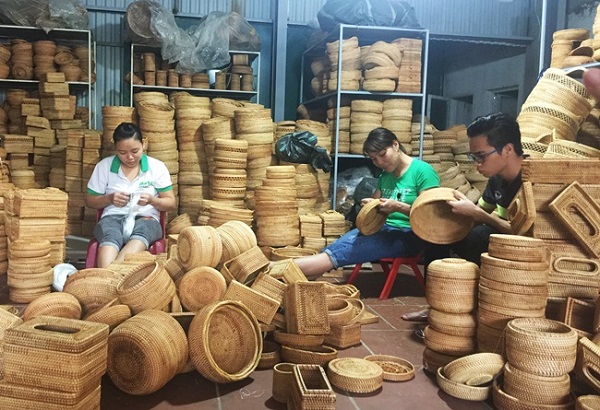
Chuong My, an outskirt district of Hanoi, has seven bamboo and rattan villages holding a significant role in developing OCOP (One Commune One Product) items. 

 Local workers at the Phu Vinh Bamboo and Rattan Weaving Village in Phu Nghia Commune. Photo: The Hanoi Times

Being part of the OCOP program, the district benefits locals by creating jobs while preserving these crafts.

Tong Van Thai, Head of the district’s Economic Division said despite advantages, the bamboo and rattan businesses in Chuong My District are currently struggling with raw material shortages.

Every year they need nearly 600 tons of rattan, 700 tons of bamboo, 500,000 bamboo shoots, 100,000 small bamboo trees, and 500 tons of sedge. However, the dwindling supply of raw materials and price controls by importers, have resulted in lower incomes for those in the weaving industry, Hai told Hanoimoi Newspaper.


"Bamboo and rattan used to be readily available in the northern mountainous provinces but now we have to import from Laos, Cambodia, and Indonesia with high prices that drive up input costs," said artisan Nguyen Van Trung, Chairman of the Phu Vinh Bamboo and Rattan Association.


To address challenges, Trung and other local producers are working with scientific institutions to develop alternative raw materials from plants such as papaya, pumpkin and banana. 

Sharing the same idea, Tong Van Thai, Head of the district's Economic Division said that skilled artisans have used these materials to produce handiworks that meet standards for export and have received positive feedback from customers.


The local authorities have also sought to establish stable resource regions.

Leveraging local advantages

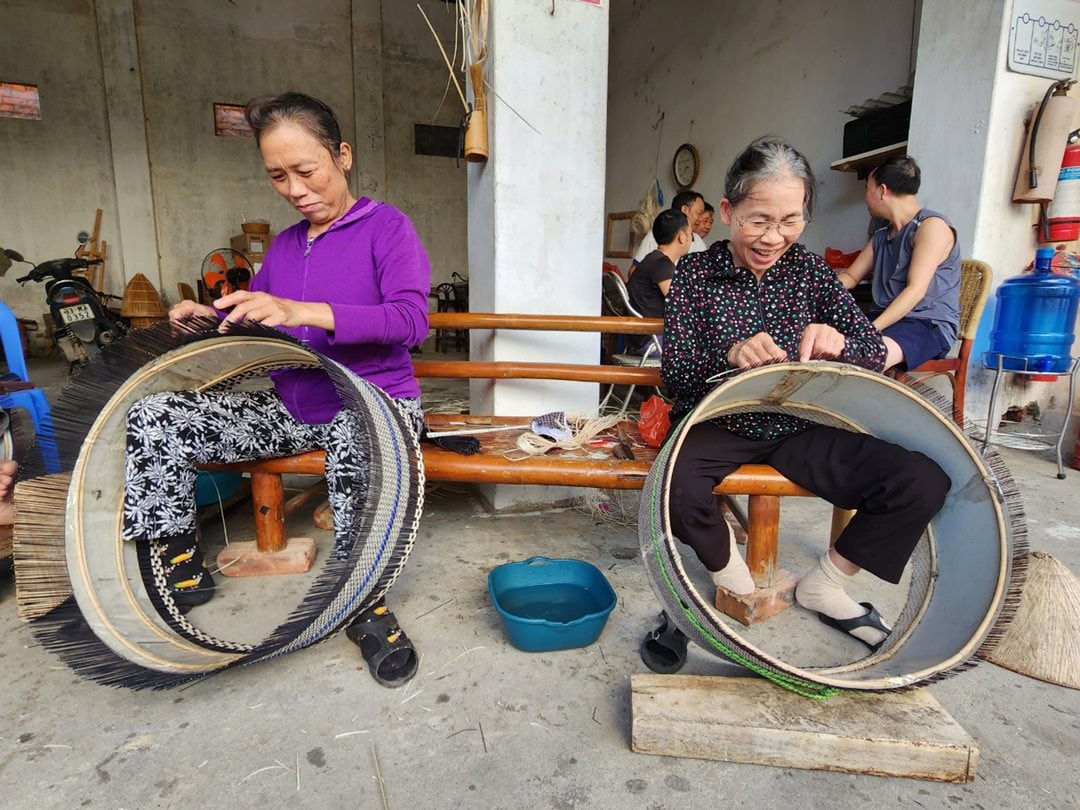
 Artisans from the Phu Vinh Bamboo and Rattan Weaving Village have created new marketable products. Photo: Hanoimoi Newspaper

Local artisans have changed designs to meet market demands, resulting in a number of deals for exports to different countries. Many of these products have earned three or four-star ratings for the OCOP goods.


The district is also home to four villages that produce wooden handicrafts, one that makes conical hats, one that specializes in stone carving, one in agricultural processing, and one in embroidery, presenting a significant opportunity for OCOP's development.


To date, Chuong My District boasts 183 OCOP-certified products and 23 more items have been added to the evaluation for the 2024 OCOP product ranking.

Among them, May Viet Trading Co., Ltd. in Phu Nghia Ward stands out with ten products recognized with four-star OCOP ratings. 


Artisan Hoang Van Hanh, Director of May Viet Trading Co., Ltd. in Phu Nghia Ward, said the company's rattan and bamboo products are now exported worldwide and are popular with international tourists from Japan, South Korea, and China. 
Reactions:
Share:
Trending
Most Viewed
Related news
Suburban Hanoi Tet Fair drives domestic consumption and OCOP promotion

Suburban Hanoi Tet Fair drives domestic consumption and OCOP promotion

As Lunar New Year shopping accelerates, a suburban Hanoi commune is using a consumer goods exhibition to connect local producers with residents and strengthen demand for high-quality Vietnamese products.

Quoc Oai launches creative OCOP Center boosting craft production and tourism

Quoc Oai launches creative OCOP Center boosting craft production and tourism

The launch of a Creative Design and One Commune One Product (OCOP) Promotion Center in Quoc Oai Commune marks a step toward sustainable rural economic development, connecting traditional craft village products with tourism while enhancing market access and promoting local cultural identity.

Vietnam tech groups back state push on innovation, digital and green transition

Vietnam tech groups back state push on innovation, digital and green transition

Vietnam is counting on its technology sector to power the next phase of economic growth, with business leaders committing to innovation, digitalization and green transition under newly launched emulation movements.

Hanoi brings "Made in Vietnam" for Tet shopping 

Hanoi brings "Made in Vietnam" for Tet shopping 

The programs aim to stimulate local trade and meet Tet (the Lunar New Year) shopping demand, while supporting the growth of Hanoi’s cultural industries and tourism.

From clay toys to tea: culture shapes shopping at Spring Fair 2026

From clay toys to tea: culture shapes shopping at Spring Fair 2026

Beyond its record-breaking scale, the first Spring Fair 2026 feels less like a marketplace than a cultural crossroads, where regional identities, handcrafted goods and digital ambition converge, hinting at how Vietnamese products may find new value ahead of the Lunar New Year 2026.

Kieu Phu Commune spring fair brings local products closer to Tet shoppers

Kieu Phu Commune spring fair brings local products closer to Tet shoppers

In the days leading up to Tet, a spring fair in Hanoi’s Kieu Phu Commune turns everyday shopping into a shared cultural moment, where Vietnamese goods, local stories and festive anticipation meet in a rural setting.

Philippine businesses keen on agricultural partnerships at Spring Fair 2026

Philippine businesses keen on agricultural partnerships at Spring Fair 2026

More than a seasonal consumer event, the Spring Fair 2026 is steadily evolving into an open trade promotion platform where direct, practical connections between Vietnamese producers and international partners are formed.

Vietnam targets 90% profit goal for Japanese Companies

Vietnam targets 90% profit goal for Japanese Companies

Japan’s businesses continue to rank Vietnam among their most attractive destinations in Southeast Asia, supported by rising profitability, expanding investment plans and closer government-to-business engagement.