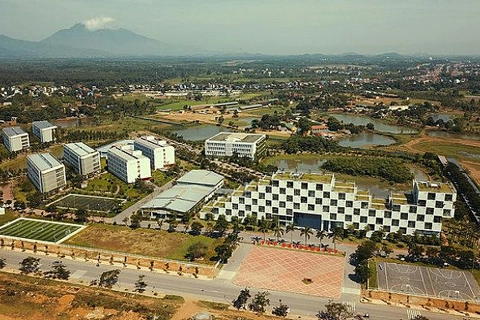
Hanoi to develop suburban Me Linh District into satellite city
Hanoi is planning to develop satellite urban areas as part of an effort to widen local space.
Me Linh District, located 30 kilometers north of downtown Hanoi, is planned to be developed as a satellite city or a satellite urban area of the capital.
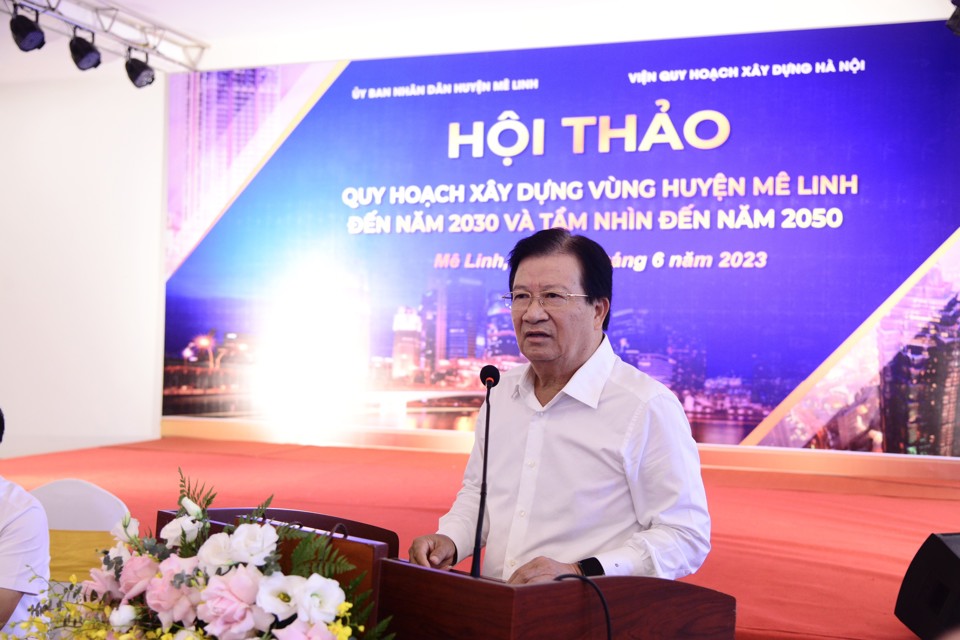
Former Deputy Prime Minister Trinh Dinh Dung supported the development of Me Linh in line with the above direction at the Workshop on Construction Planning of Me Linh District to 2030, with a Vision to 2050, held in Hanoi last week,
"The location of Me Linh is very convenient as it is close to the Red River, the axis of the east-west corridor. The district must take on the function of Hanoi's satellite city to shoulder more of the capital's responsibilities," Dung said.
Former Deputy PM Trinh Dinh Dung speaks at the conference. Photo: Pham Hung/ The Hanoi Times |
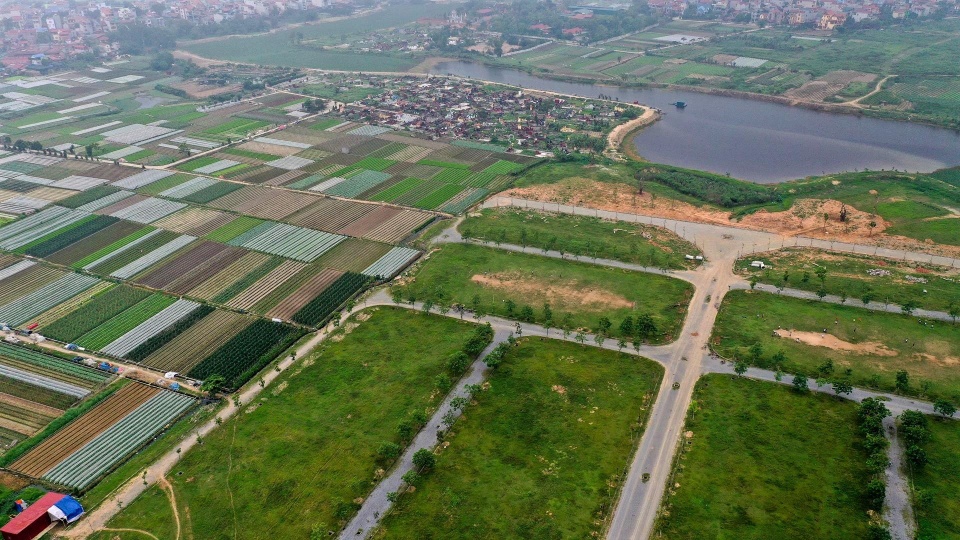
He stressed that the biggest potential of Me Linh is 7,000 hectares of urban land, which is favorable for urban development. The other advantage is the convenient transportation system of Ring Road No. 3, Noi Bai International Airport, and Ring Road No. 4 to be built.
"In the 2000s, Me Linh was still a purely agricultural district, with no urban areas, no industry, mainly supplying vegetables and flowers to Hanoi, now the economic structure of the district has shifted mainly to industry, with agriculture accounting for only 1-2%," Dung added.
The planning adjustment also aims to strictly control the development of high-rise buildings downtown, prioritize the development of small towns and peri-urban areas to support rural development through urban-rural linkages, invest in the development of urban areas with heritage value and potential to promote tourism, the former deputy PM said, urging Hanoi authorities to speed up the Me Linh development project.
Secretary of Me Linh District Party Committee Nguyen Thanh Liem said the district's construction planning is a top priority political task that plays an important role in the locality's socio-economic development.
Me Linh owns around 7,000 hectares of urban land. Photo: Quynh Trang |
"Therefore, the vision should be to build Me Linh District into a driving force for the socio-economic development of the capital, with a balanced and sustainable direction," Liem said.
He stressed that this is an opportunity for the locality to explore becoming the region's international trade center, knowledge and creativity center, scientific research, technology transfer, high-tech industry, trade, services, logistics, and tourism in the country and the region.
The functional agencies will study Me Linh District's potential and advantages in the regional relationship towards the harmonious development of urban areas, industry, agroecology, services, and tourism.
The Government of Hanoi has drawn up a master plan for the development plan for 2030, with a vision for 2050. According to the plan, Hanoi plans to build five satellite cities in Dong Anh, Me Linh and Soc Son in the north and Hoa Lac and Xuan Mai in the west.
The move aims to alleviate the high population density in downtown areas, reduce traffic congestion and pollution, and promote balanced development between the city center and suburbs, which will help promote Hanoi's industrialization and linkages with regional provinces.