Hanoi to pilot waste segregation in June
Households and individuals who fail to sort their waste or use the prescribed containers will be fined between VND500,000 and VND1 million (US$20-US$40).
Starting in June, 23 wards in Hanoi will pilot a program to sort waste into four categories and the model is expected to be applied citywide by 2026.
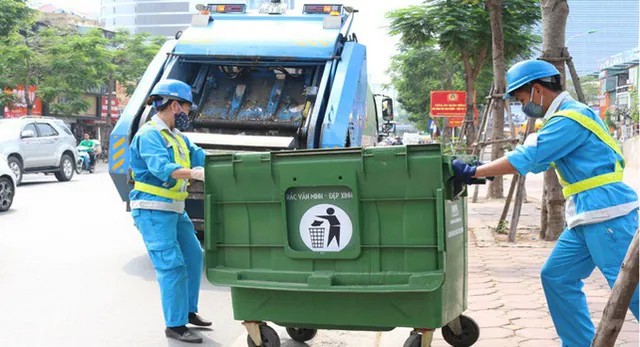
| Collecting waste in Hanoi. Photo: Vu Le/The Hanoi Times |
According to the Hanoi Urban Environment Company (URENCO), the districts of Ba Dinh, Hoan Kiem, Hai Ba Trung, Dong Da, and Nam Tu Liem will pilot waste separation at the source. Specifically, Pham Dinh Ho Ward in Hai Ba Trung District, Nguyen Trung Truc Ward in Ba Dinh District, Phu Do and Cau Dien wards in Nam Tu Liem District, and Nam Dong Ward in Dong Da District will participate. Hoan Kiem District, which already has a foundation for waste separation, will implement the pilot in all 18 wards.
The first phase of the pilot will run through the first quarter of 2025. The districts will then review and adjust the approach for the second phase, which will go on for the rest of 2025. The pilot aims to gather data and practical experience for the Project on Classifying, Collecting, Transporting, and Treating Household Solid Waste at Source in Hanoi, which will be submitted to the Hanoi People's Committee for approval in 2025.
This will lay the groundwork for citywide waste separation in 2026.
In Pham Dinh Ho Ward, Hai Ba Trung District, waste will be divided into four categories: recyclable waste, bulky waste, hazardous waste, and residual household waste (including food waste). The district has conducted awareness campaigns and training for ward officials and has prepared the necessary infrastructure and standardized collection equipment, such as specific types of storage bags.
For recyclable waste from households and small businesses—such as paper, books, plastic cups, and bottles—the ward will set up collection points with fixed collection times twice a week. Initially, residents will use transparent storage bags of their choice, with an official bag design to be issued later for measuring waste volume.
Bulky waste, such as wardrobes, tables, chairs, and sofas, can be dropped off at a designated location every Saturday between 7am and 11am. Households with large quantities of such waste can call a hotline to arrange for it to be collected separately.
Hazardous waste, including light bulbs, batteries, thermometers, and oil containers, will be collected at a specified site and must not be mixed with any other type of waste. All other waste, including food waste, will be collected directly and placed in bins according to the current schedule.
Under the Environmental Protection Law of 2020, waste sorting at source will be mandatory nationwide by December 31, 2024. Environmental workers will refuse to collect unsorted waste. Households and individuals who fail to sort their waste or use the prescribed containers will be fined between VND500,000 and VND1 million (US$20-US$40).
Hanoi generates about 7,000 tons of household waste daily, the second highest in the country after Ho Chi Minh City. Since 2005, some wards in Hanoi have piloted waste sorting, but these efforts have not been sustainable due to inconsistent collection infrastructure and legal systems.