Hanoi's largest incinerator to process one million tons of waste this year
The plant will have a positive impact on waste management, which has long been a source of frustration for local residents.
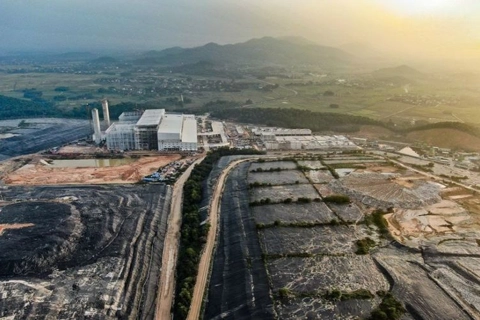
The Soc Son waste-to-energy plant at the Nam Son Waste Treatment Complex in Hanoi, the largest of its kind in Vietnam and currently the second largest in the world, aims to convert one million tons of waste into a fuel source this year.
According to Nguyen Trong Dong, Vice Chairman of the Hanoi People's Committee, the plant is in line with the city government's plan to develop renewable energy by 2024.
"Hanoi has set a target to generate 67 MW from the No. 3 incinerator at the Soc Son waste-to-energy plant and to launch the Seraphin waste-to-energy plant (the second in Son Tay Town). This will bring the city's total energy from waste treatment to about 129.3 MW," Dong said.
The Soc Son waste-to-energy plant uses Belgian "Waterleau" technology. Photos: VNA |
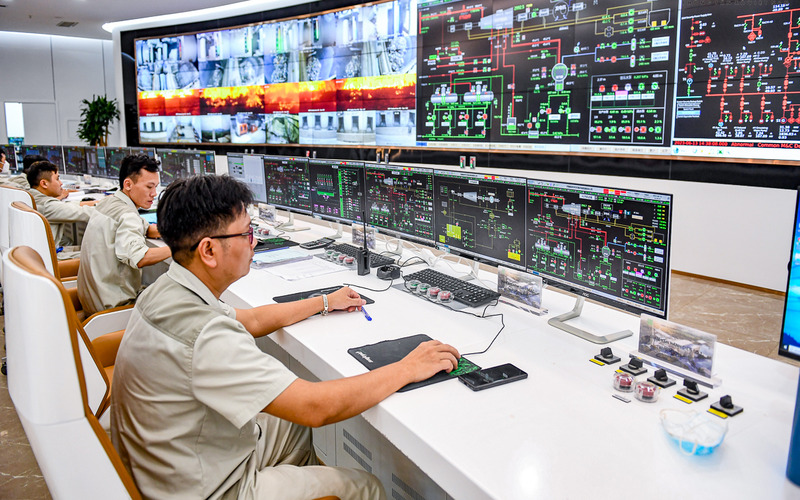
With a capacity to incinerate 4,000-5,000 tons of dry waste per day and a power generation capacity of 90MW, the Soc Son waste-to-energy plant has substantially contributed to the city's solid waste treatment and management, reducing environmental pollution and greenhouse gas emissions.
Do Tien Dung, Deputy General Director of Thien Y Environmental Energy Joint Stock Company, told Vietnam News Agency (VNA) that the operation of the plant has partially met the requirements for "proper" waste treatment in Hanoi.
"Before 2022, the city's centralized domestic waste treatment areas had to bury about 7,000 tonnes per day. This method not only runs the risk of causing environmental pollution but also wastes resources that could be converted into energy," Dung said.
He added that the Soc Son waste-to-energy plant, which started generating electricity for the national grid in July 2022, has helped to treat more than 70% of Hanoi's waste and relieve pressure on the two solid waste treatment complexes at Nam Son (Soc Son District) and Xuan Son (Son Tay Town).
The waste tank is sealed so that waste can be composted for 10 days and then fed into the incinerator. |
.jpg)
The facility has ensured compliance with environmental regulations, helped minimize the risk of environmental incidents due to Hanoi's household waste backlog, and conserved land resources by reducing the need to bury waste, treating more than 1.2 million tons of solid household waste and 245,000 cubic meters of leachate.
The Soc Son waste-to-energy project was approved by Hanoi authorities in late 2017, with a total investment of nearly US$30 million. It is expected to help manage Hanoi's waste management, which has long been a very frustrating issue for residents living near the Nam Son Waste Treatment Complex.
According to the municipal Department of Construction, Hanoi will have 17 waste treatment zones under the city's master plan for 2030 with a vision for 2050. However, many waste treatment projects have been delayed due to obstacles related to land clearance.
The tank has the capacity to hold thousands of tons of waste. |
.jpg)
Hygienic waste treatment technology
Do Duc Thanh, Head of Hanoi's Environmental Protection Department, suggested installing automatic monitoring stations to send environmental parameters to city authorities.
“Even though it is now running and plugged into the national grid, the plant’s managers expect the next phase to come on stream soon, as the current capacity limits the amount of waste that can be incinerated,” Thanh said.
He added that Hanoi will continue to build waste treatment plants in Chuong My, Phu Xuyen, Thanh Tri, Gia Lam, and other districts. The municipal government is also considering using clean and green energy sources in education, agriculture, and urban transport.