Vietnam’s largest waste-to-power plant to begin operation tomorrow
The plant will help improve the Hanoians' living standards and tackle environmental pollution in the capital city.
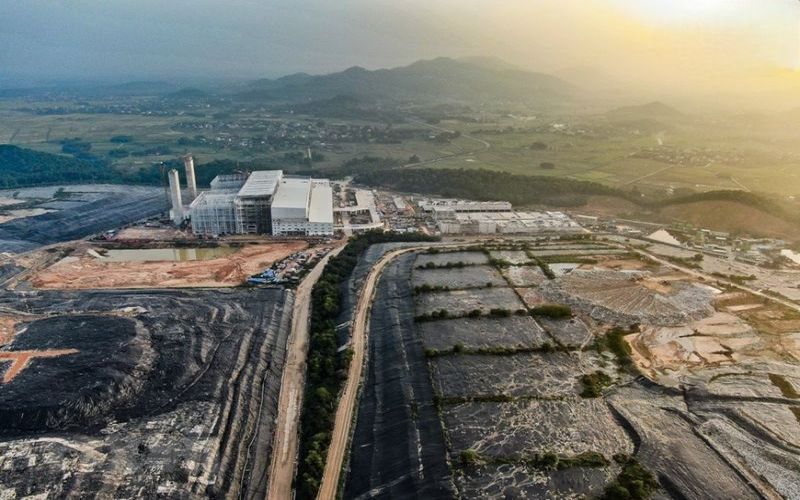
The Soc Son waste-to-energy plant, located at the Nam Son Waste Treatment Complex in Hanoi, the largest of its kind in Vietnam, will go into operation from tomorrow [July 15], according to Thien Y Environmental Energy JSC, the investor in the project.
Ly Ai Quan, general director of Hanoi-based Thien Y Environmental Energy JSC said that the plant will process waste into a fuel source, with a capacity of handling 4,000 tons of solid refuse daily.
It is expected that each day, the plant will receive and burn about 4,000 tons of waste, equivalent to 70% of Hanoi's wasteload. Photo: Minh Anh |
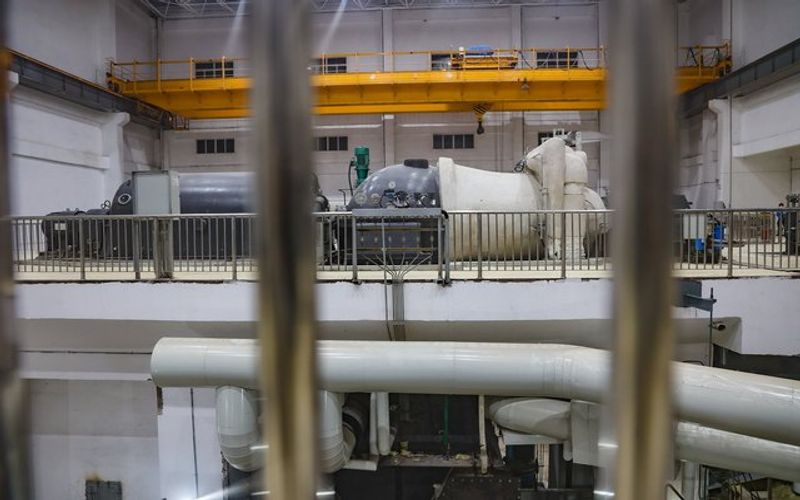
Its incinerators No.2 and No.3 with a capacity of handling 1,600 tons of solid refuse daily will generate 30MW to the national grid, Quan added.
The plant has five incinerators and three generator sets. Currently, 645 people are working on the project, including 125 foreign experts.
According to Quan, the technical phases have been completed, and the trial operation of burning waste for electricity has been thoroughly checked and accepted. The plant is ready for waste combustion.
Quan also noted that the source of waste materials is taken directly from the unclassified domestic waste of nine inner districts and five outskirt districts of Thanh Tri, Gia Lam, Tu Liem, Dong Anh, and Soc Son.
“From the end of 2021 until now, the plant has received more than 30,000 tons of waste from Hanoi. In the first half of 2022, when the capital city was full of garbage for many days, thousands of tons of garbage have been sent to the plant to reduce the waste load in downtown Hanoi,” Quan said.
The plant's process of waste treatment is automated. Photo: Minh Anh |
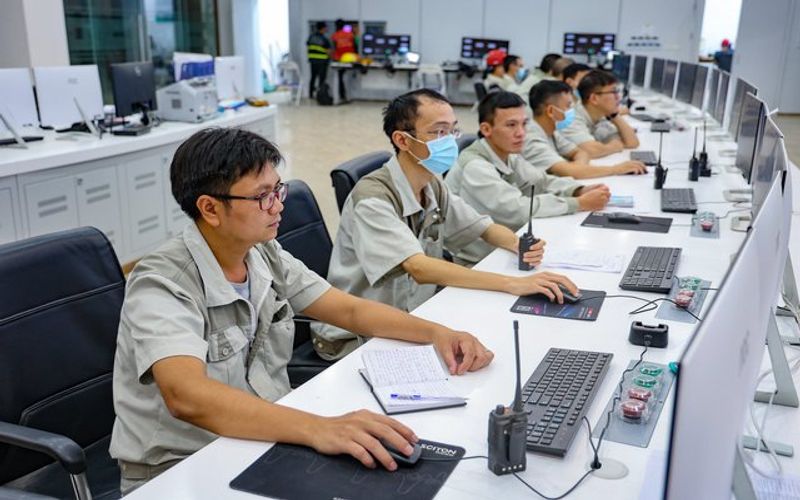
The plant is expected to help handle waste treatment in Hanoi, a very frustrating problem for residents living near the Nam Son Waste Treatment Complex.
In recent years, the Nam Son complex has made headlines for a long-running dispute over land compensation that repeatedly led to workers besieging the road leading to the complex, resulting in trash piling up around the city.
Being aware of the importance of thorough waste treatment in a large city like Hanoi, the municipal government has invested a lot of resources to modernize waste collection and treatment in recent years.
The Soc Son waste-to-energy project, with an overall capacity of processing 4,000 tons of solid waste and 1,740 tons of wastewater per day, was approved by Hanoi’s authorities in late 2017 with a total investment of VND7 trillion (US$303 million). The plant is expected to generate up to 75MW of electricity per hour.
According to the Hanoi Department of Construction, the city currently discharges 6,000 tons of waste every day. Most of the volume is buried at the Nam Son Waste Treatment Complex. It is hoped that this new project will reduce the pollution levels, which have for years affected the life of people in the capital city.
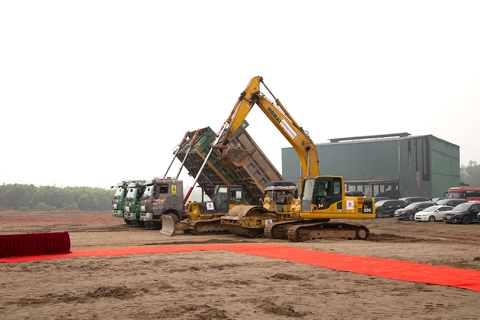
An overview of the construction site of the Thien Y waste-to-energy plant in Hanoi. Photo: Trung Nguyen |