Waste-to-energy plants in Hanoi ready for operations
Private investors are on track to bring their waste-to-energy projects to life in an attempt to help the city resolve environmental issues.
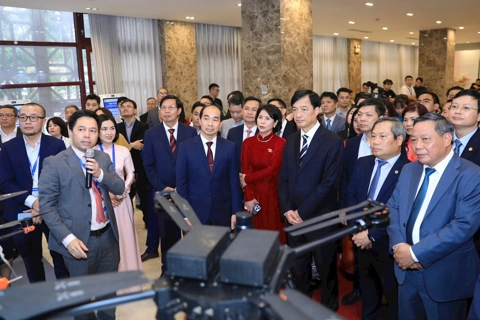
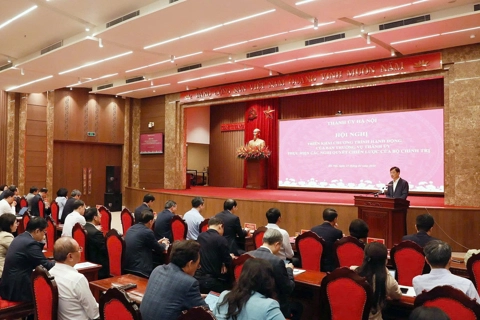
Waste-to-energy plants are on track to become officially operational to help solve environmental problems related to waste overload at Hanoi's existing treatment facilities, the idea was shared at a meeting chaired by Hanoi's Mayor Tran Sy Thanh.
Chairman of the Hanoi People’s Committee Tran Sy Thanh at a recent meeting asked related agencies to review and propose possible amendments to the solid waste treatment strategy until 2050 as well as listing out must-do tasks.
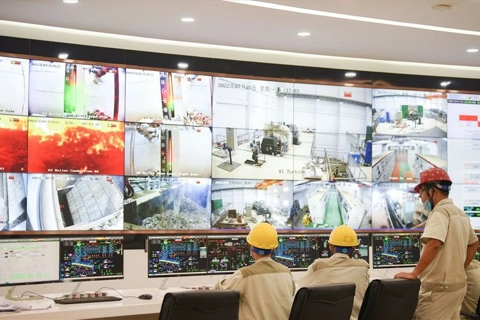
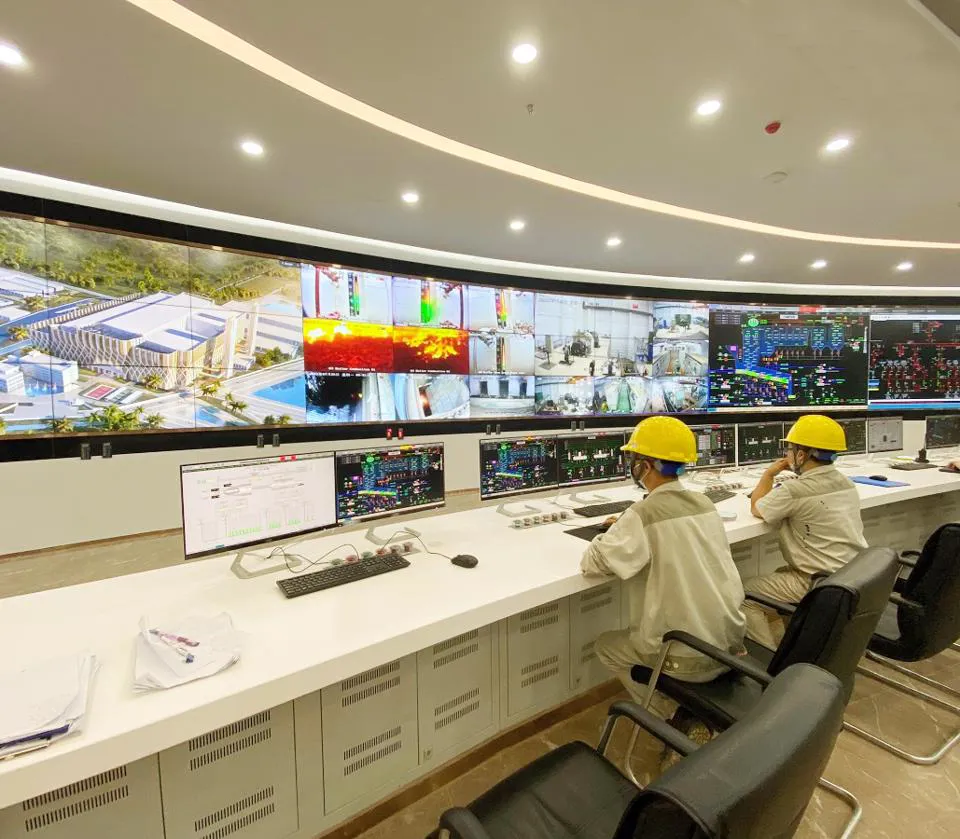
| The operation center of the Soc Son Waste-to-Energy Treatment Plant in Soc Son District of Hanoi. Photo: Hung Thap |
Local authorities must work to remove barriers that have impeded the progress of the construction of waste-to-energy plants while assuring waste imports at the facilities are safe and secure for both operators and people. Additionally, heavily-affected local residents in project areas will be supported with healthcare services, clean water, and insurance.
Acknowledging the importance of environmental protection and waste treatment, operators of waste-to-energy plants are determined to bring the projects into official operations soon.
According to Thien Y Environmental Energy JSC, the main investor of the Soc Son Waste-to-Energy Plant, the facility is ready for full operations in stage one. On July 25, the plant was plugged into the national grid, at which, the plant has one incinerator and one operation cluster that serve the treatment of 800 tons of waste per day and produce some 15MW of electricity.
Nguyen Thi Hong Van, general director of market development in Southeast Asia for Thien Y Environmental Energy JSC, said that there will be stages two and three. The company has submitted stage-two development plan to the Ministry of Natural Resources and Environment for approval. Stage three will come following the approval of the stage-two plan.
Upon completion of construction and installation of the three phases, the plant will be able to store 5,000 tons of waste per day, process 4,000 tons of the total and produce 75MW of energy. Some 50MW of the energy production will be fed into the national grid and the remainder will be used to operate the plant.
“The city authorities have acknowledged the stage-one plant is ready for operation. We are pending for administrative and legal documents to be finalized,” Van said.
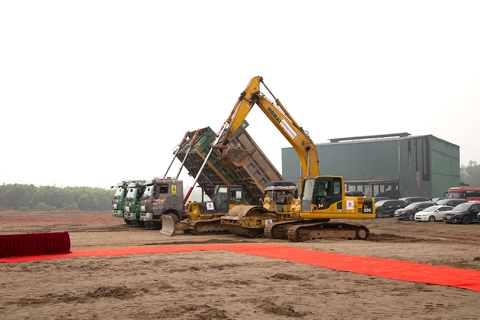
Meanwhile, the construction of the Seraphin Waste-to-Energy Treatment Plant in Son Tay Town will be complete 2-3 months ahead of schedule, Amaccao Group Deputy General Director Vu Van Ngoc told The Hanoi Times.
Its construction started on March 30, 2022 and the plant was expected to come into operation 20 months later. It's designed to produce 37MW of electricity and 2.4 million kWh of power each year while it is able to process 1,500 tons of waste per day.
So far, the investor has fulfilled 90% of the construction, Ngoc said.
According to Hoang Xuan Co, Director of Research Center for Environmental Monitoring and Modeling (CEMM), there are now 17 waste treatment facilities in Hanoi. Eight of them are being expanded and upgraded, and nine are newly-constructed. However, only three plants are active with old technologies, so it is necessary to finish and bring waste-to-energy plants into operation.
“Waste-to-energy plants with modern technologies will play a big part to reduce the negative impacts of waste on the environment in Hanoi and develop a source of circular energy,” he said.
Local residents and the city authorities have been at odds for several years as treatment plants using out-of-date technologies become unable to deal with the increase of domestic waste, leading to the pollution of local areas and environmental conditions.
According to the Hanoi Department of Construction, the city’s largest waste treatment plant Nam Son in Soc Son District is designed with a capacity of 5,000-5,500 tons of waste each day, accounting for 80% of the total waste discharged by the people of Hanoi.
But the limited capacity of the plant has caused problems for both operators of the plant and local residents as the uncontained and unprocessed waste is left exposed, thus affecting the environment and health of local people.
The operation of waste-to-energy treatment plants will help resolve many existing issues, mainly producing green power, experts said.