Ao Dai Week seeks to elevate Vietnam’s national dress at work
Authorities are encouraging women to wear the ao dai to work in early March, culminating in mass performances marking key political and historical anniversaries.
THE HANOI TIMES — Offices across Hanoi and other major cities are set to take on a more traditional hue in early March as Vietnam rolls out “Ao Dai Week”, a nationwide campaign promoting the country’s signature long-dress attire.

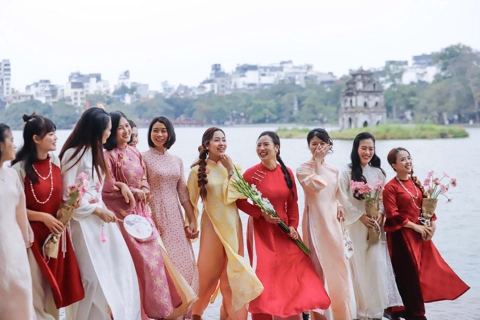
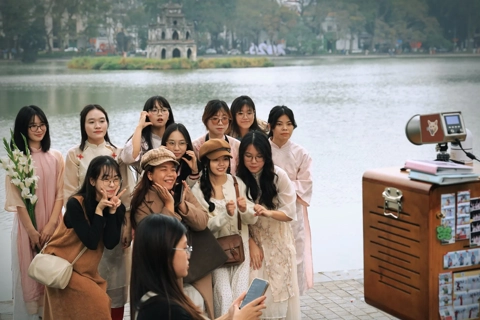
Female civil servants in Hoang Liet Ward, Hanoi, take part in Vietnam’s 2025 Ao Dai Week, showcasing the country’s traditional dress in the workplace. Photo: Huong Le
The Vietnam Women’s Union said activities will run from March 1 to March 8, including a synchronized folk dance on March 8 at public venues tied to cultural and historical landmarks.
Female officials and union members nationwide are encouraged to wear the ao dai during the work week. The long tunic worn over trousers is regarded as Vietnam’s national costume, symbolizing elegance and cultural identity, and is now common at formal events, in schools and in corporate settings.
The March 8 performances will feature music honoring the ao dai and patriotism. Local chapters have been asked to film their dances and submit recordings to the union’s Women’s Affairs Department by March 10 for compilation and posting on its official Facebook page.

Female trade union members of Vietnam’s Ministry of National Defense pose in traditional ao dai, highlighting the elegance of the country’s national dress. Photo: Le Cong
The union said the initiative also marks elections for deputies to the 16th National Assembly and People’s Councils for the 2026-2030 term, the 1,986th anniversary of the Hai Ba Trung Uprising led by the Trung Sisters and the 116th anniversary of International Women’s Day.
By linking civic events with cultural celebrations, the campaign seeks to reinforce the ao dai as a living heritage symbol and project a modern, unified image of Vietnamese women in public life.