Hanoi’s youth revive tradition in Ao Dai as Tet approaches
As Tet approaches, Hanoi’s historic sites turn into open-air studios, where young people in ao dai welcome the Lunar New Year through style, memory and a sense of place.
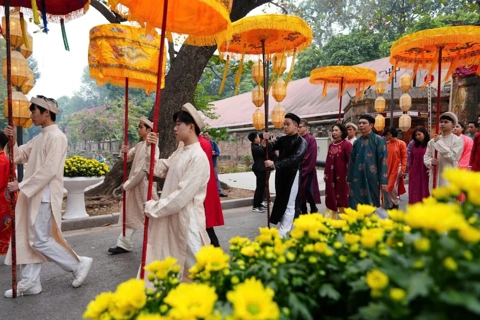
THE HANOI TIMES — In the days leading up to Tet, Hanoi’s most iconic public spaces take on a distinctly seasonal rhythm, as young people in traditional ao dai (long dress) gather around Hoan Kiem Lake, the Hanoi Opera House and the Temple of Literature for photoshoots, turning familiar landmarks into backdrops for a living cultural ritual.
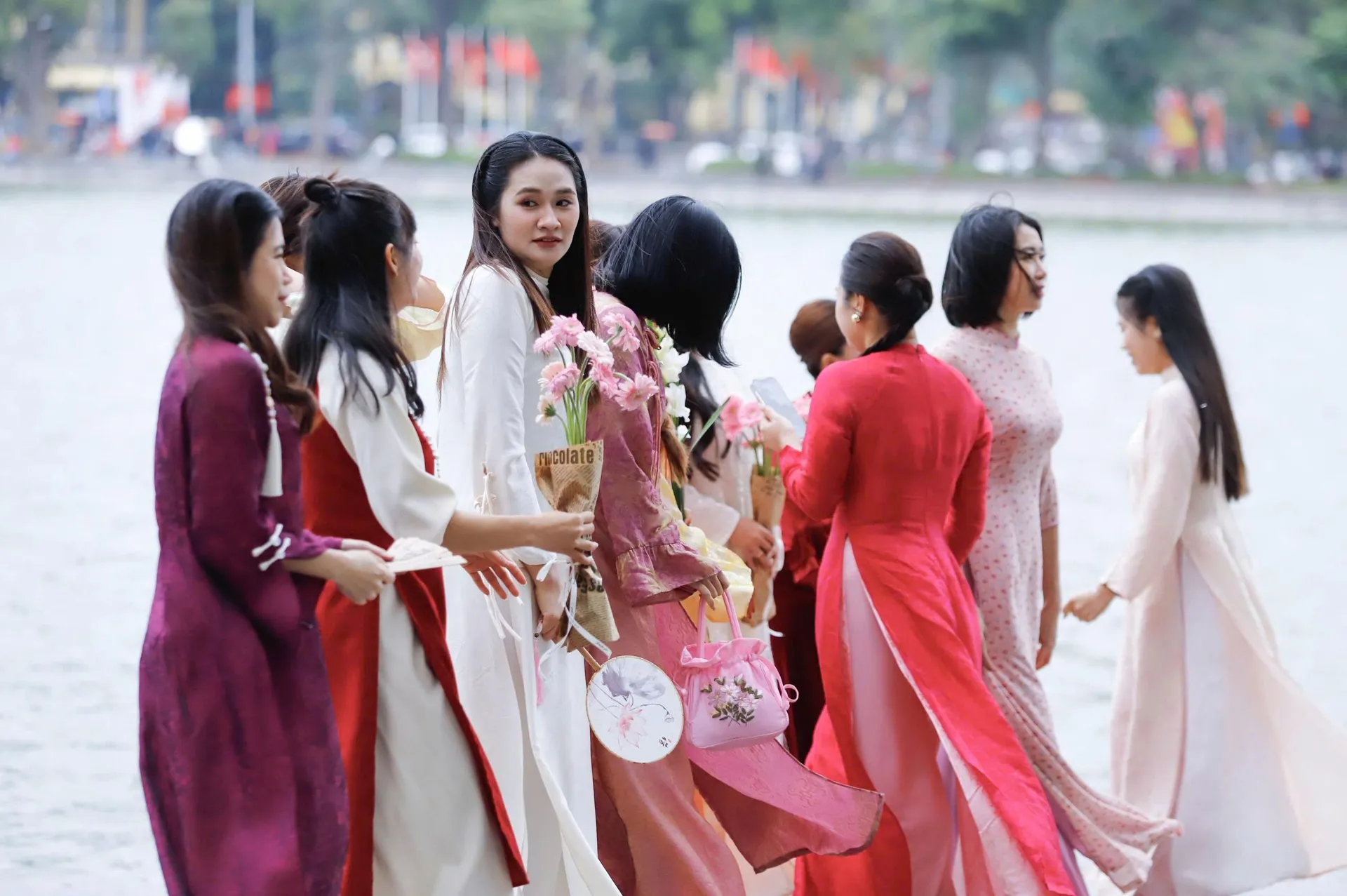
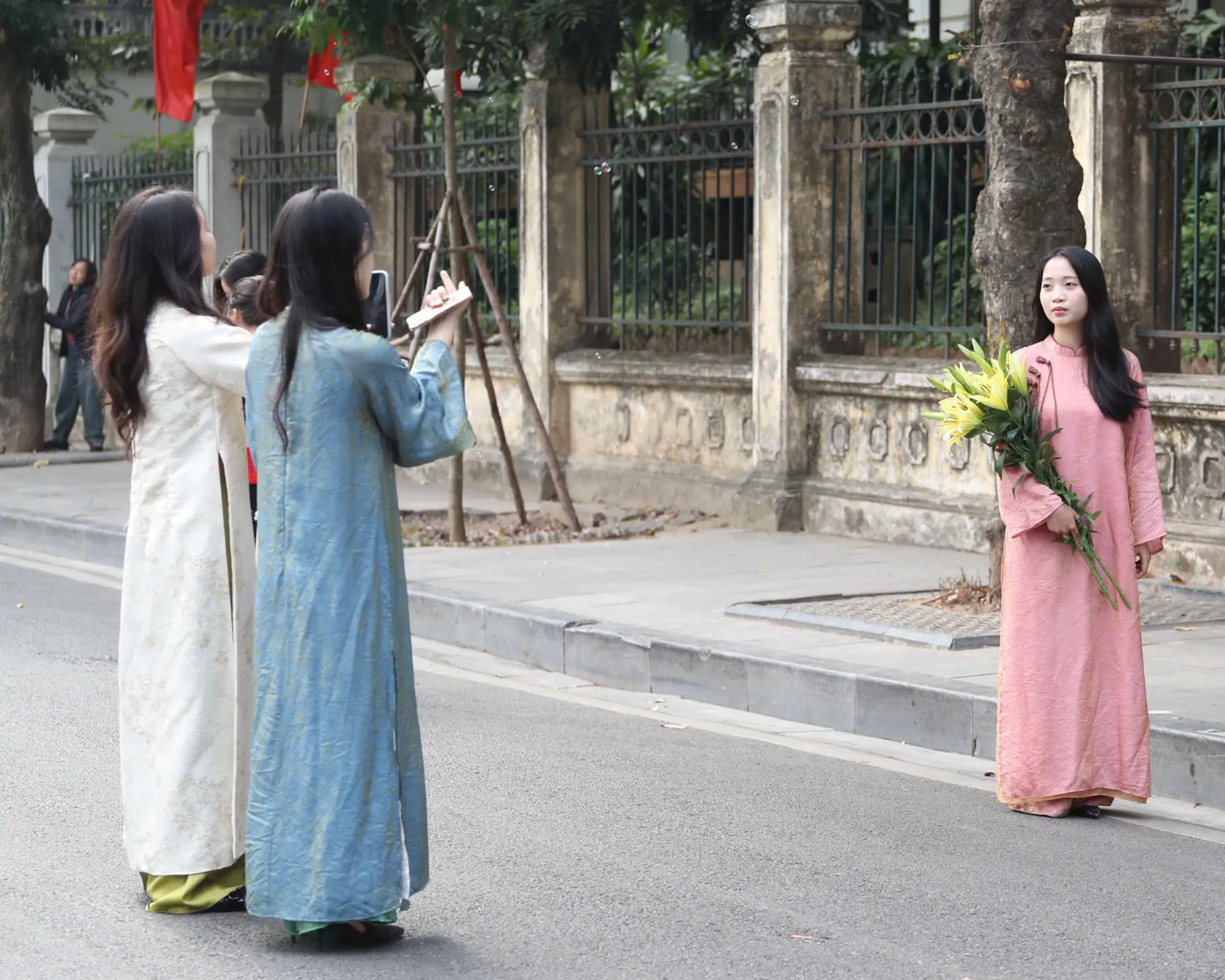
Women in traditional ao dai add a sense of occasion for locals and visitors alike as Tet approaches. Photos: Duy Khanh/ The Hanoi Times
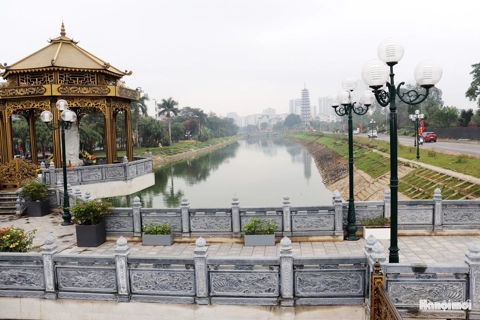
From early morning, many groups of friends gather at Hanoi’s Hoan Kiem Lake, carrying peach blossoms, apricot branches, conical hats and paper fans closely associated with the Lunar New Year. The scenes go beyond festive anticipation, reflecting a renewed engagement with heritage framed by the capital’s most familiar landmarks.
Favorable weather has heightened the atmosphere. Soft winter sunlight illuminates flowing ao dai in reds, whites, pastels and floral patterns, adding movement and color to the historic setting. The contrast between youthful figures and centuries-old architecture underscores how tradition is being reinterpreted through a contemporary lens.
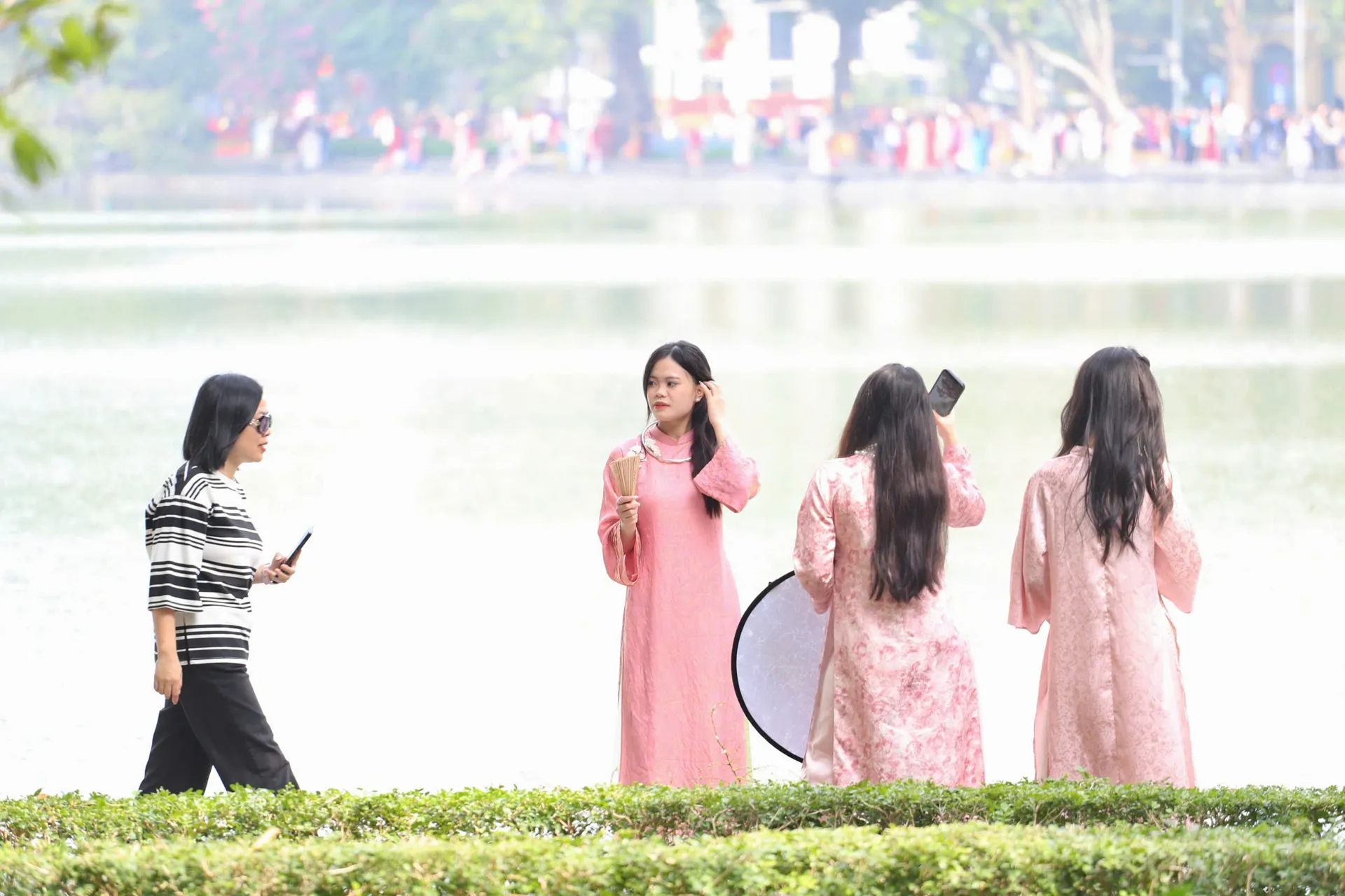
Vietnam’s national dress continues to resonate across generations.
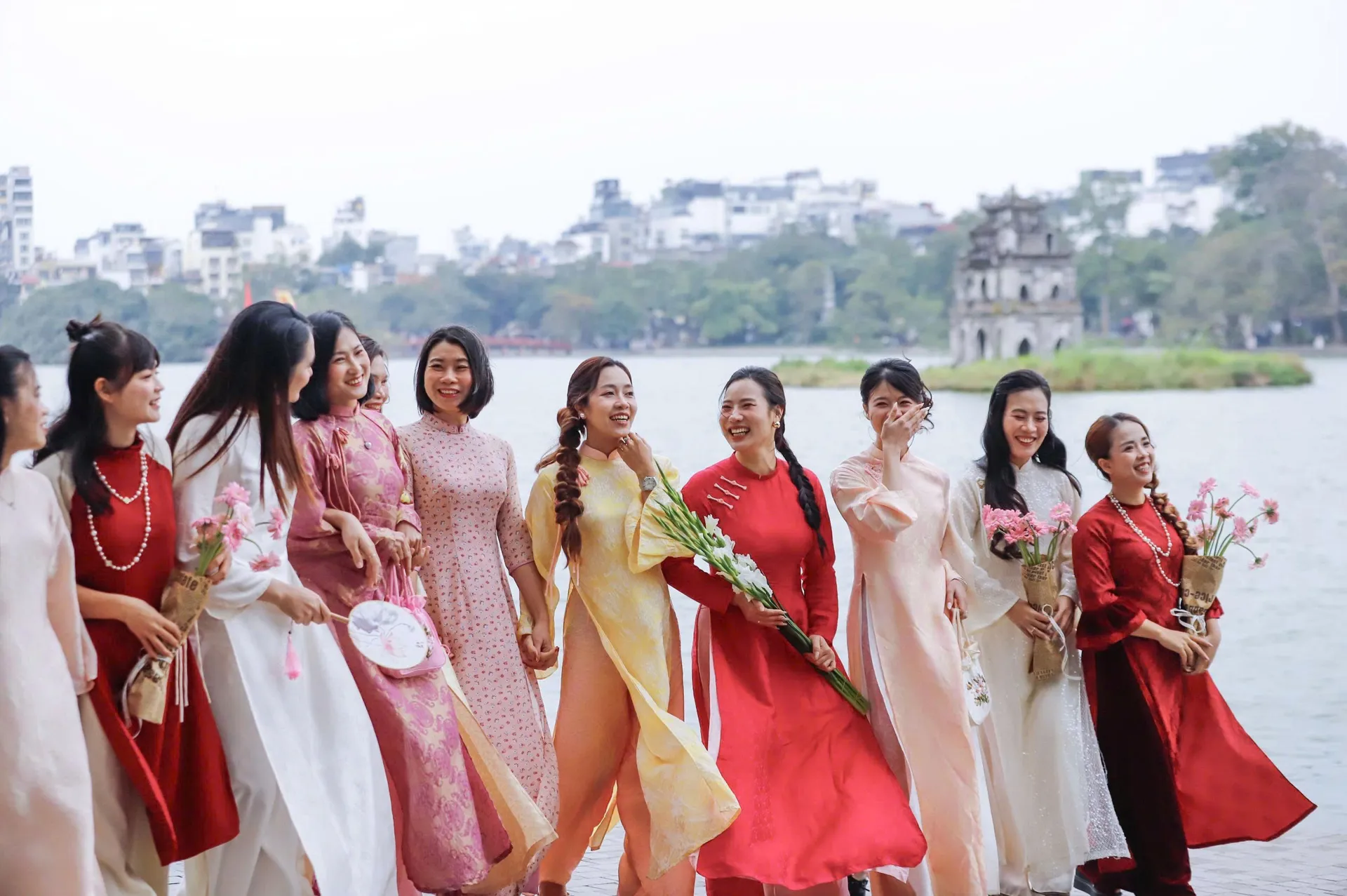
While rooted in classic tailoring, today’s ao dai appear in a wide range of fabrics and designs, blending tradition with modern aesthetics.
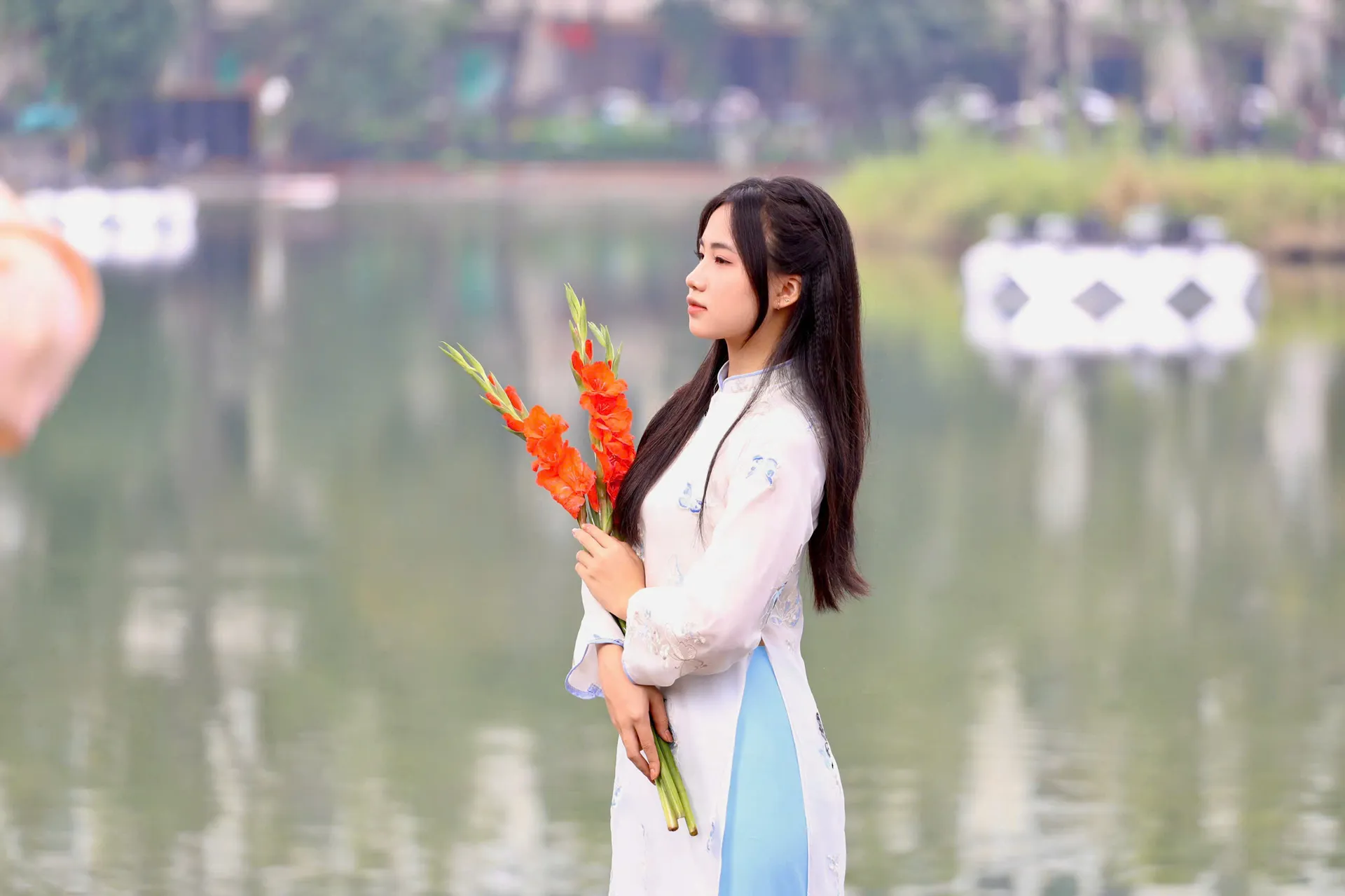
During Tet, wearing ao dai is both a personal statement and a cultural gesture.
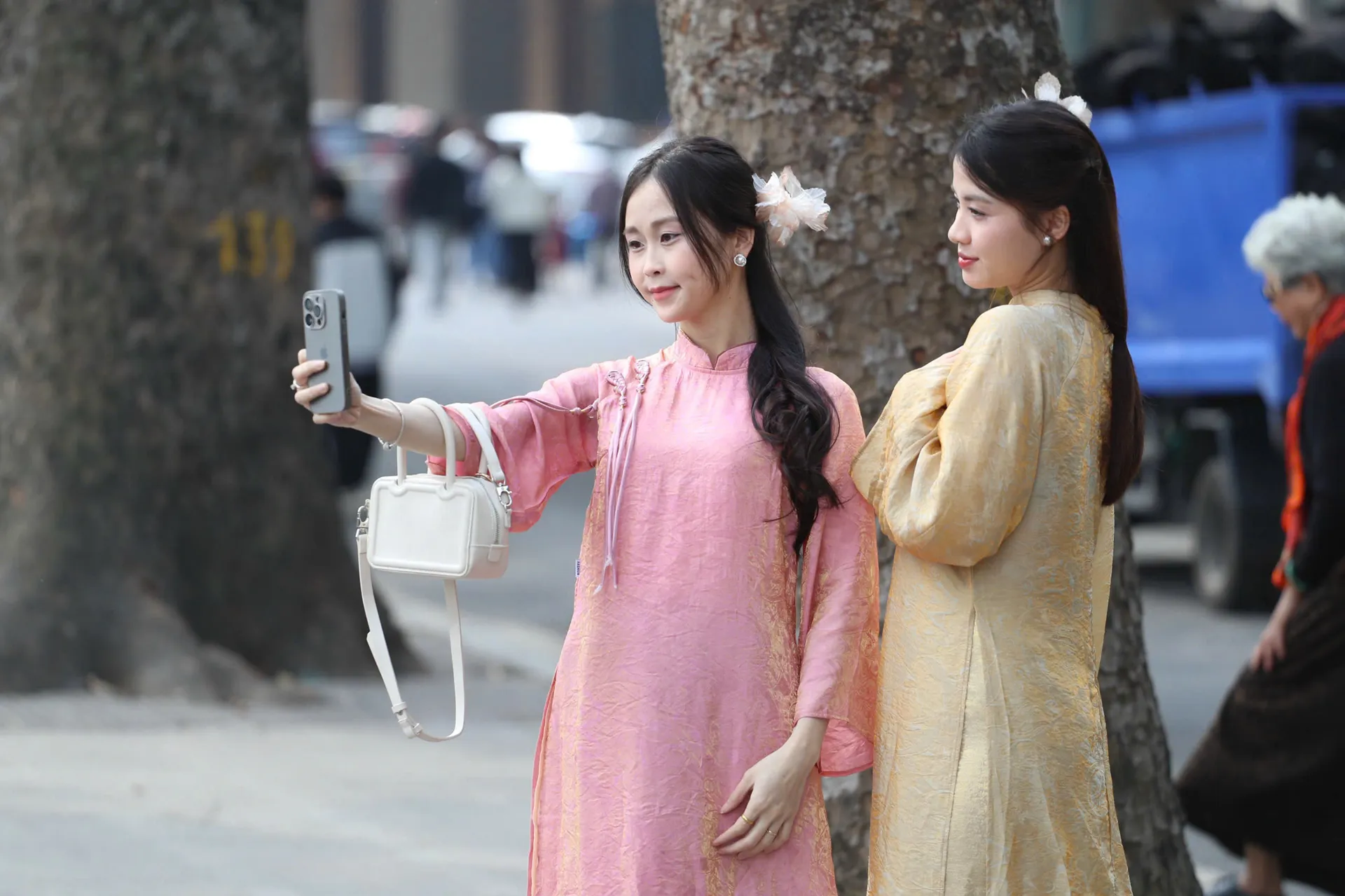
The practice of photographing ao dai at historic sites during the Lunar New Year has become an annual custom in Hanoi, embraced by locals and increasingly visible to visitors.
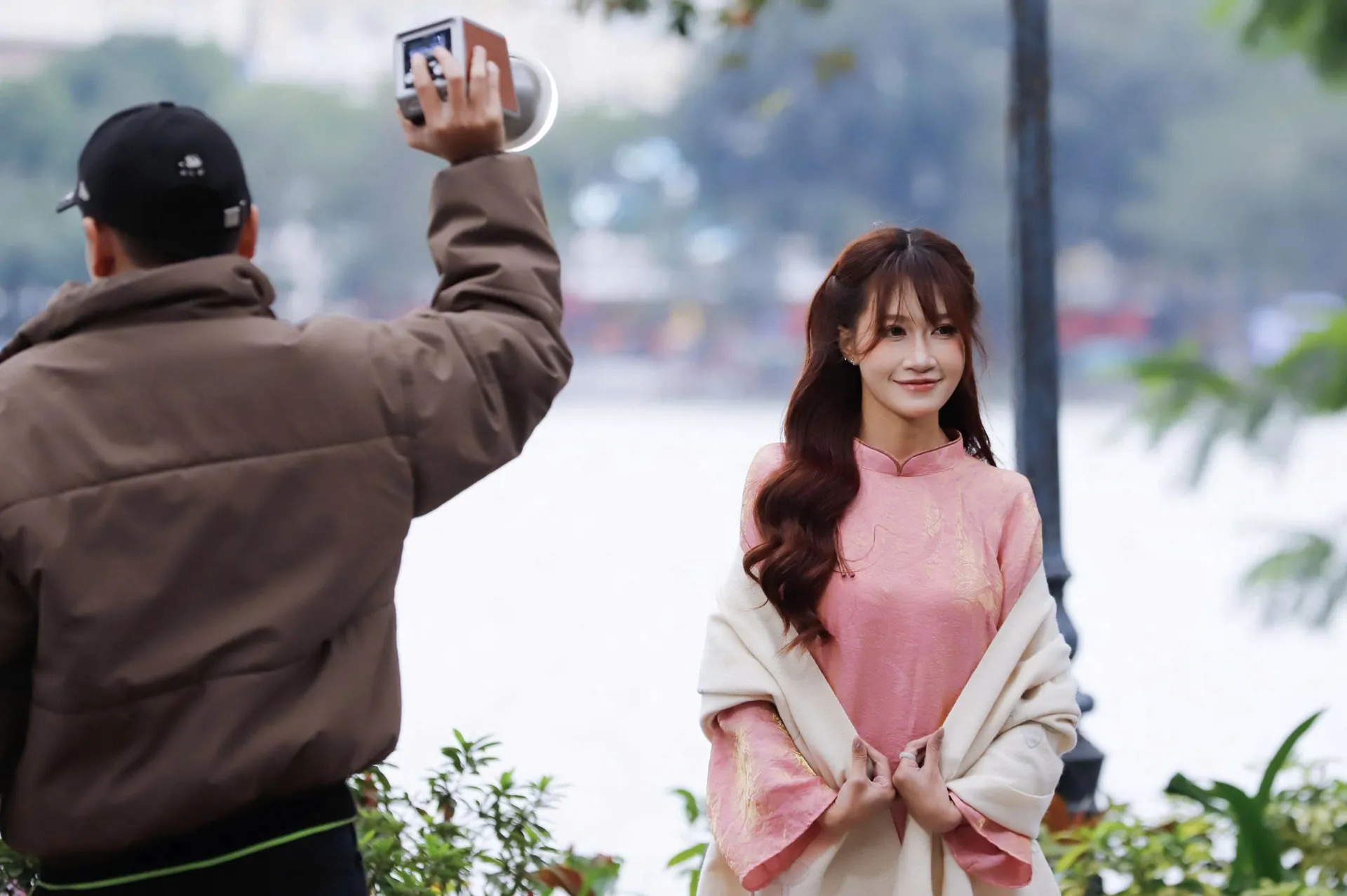
Some participants even hire professional photographers, treating the occasion with the care of a formal portrait session.
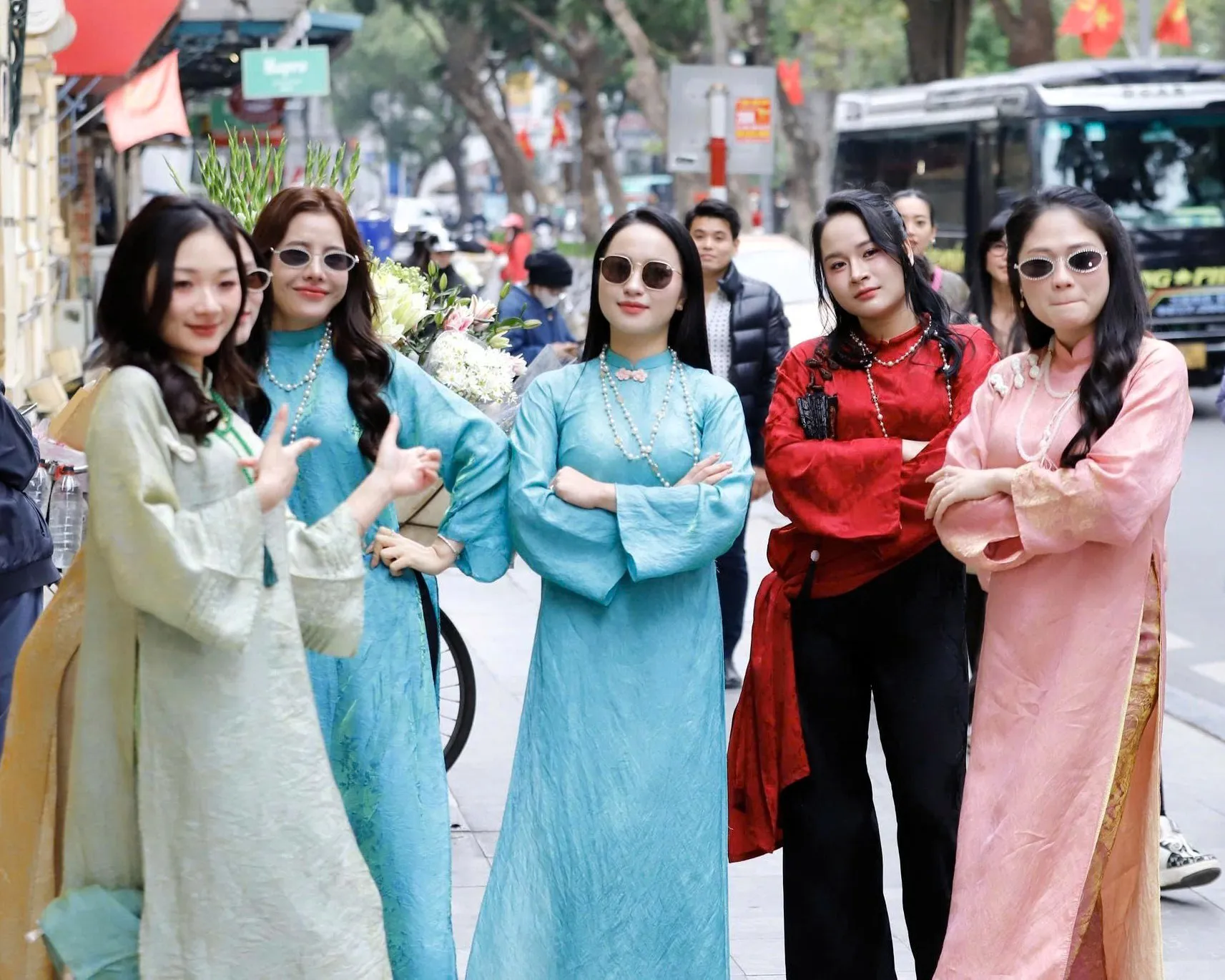
Dressed in traditional Vietnamese ao dai, a group of young people pose playfully, turning a quiet moment into a lasting memory.
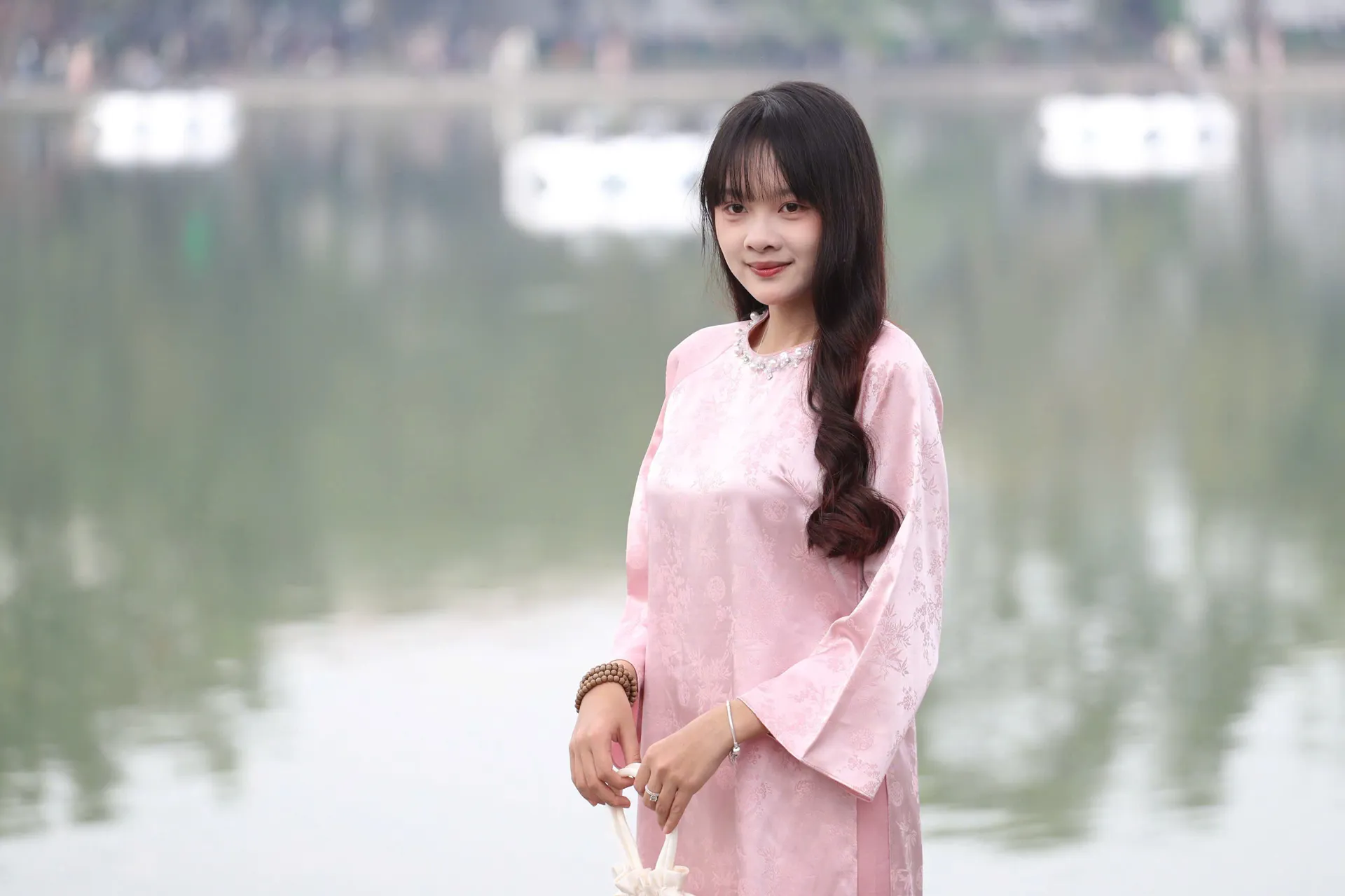
Beyond social media or aesthetics, the ritual serves a simpler purpose: preserving memories.
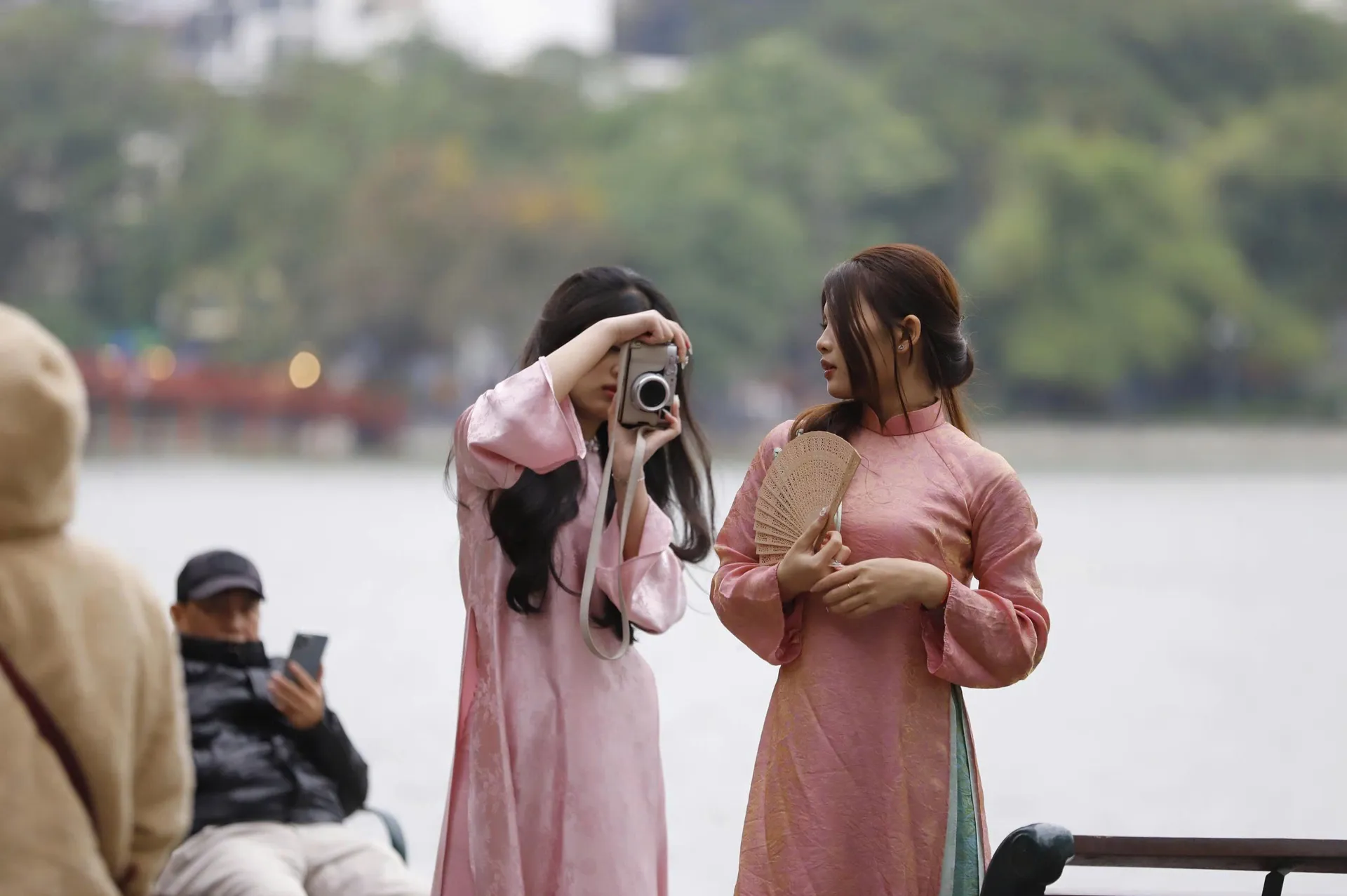
As Tet draws closer, the images unfolding across the city offer a glimpse into how Hanoi’s younger generation carries tradition forward gracefully, deliberately and very much in public view.