Happy Tet 2026: Hanoi extends a cultural invitation to the world
Hanoi is positioning its Lunar New Year celebrations as a global cultural draw, as the city prepares to host Happy Tet 2026, an immersive festival designed to bring Vietnam’s most important holiday to international audiences at the heart of the capital.
THE HANOI TIMES — Hanoi will open the Lunar New Year with a clear message to global visitors: Tet is not only a holiday but a cultural experience to be shared.
From February 6 to 10, 2026, the capital will host "Happy Tet 2026" at the Thang Long Imperial Citadel, one of Vietnam’s most important UNESCO World Heritage sites, recreating the rhythms, rituals and aesthetics of traditional Vietnamese New Year at the moment spring begins.

Nguyen Tran Quang, Deputy Director of the Hanoi Department of Tourism, speaks about Happy Tet 2026, outlining the city’s vision to present Vietnam’s Lunar New Year as a living cultural experience for international visitors. Photo: Minh Loan
Designed as an immersive cultural showcase, the annual festival offers overseas visitors a rare and carefully curated introduction to living Tet traditions, from spatial arrangements and folk practices to seasonal customs deeply rooted in daily life.
Nguyen Tran Quang, Deputy Director of the Hanoi Department of Tourism, said the program goes beyond celebration. “This annual festival affirms Hanoi’s efforts to become a safe, friendly and culturally rich destination. It also creates momentum to stimulate tourism at the beginning of the year, contributing to tourism growth and the city’s socio-economic development.”
The city's authorities see "Happy Tet 2026" as both a tourism product and a cultural platform. Alongside attracting visitors, the event helps strengthen cultural awareness and national pride, particularly among younger generations, while supporting sustainable and community-based tourism.
By placing Tet at the heart of its tourism narrative, Hanoi is positioning the Lunar New Year as a shared cultural moment, one that welcomes the world to experience Vietnam’s traditions through authenticity rather than spectacle.
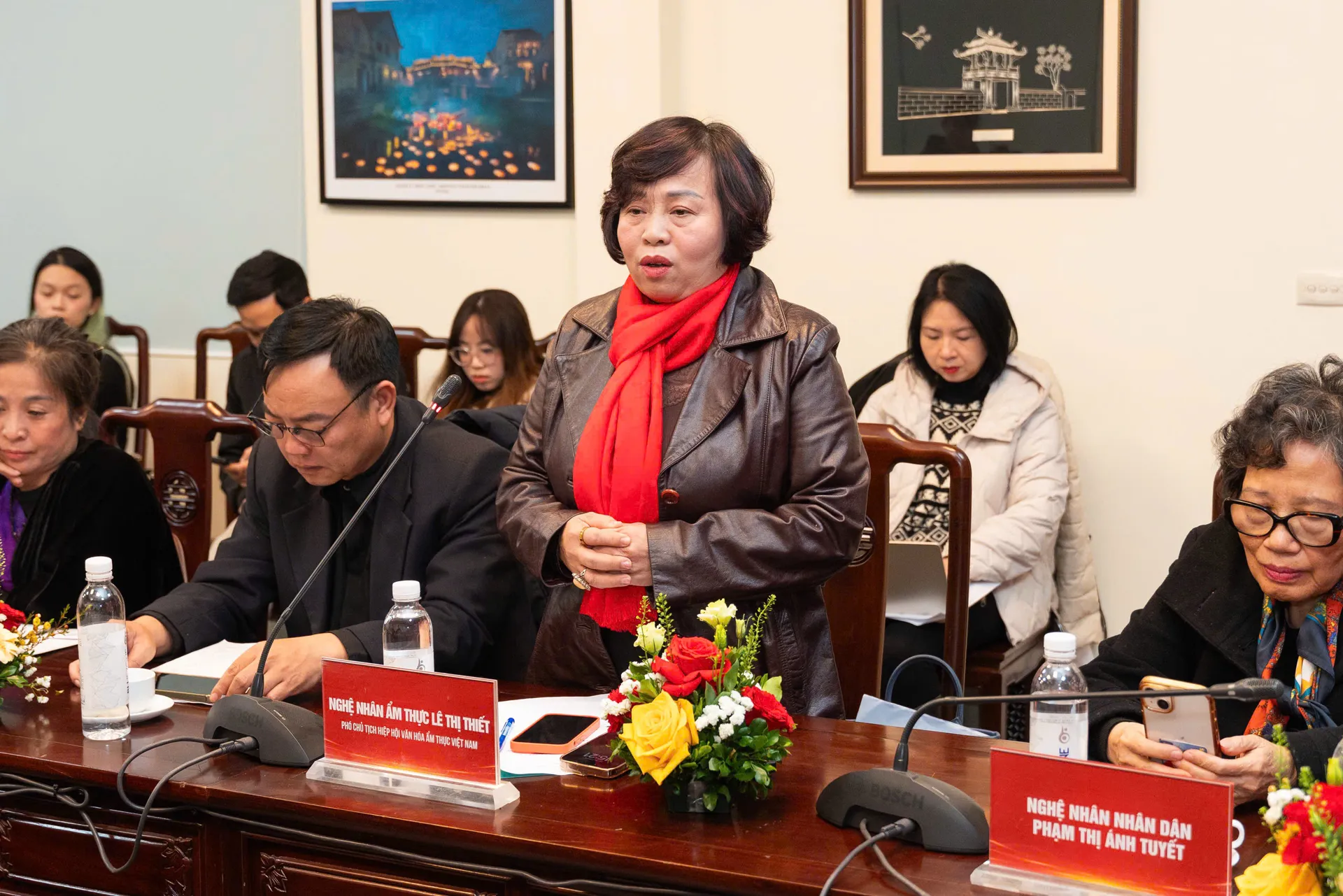
Culinary expert Le Thi Thiet shares insights on Happy Tet 2026 at the press briefing, highlighting the event’s rich celebration of Vietnamese New Year food culture.
At the meeting, culinary expert Le Thi Thiet said that this year’s Happy Tet represents a significant step forward in scale and ambition, offering a more expansive and immersive portrayal of Vietnam’s Lunar New Year traditions.
“This year's Happy Tet promises to provide the most comprehensive view of Vietnamese Tet (the Lunar New Year) in three regions of North, Central and South Vietnam to meet the needs of young people and international tourists who want to enjoy the spring festivities, celebrate Tet and learn about Vietnamese culture and traditional customs,” she shared.
Spanning more than 7,000 square meters, the festival space is meticulously curated to recreate the visual and emotional landscape of Tet across Vietnam, blending cultural storytelling with hands-on experiences and tourism promotion. Visitors move through themed zones that mirror the traditional journey toward the Lunar New Year.

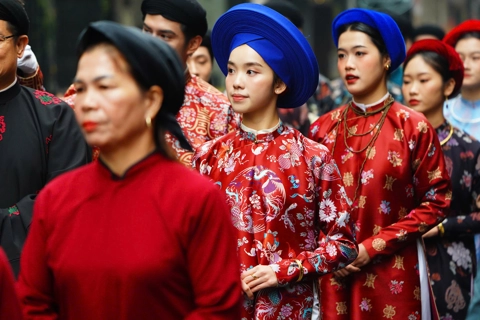
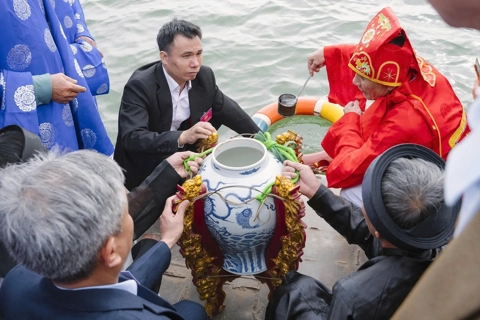
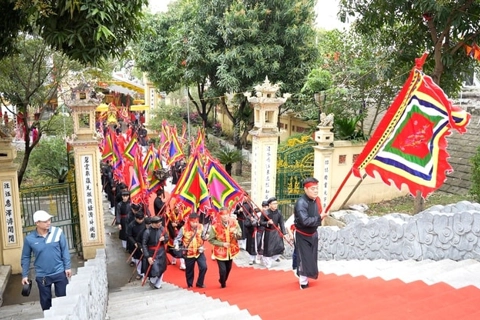
A highlight of Happy Tet 2026 will be the re-enactment of the royal "Tong cuu nghinh tan" (“Farewell the Old, Welcome the New”) ceremony. Photo: Duy Khanh/ The Hanoi Times
The Spring Market evokes the energy of pre-Tet shopping, filled with peach blossoms, kumquat trees, apricot flowers, handicrafts, Tet gifts and products from traditional craft villages linked to tourism.
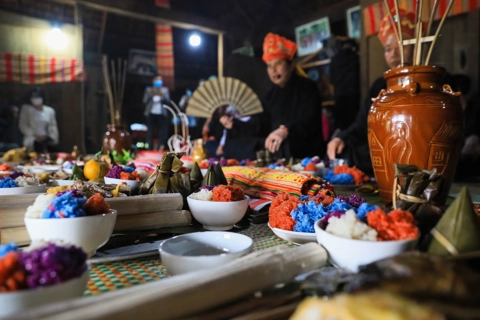
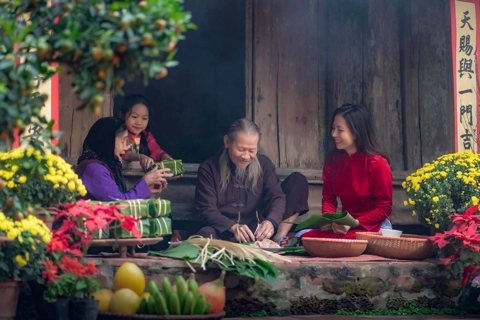
The Taste of Tet zone highlights regional culinary heritage, from hands-on experiences making banh chung (square glutinous rice cake covered by leaf) and banh te (traditional Vietnamese steamed rice cake associated mainly with the Red River Delta) to assembling Tet feasts, receiving auspicious calligraphy, and sampling signature dishes from the three regions across Vietnam.
In the Spring Gathering area, Hanoi showcases its tourist destinations, heritage sites and traditional festivals, alongside live demonstrations of iconic crafts such as Bat Trang ceramics, Ha Thai lacquerware, Phu Vinh rattan and bamboo weaving, Thuy Ung horn combs and Xuan La powder figurines.
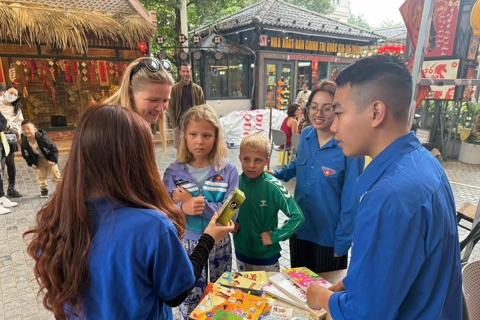
Traditional entertainment anchors the Folk Games and Community Activities space, where visitors can take part in tug-of-war, swinging, ball throwing, human chess and folk toy-making- activities that animate the communal spirit of Tet.
Reflecting Hanoi’s push to modernize heritage engagement, the Tet in the Digital Age zone integrates livestreaming, digital check-ins, VR 360 experiences and AI-powered storytelling, offering new ways to explore Tet traditions and the capital’s cultural landscape.
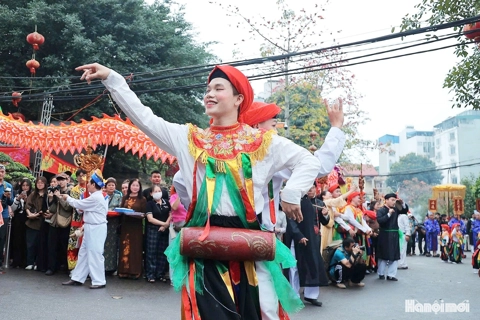
The festival will open on the evening of February 6, 2026, with a large-scale artistic performance that leads visitors through curated Tet spaces, traditional cuisine and cultural rituals.

The Vietnamese traditional Ceremony of Erecting the New Year’s Pole offers international visitors a rare, immersive glimpse into this enduring cultural practice.
During the five-day program, visitors can join signature experiential series such as “Touching Identity,” with demonstrations of a Vietnamese spring kitchen, hands-on banh chung making, Tet jam preparation, and gio (Vietnamese sausage); “Asking for Calligraphy at the Beginning of the Year”; and the “Traditional Tet Home” workshop, which includes narcissus flower carving and Tet tea appreciation. Additional highlights include the Van Dinh Tet Flavor showcase and a kite exhibition.
Hands-on activities continue with “Handicraft Touch” and the Tet Art-tist space, where visitors create contemporary Tet decorations. “Technology Touch” bridges tradition and innovation with a Digital Memory Box, QR-based Lucky Money 4.0 and photo booths that blend classic and modern aesthetics.
A gamified journey, the “Happy Tet 2026 Passport” connects all festival zones, encouraging visitors to collect experience points and exchange them for distinctive souvenirs.
Within this framework, the Hanoi Department of Tourism and the Thang Long - Hanoi Heritage Conservation Center will recreate the traditional Ceremony of Erecting the New Year’s Pole, reviving ancient rituals within the imperial citadel.
As Hanoi positions itself as a year-round cultural destination, Happy Tet 2026 delivers a clear message to global travelers: the Lunar New Year is not just a holiday and it is an experience best lived at its source.
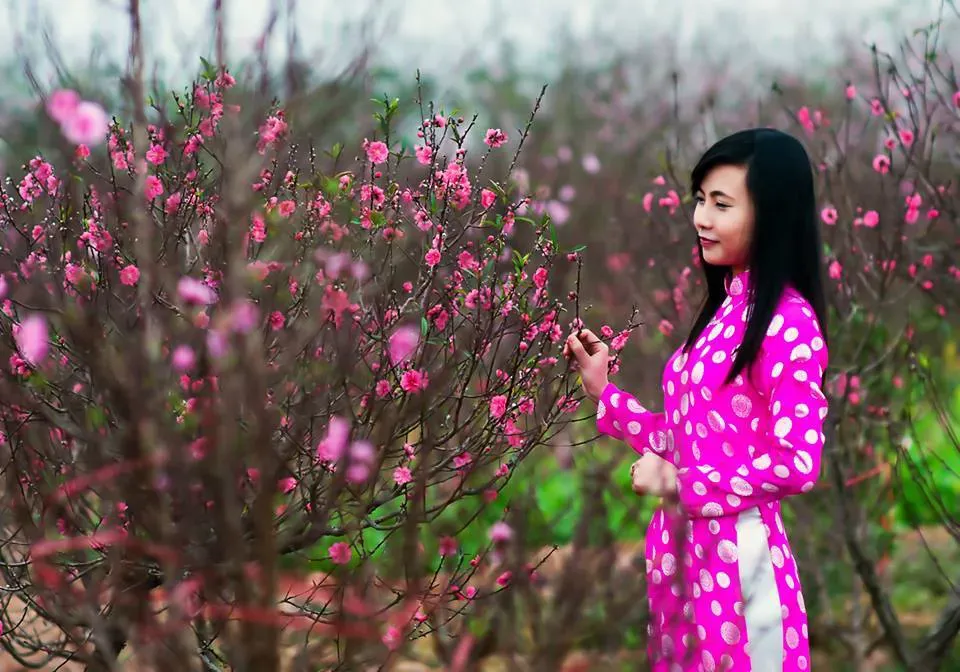
The vibrant pink of peach blossoms in Nhat Tan Village in Hanoi, a flower characteristic of Tet (Vietnamese Lunar New Year) in northern Vietnam. Photo: Chuyen Cua Ha Noi Group
|
Tet Nguyen Dan, commonly known as Tet, is Vietnam’s most important traditional holiday, marking the Lunar New Year and the arrival of spring. Rooted in agrarian and spiritual traditions, it is a time for family reunions, ancestor worship and renewal, when homes are cleaned, debts settled and wishes for prosperity, health and happiness are exchanged. Although the first three days are the most sacred, reserved for family, teachers and close relations, the festive spirit extends far beyond. Across the country, temple visits, folk games and spring festivals often last seven to ten days, especially in major cities and heritage sites. In 2026, Vietnam enters the Year of the Horse, a zodiac symbol of vitality, independence and forward momentum. While the official public holiday usually lasts about five days, the wider Tet season offers travelers more than a week of immersive cultural experiences. Events such as Happy Tet 2026 help extend the celebration, allowing international visitors to engage with Vietnamese New Year traditions beyond the peak period. For Hanoi, the Year of the Horse brings both symbolic and practical momentum, reinforcing the capital’s role as a dynamic gateway where ancient rituals, contemporary culture and global tourism meet at the opening of the lunar calendar. |