Northern ethnic heritage shines in Hanoi Lunar New Year showcase
An early Lunar New Year showcase for international and domestic visitors highlights the traditions of northern ethnic communities, reflecting broader efforts to preserve and promote intangible cultural heritage.
THE HANOI TIMES — Gongs echo through wooden stilt houses as incense fills the winter air, while women in handwoven brocade and village elders prepare traditional rituals, evoking the spirit of Tet, Vietnam’s Lunar New Year, weeks ahead of the holiday.

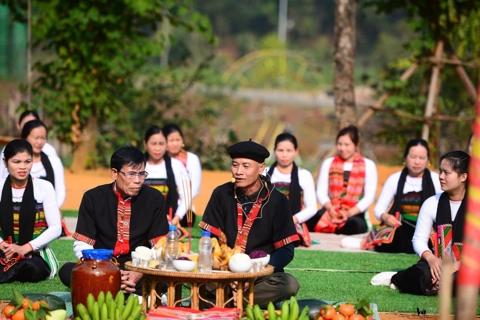
The Thay Mo, a ritual specialist of the Muong ethnic minority, leads prayers and offerings believed to ensure good health, favorable weather and abundant harvests. Photos: Lai Tan/ The Hanoi Times
The scenes are featured in the “Returning to the Village to Welcome Spring” program, set for January 17–18 at the Vietnam National Village for Ethnic Culture and Tourism in Doai Phuong Commune, Hanoi, as part of the “Tet in the Village” series celebrating spring and the Lunar New Year in the capital.
The event is designed to go beyond tourism, introducing long-standing customs, rituals and artistic practices that define community life among ethnic groups in northern Vietnam that mainly unfamiliar to international visitors.
Starting January 17, activities at the Muong ethnic village recreate the festive Tet atmosphere of Vietnam’s mountainous regions, with traditional folk songs and dances inspired by agricultural life and spiritual beliefs, offering visitors a glimpse into how local communities welcome the new year.
Audience participation is central to the experience, with visitors invited to join communal circle dances and bamboo pole dances accompanied by gongs and drums, ceremonial instruments symbolizing unity and collective strength in highland cultures.
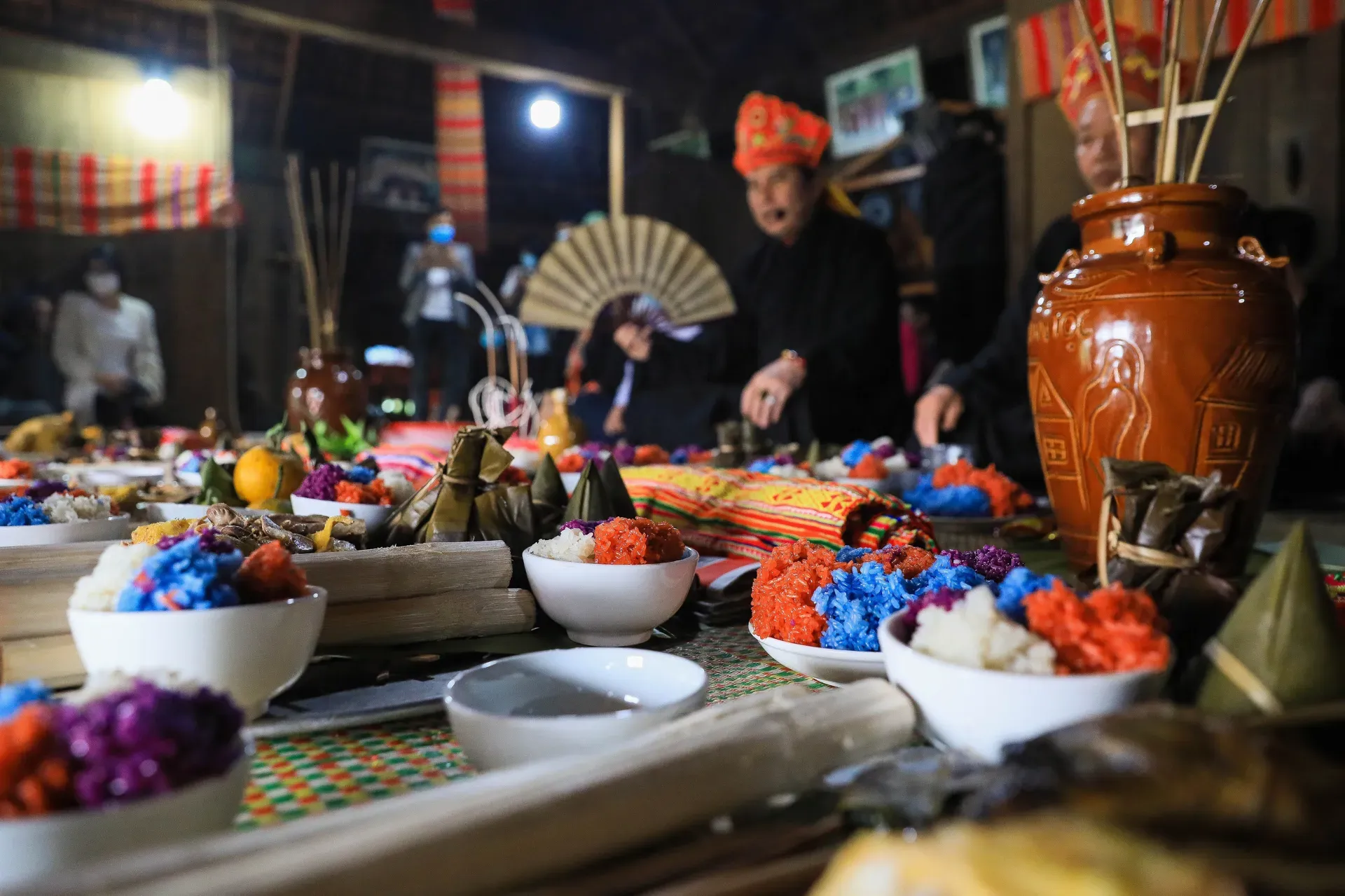
Offerings at the ceremony.
The focus shifts to ritual on January 18, when the Muong community reenacts the Khoong Bep (Kitchen God Worship Ceremony), a traditional observance held at the end of the lunar year, to honor ancestors and the kitchen deity, believed to protect the household and bring prosperity in the coming year.
Staged inside a traditional stilt house, the ceremony is led by a Thay Mo or shaman who performs prayers and offerings for good health, favorable weather and abundant harvests, highlighting the cultural importance of the home and kitchen in Vietnamese society, where domestic spaces are closely tied to spiritual life.
In addition to the main events, visitors can explore everyday cultural activities associated with village life, including traditional board games, bamboo puppetry and outdoor folk games such as stilt walking and swinging.
A popular feature for international tourists is the ethnic costume experience area, where visitors can try on handcrafted brocade clothing and take photos in front of traditional stilt house architecture, offering a rare opportunity to engage with Vietnam’s highland cultures within a modern capital city.