Hanoi's traditional craft villages join World Crafts Network
The artisan villages of Bat Trang and Van Phuc are hubs of creativity, showcasing the skill and dedication of traditional Vietnamese craftsmen.
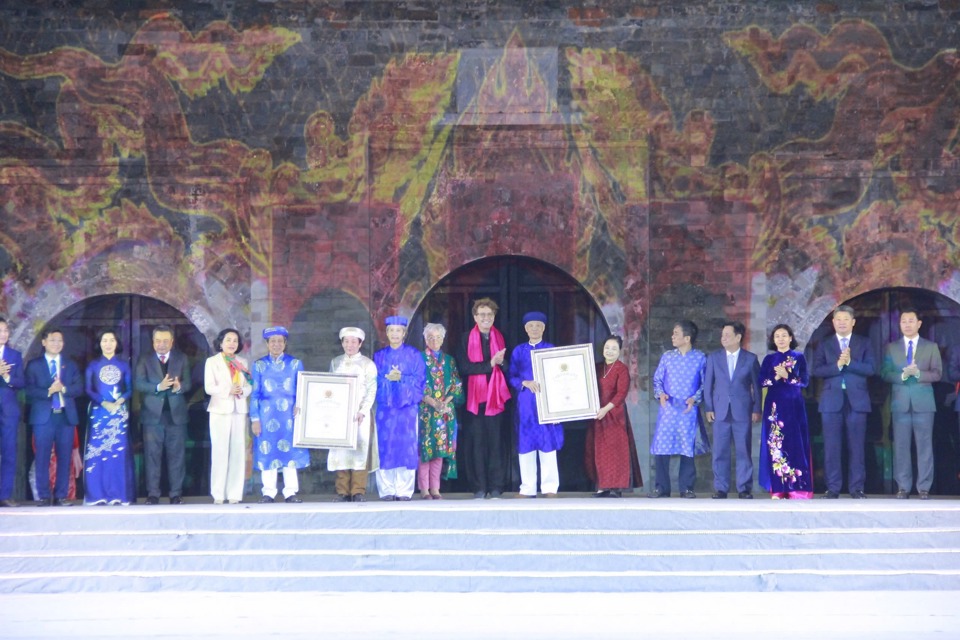
The Bat Trang Pottery and Van Phuc Silk Weaving villages were announced as members of the World Crafts Network on the evening of February 14 at the Thang Long Imperial Citadel in Hanoi.
In his speech at the ceremony, Nguyen Manh Quyen, Vice Chairman of the Hanoi People's Committee, highlighted that Thang Long - modern-day Hanoi - has long been recognized as the "land of hundreds of trades" in Vietnam. For centuries, it has stood as the nation's largest cultural hub, home to significant historical relics, cultural heritage sites, and traditional craft villages.
| Deputy Chairman of Hanoi People's Committee Nguyen Manh Quyen delivers a speech at the ceremony. Photo: Tung Nguyen/kinhtedothi.vn |

"The artisan villages of Bat Trang and Van Phuc are not only symbols of traditional Vietnamese craftsmanship, but also centers of creativity, producing art forms that reflect the skill and dedication of the artisans and workers," he noted.
With a rich history and meaningful stories embedded in each product, these craft villages have endured over time and become an integral part of every Hanoian's identity. The skilled hands of artisans have created countless exquisite handicrafts that have stood the test of time and continue to thrive today.
Awarding the titles of "World Craft Village of Ceramics" to Bat Trang and "World Craft Village of Silk Weaving" to Van Phuc, Saad al-Qaddumi, Chairman of the World Craft Council, said: "Vietnam, especially the traditional artisanal villages of Hanoi, has long been famous for its exquisite handicrafts. From the finely crafted ceramics of Bat Trang to the delicate silk of Van Phuc, these are not just livelihoods - they are vibrant symbols of the culture, creativity, and resilient spirit of the Vietnamese people".
| Hanoi's craft villages "Bat Trang Pottery" and "Van Phuc Silk Weaving" are members of the World Crafts Network. |
“The stories of these two villages serve as a powerful testament to the resilience of their communities. Despite facing many challenges, they have risen to become centers of craftsmanship and cultural pride,” he added.
Currently, Hanoi is home to the largest number of artisan villages in the country, some 1,350, practicing 47 of Vietnam's 52 traditional industries. Each village is distinct, with unique products that reflect local culture and compete strongly in both domestic and international markets, such as ceramics, weaving, embroidery, lace, woodworking, and agricultural processing, among others.
Hanoi has implemented a development plan for its craft villages through 2025, with a vision through 2030.
In addition, a master plan for the development of artisan villages in the city has been approved for the period 2025-2030, with a vision for 2050. Along with this, various mechanisms and policies are being put in place to preserve and develop the city's artisan villages.