Industrial infrastructure - a key to realizing Hanoi's 2045 vision
The construction of critical industrial infrastructure has now become a priority as Hanoi is embarking on socio-economic recovery.
A strong focus on developing industrial infrastructure during the next 10-15 years would lay the platform for Hanoi to realize its 2045 development vision, including a GRDP per capita of US$36,000.
| Overview of the meeting. Photos: Thanh Hai |
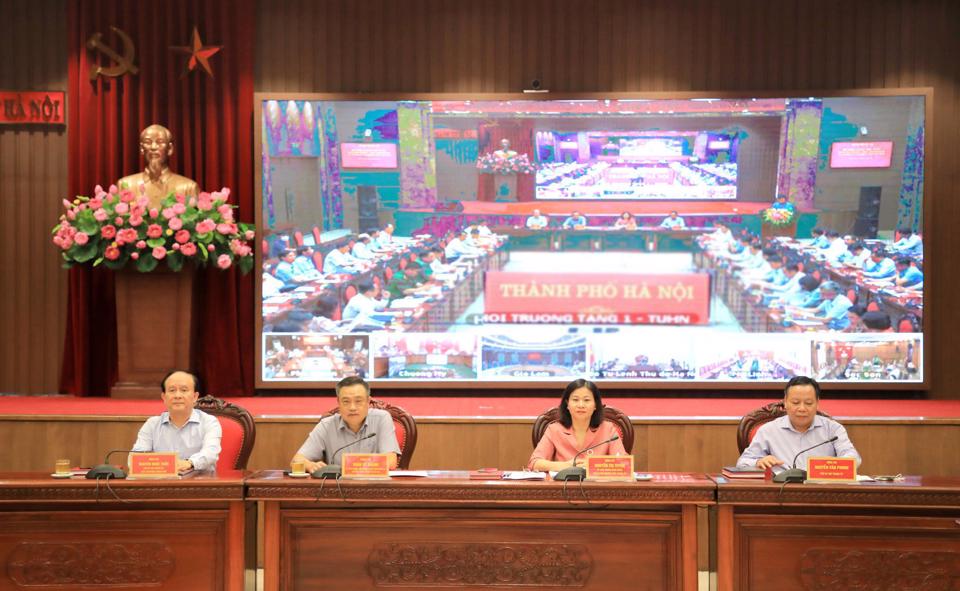
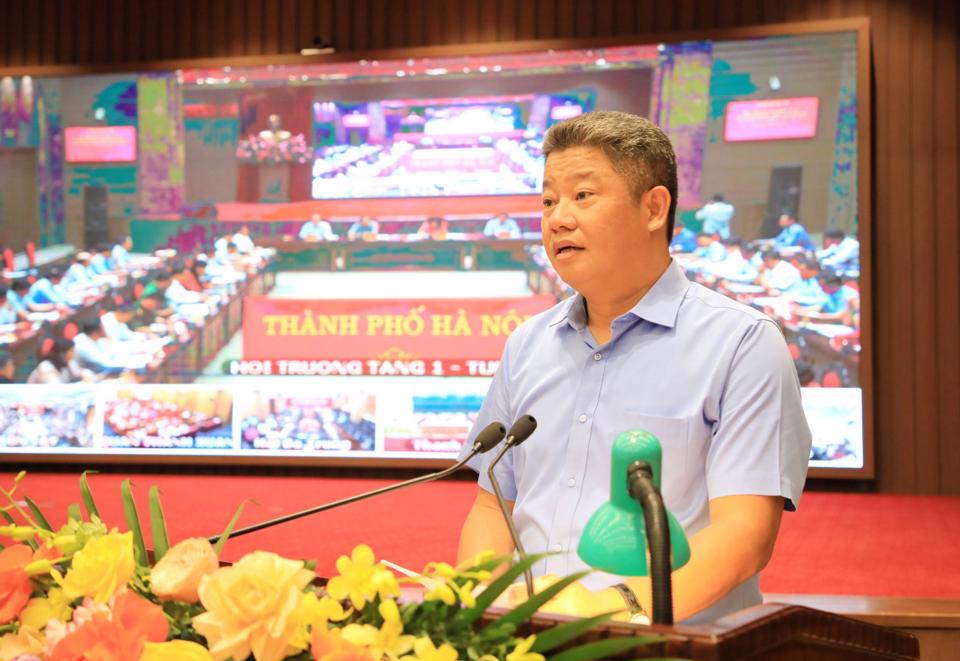
Vice Chairman of the Hanoi People’s Committee Nguyen Manh Quyen gave the remarks during the city’s quarterly meeting to discuss the progress of the construction of industrial parks and clusters in the city on September 28.
According to Quyen, the development of industrial parks and clusters in Hanoi over the past ten years have not met expectation. Still, as the city has now overcome the Covid-19 impacts and embarked on economic recovery, “the construction of key industrial infrastructure has now become a priority,” he said.
At the meeting, Chairman of the Quoc Oai District People’s Committee Nguyen Truong Son said the locality currently has one industrial park in Thach That – Quoc Oai, two industrial clusters with a combined area of 30.16 hectares, and 35 companies.
They employ around 1,600 workers with an average monthly income of VND9-10 million ($378-420) per person.
Son expected Quoc Oai District to have ten industrial clusters by 2030 in 245 hectares spreading in 11 communes.
He added that the city had decided to establish four industrial clusters, including Tan Hoa, Ngoc My – Thach Than, Nghia Huong, and Ngoc Liep, in an area of 54.84 hectares.
| Vice Chairman of the Hanoi People's Committee Nguyen Manh Quyen. |
To accelerate the progress of the construction of industrial parks and clusters in the locality, Son asked the city and other government agencies to allow the change of land use from agricultural to non-agricultural purposes, along with simplifying investment procedures for industrial parks.
Chairwoman of the Gia Lam District People’s Committee Dang Thi Huyen added that under the development planning of industrial parks in Hanoi until 2020, with a vision to 2030, the district would have eight industrial clusters. However, only five have become operational, and the other three are still under construction.
Huyen suggested greater efficient cooperation between various municipal agencies to remove legal bottlenecks during the implementation process.
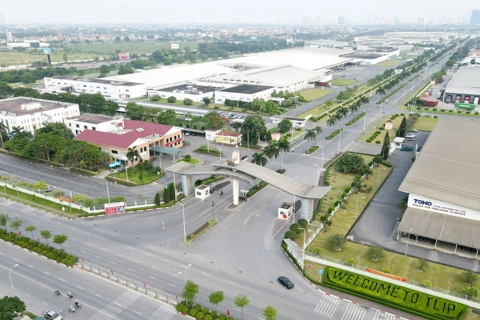
Currently, Hanoi is home to 10 operational industrial parks covering a total area of 1,347 hectares, in which the occupancy rate of nine industrial parks has reached nearly 100%.
These industrial parks in Hanoi attracted over 700 projects as of December 2021, including 303 foreign investors with registered capital of US$6.1 billion; 399 domestic projects of VND18 trillion ($792 million), averaging $18 million per FDI project, and $2.3 million a domestic one.
Industrial parks in Hanoi employ nearly 165,000 workers, including 1,100 foreign nationals. It is estimated that one hectare of land in Hanoi would attract $5.5 million in investment capital and provide jobs for 160 workers.
In the 2021-2025 period, Hanoi plans to allocate 1,200 hectares to construct five new industrial parks.
These include the 302.8-hectare Soc Son Industrial Park, located in Minh Tri and Tan Dan communes; Dong Anh Industrial Park (300 hectares) in communes of Nguyen Khe, Xuan Non, Thuy Lam, Lien Ha, and Dong Anh village; Bac Thuong Tin Industrial Park (112 hectares) in Van Binh, Ninh So, Lien Phuong communes of Thuong Tin District; Phu Nghia expansion Industrial Park (389 hectares) in Chuong My District; and Phung Hiep Industrial Park (175 hectares) in Thuong Tin District.