Vietnam to grow one million hectares of low-carbon rice
The plan matters a lot to Vietnam as the country pursues climate change targets and promotes rice trade with strategic partners amid global food concerns.
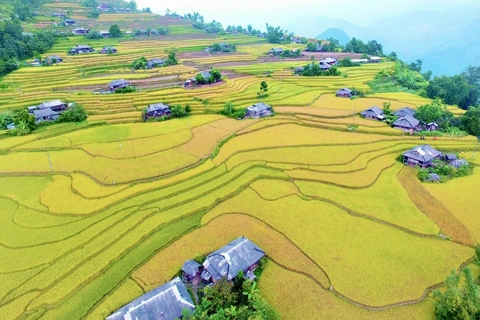
Vietnam's plan to grow one million hectares of high-quality, low-carbon rice fields in the Mekong Delta demonstrates the country's twin missions of ensuring national food security and sustainable agriculture.
The idea was unveiled at a conference in Kien Giang this week, attended by Deputy Prime Minister Tran Luu Quang.
The project, to be implemented in 12 Mekong Delta provinces, including Kien Giang, An Giang, Dong Thap, and Soc Trang, is one of the World Bank's key programmes, said Deputy Minister of Agriculture and Rural Development Tran Thanh Nam, adding that the World Bank will lend Vietnam US$500 million for the project.
Kien Giang takes on an important role
Given this strategic project, the southern province of Kien Giang is committed to taking the lead in sustainable agriculture, while ensuring better benefits for farmers and producers, according to Le Quoc Anh, Vice Chairman of the Kien Giang Provincial People's Committee.
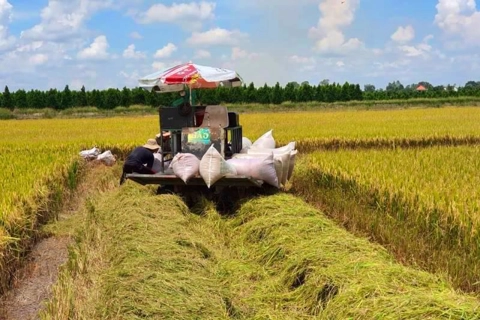
| Rice harvest in Mekong Delta. Photo: Huu Tuan/The Hanoi Times |
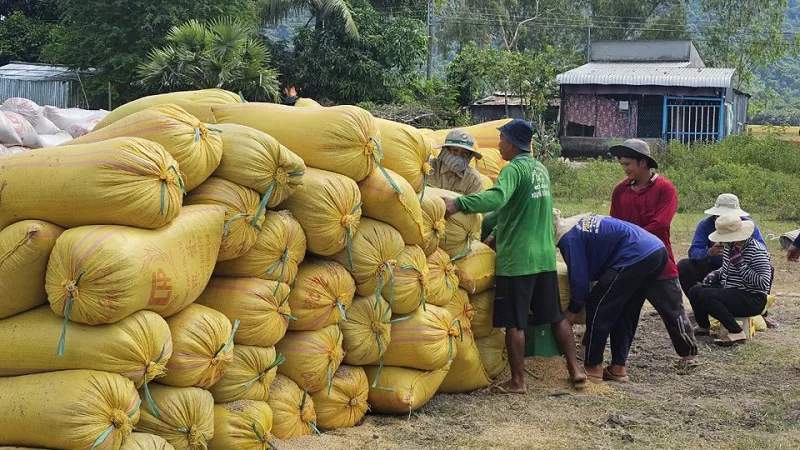
"Farmers in the Delta region and Kien Giang Province are expecting higher incomes from the implementation of the project," he said.
"We hope that by 2030, the value of rice production will increase by 40% and the rate of return for local farmers will exceed 50%," the provincial vice chairman added.
Kien Giang Province is very supportive of the project implementation and has launched an action plan, Anh said.
The province will cultivate 60,000 hectares of high-quality, low-carbon rice fields in 2024, and expects to increase the area to 100,000 hectares in 2025 and 200,000 hectares in 2030, he said.
The provincial government and local authorities will develop policies to encourage investment in sustainable agriculture and support cooperatives to join the scheme, he said.
"Financial resources will be pooled and allocated to start the project as soon as possible in 2024," Vice Chairman Anh affirmed.
Bui Ba Bong, Chairman of the Vietnam Rice Industry Association, pledged to develop 10 model cooperatives under the project and to "better connect farmers and businesses in the value chain," he said.
The veteran specialist suggested that local farmers adopt high-tech solutions for farming and reducing emissions, and join rice promotion activities.
He also encouraged individuals and units to come up with breakthrough initiatives and solutions.
"The partnership with the International Rice Research Institute (IRRI) is expected to develop three to five 200-hectare high-tech low-carbon rice sample fields," he said.
Other measures include developing Vietnamese standards for low-carbon rice and certifying low-carbon rice brands that come from the project areas, Bong said.
The association will help link government agencies with domestic producers and farmers to disseminate policies, study changes in agricultural regulations, and help farmers and producers promote their products in international markets, especially low-carbon products, he stated.
Government responsibilities
Stressing the role of the government, ministries and central level agencies, Bong recommended that the project be considered as part of green growth programs.
"It should be aligned with other climate change and emission reduction projects that will drive the development of the Mekong Delta region, improve living conditions, and ensure national food security," Bong said.
The central bank should take measures to initiate a credit package for cooperatives and businesses and improve their performance, he said.
Meanwhile, the government should develop a national research program on high-quality, low-carbon rice to prepare for the next 5-10 years, he said.
| Rice production at Loc Troi Group. Photo: The Hanoi Times |
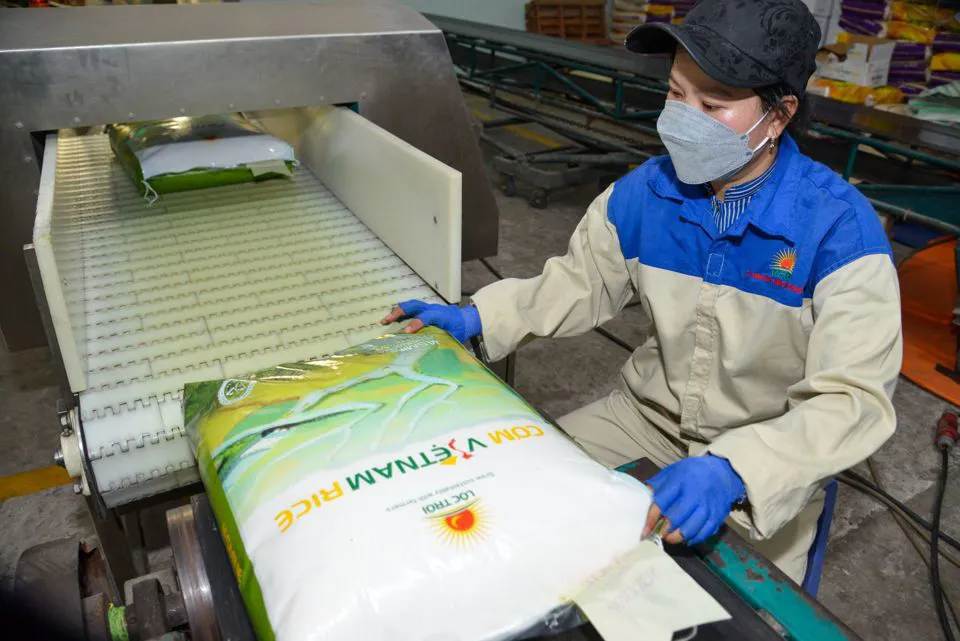
"There should be an experimental program on carbon credits for rice cultivation in 2024, as international organizations are willing to provide Vietnam with financial and technical assistance in this matter."
He said the ministry and the World Bank are working on a carbon credit policy for rice cultivation to increase farmers' income and reduce emissions.
The ministry will work with the State Bank of Vietnam and commercial banks to provide a preferential loan package for businesses and cooperatives that join the project, Nam said.
He urged southern provinces to develop their project implementation plans for 2024 and beyond, improve business conditions to attract private investors, provide training to raise the skills of local workers, and improve domestic infrastructure.
Deputy Prime Minister Tran Luu Quang said the government will do its best to support provinces, enterprises and cooperatives in the Mekong Delta to implement the project.
He tasked the finance ministry to come up with a feasible funding plan for the project, and reminded localities to pay attention to negotiating ODA loans with international agencies.
He instructed the Ministry of Finance to come up with a feasible financing plan for the project and reminded localities to pay attention to negotiating ODA loans with international agencies.
The Mekong Delta region is the largest rice basket in Vietnam, producing a total of 24-25 million tons of rice annually. This figure accounts for more than 90% of the country's total rice production. In 2023, the region exported more than $4.8 billion worth of rice, up 39.4% from the previous year.
However, poor rice management and the use of outdated farming practices and technologies have resulted in low productivity and yields for farmers.
Meanwhile, the use of chemicals and pesticides has polluted the environment and increased greenhouse gases. Every year, the region produces 26-27 million tons of waste. Of this, 70% is buried and burned, and only 30% is used in other agricultural activities. Burning and burying rice-farming waste pollutes the air and increases methane and other greenhouse gas emissions.