Local banks cut interest rates in response to PM’s request
The rate cuts come in response to the Prime Minister’s directive to inspect and review banks that have recently increased deposit rates.
Five banks have lowered their deposit interest rates by 0.1 to 0.3 percentage points over the past two days following the Prime Minister’s directive to inspect institutions that have raised deposit rates.
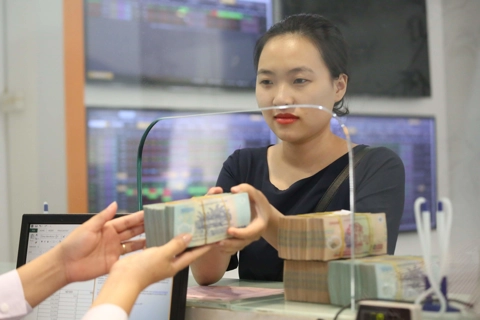
| BIDV bank revises the interest rates. Photo: Pham Hung/The Hanoi Times |

VietBank lowered its rates on over-the-counter deposits by 0.1 to 0.4 percentage points. BanViet Bank cut rates by 0.1 to 0.3 percentage points for deposits made at branches, transaction offices, and online.
MSB reduced rates by 0.2 percentage points for deposits of 12 months or more at the counter and online for selected maturities. Similarly, Eximbank lowered rates by 0.2 percentage points for certain online deposit terms.
Although the adjustments are not significant, they contrast with the slight upward trend in interest rates observed in recent months. As of February 26, only three banks—GPBank, CBBank, and Woori Bank—offered interest rates of 6% or more for deposits of less than USD40,000 with a maturity of 12 months.
The rate cuts come in response to the Prime Minister’s directive to inspect and review banks that have recently increased deposit rates. The government has also ordered strict actions against any violations or non-compliance. The State Bank of Vietnam (SBV) has been instructed to consider management tools, such as credit growth limits and license revocation, to maintain control.
According to Vietcombank Securities (VCBS), state-owned banks are likely to keep rates stable to support the economy. Meanwhile, private banks, especially those heavily dependent on customer deposits and with less flexible funding structures, are under pressure to raise rates slightly to attract deposits and boost lending. Smaller banks with weaker competitiveness, riskier customer bases, and slower financial recovery may find it more challenging to expand profit margins.
Following the Prime Minister’s directive, the SBV announced that it would closely monitor market developments and require banks to publish lending rates on their websites. "Commercial banks must post average lending rates, the spread between deposit and lending rates, and details of credit packages and loan programs on their websites," the SBV said.
The central bank has also emphasized the need for financial institutions to strictly follow government directives, cut operational costs, enhance digital transformation, and simplify procedures to lower lending rates. Banks are encouraged to lower their profitability to facilitate businesses' access to credit and boost economic growth.
Regarding credit allocation, the SBV has instructed banks to prioritize lending to business sectors, key economic drivers such as consumption, investment, and exports, and emerging growth areas, including digital transformation, green transition, circular economy, sharing economy, science, technology, and innovation. Meanwhile, lending to high-risk sectors must be strictly controlled to ensure financial stability and efficiency.
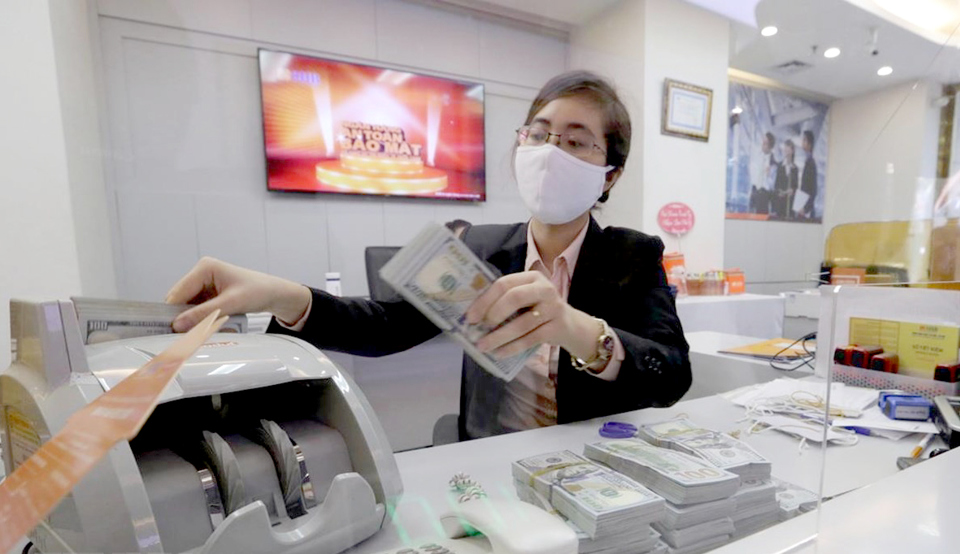
| SHB Branch in Hanoi. Photo: Viet Linh/The Hanoi Times |
According to Deputy Governor Pham Thanh Ha, the State Bank of Vietnam (SBV) has directed financial institutions to take comprehensive measures to stabilize deposit interest rates, which play a crucial role in determining lending rates. However, some commercial banks have raised deposit rates, which may lead to higher lending rates. Therefore, it is essential to continue taking strong measures to reduce lending rates.
"Commercial banks must strictly comply with the directives of the Government and the Prime Minister, maintain stable deposit interest rates, and actively implement solutions to lower lending rates," the Deputy Governor emphasized.
The SBV will continue to closely monitor deposit and lending rates, enforce transparency requirements on bank websites, and strengthen inspections and supervision of financial institutions. “We will take strict action against any violations, including unfair competition and noncompliance with regulations," Ha stated.
High pressure on exchange rates
Looking into the country’s monetary market, Nguyen Huu Huan, an economist at Ho Chi Minh City University of Economics, said that the primary reason for the upward trend in deposit interest rates is the increasing pressure on exchange rates.
“The sharp fluctuations in exchange rates have led the SBV to conduct net withdrawals through the open market operations (OMO) channel, putting pressure on banks' liquidity,” noted Huan.
Additionally, rising corporate credit demand has forced banks to step up capital mobilization efforts to meet lending needs. To support high economic growth, the SBV has set this year’s credit growth target at 16%, equivalent to injecting about approximately $100 billion into the economy. This is a substantial figure, requiring banks to raise a corresponding amount of capital for lending, he noted.
Inflation pressure is not yet a major challenge for Vietnam’s economy this year. Inflation tends to seep into the economy gradually, while domestic demand remains weak, with many people still tightening their spending. Therefore, even if inflation rises, it is unlikely to be too severe.
The biggest challenge for the economy at present is balancing exchange rates and interest rates. Despite the recent cooling of the US dollar, exchange rate pressures remain high. This is due to weaker-than-expected export growth and continued strong net foreign capital outflows.
“Monetary policy always involves trade-offs between macroeconomic objectives. Keeping interest rates low to support economic growth means accepting risks related to exchange rates and capital outflows. When exchange rates rise sharply, imported inflation pressures also increase, creating ripple effects throughout the economy. As a result, the room for using monetary policy as a growth-supporting tool is now very limited,” Huan explained.
Dr. Bui Duy Tung, an economics lecturer at RMIT University Vietnam, also noted that Vietnam’s monetary policy is approaching its limits. Adjusting interest rates to control the exchange rates could be challenging, as the authorities must balance exchange rate stability with economic growth objectives. While raising interest rates could ease exchange rate pressures, it might also negatively impact domestic economic growth.
Dr. Tung emphasized that maintaining flexibility in monetary policy and ensuring close coordination with other economic policies will help Vietnam effectively manage exchange rate fluctuations in the coming period.
Tim Leelahaphan, Senior Economist for Vietnam and Thailand at Standard Chartered, noted that the Vietnamese Government is focused on driving stronger economic growth, which could help keep interest rates low in the short term. However, Standard Chartered forecasts that interest rates will gradually return to normal by the second quarter of 2025, with the SBV expected to raise rates by 50 basis points during that period.
Leelahaphan suggested that inflation, US Federal Reserve policy, and the performance of the Vietnamese dong will play a crucial role, with the SBV’s monetary policy decisions being the key factor in maintaining economic stability and growth in 2025.
Regarding the exchange rate and interest rate dynamics, experts suggest waiting for further signals from exports and foreign direct investment inflows. A positive export outlook and stronger foreign currency inflows could provide more room to stabilize exchange rates and interest rates.