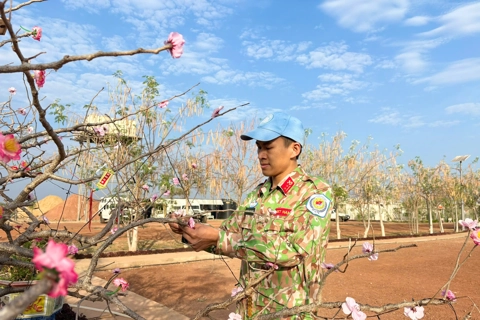
Love for Vietnam remains: Swedish filmmaker
Many Swedish youth strongly supported Vietnam in the struggles for independence and Vietnam’s victory inspired them, united by a shared desire for freedom despite the distance between the two nations.
THE HANOI TIMES — Swedish filmmaker Bo Öhlén now remains emotional when he watched the film documenting the moments of the victory when Vietnamese people put an end to the war 50 years ago, as Vietnam holds a special position in his heart, and so do many Swedish people of his generation.
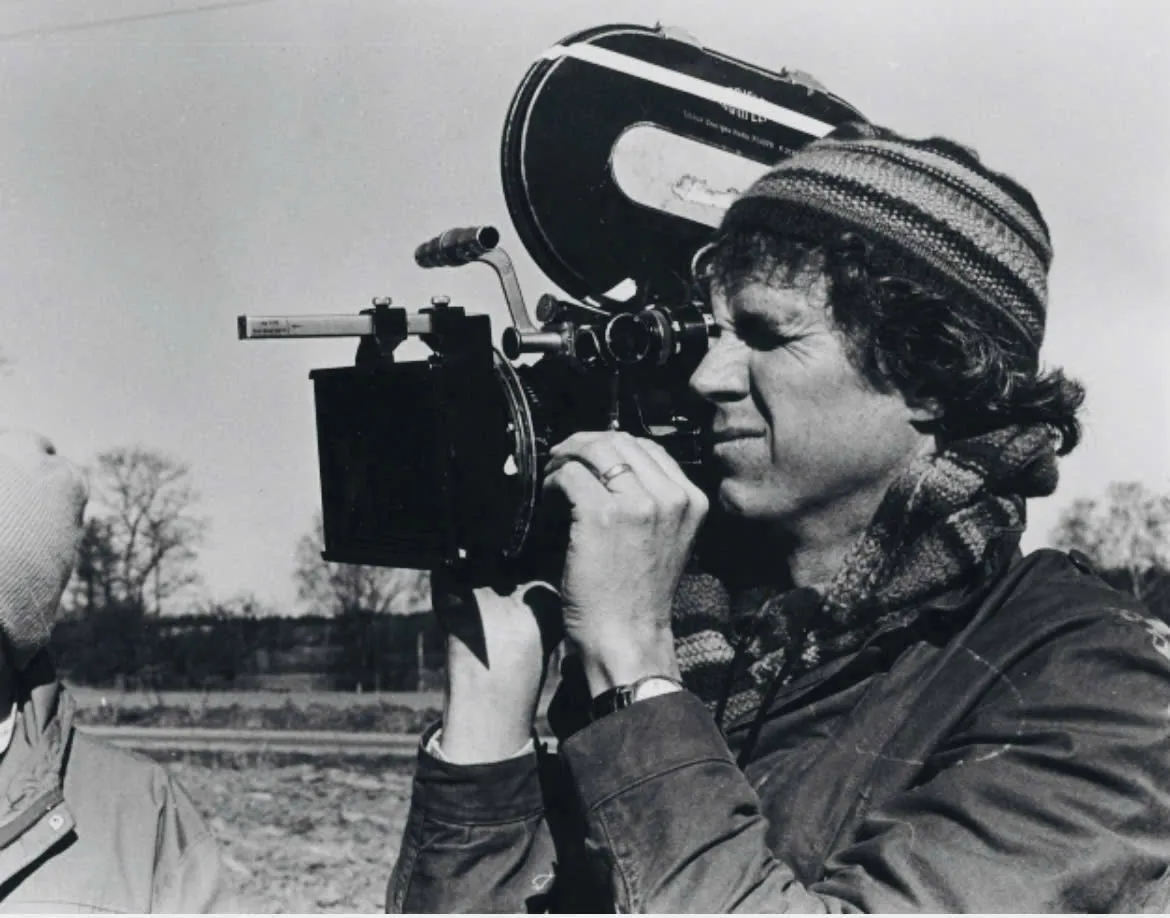
A rare photo of Swedish filmmaker Bo Öhlén in his early career, taken in 1975, the year he directed the documentary highlighting Vietnam’s reunification.
“Many in my generation still hold a deep affection for Vietnam,” the filmmaker shared with The Hanoi Times. “Once again, seeing the film, I was especially struck by how openly everyone expressed the joy over the victory.”
Bo Öhlén revealed his emotions when Sweden handed over Vietnam on the occasion of its 50th anniversary of National Reunification (April 30, 1975-2025), the “Victory Vietnam” film, which showed how Swedish people supported Vietnam in the struggle for independence.
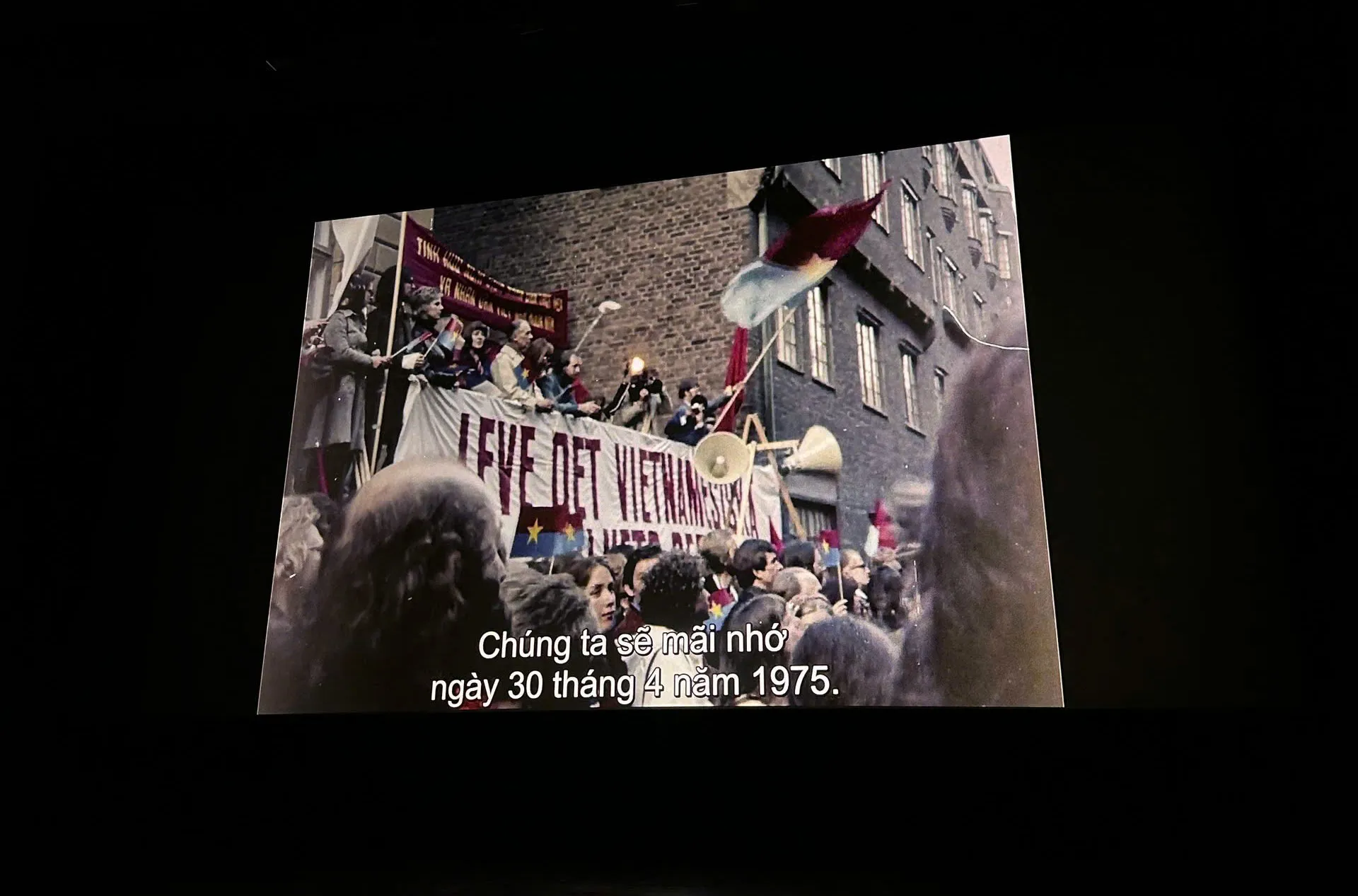
A powerful scene from the documentary “Victory Vietnam” showcasing the solidarity and support of the Swedish people on the day Saigon was liberated.
The film documented thousands of Swedish people who took to the streets in Stockholm to express their joy over the victory of the war against America that separated Vietnam into two parts – North and South – for 30 years.
“In those days, I was a cinematographer who had switched from television, and on the very victory day, I grabbed my camera and together with other filmmakers, we documented how the Vietnamese support was in Stockholm, spontaneously took to the street to express their joy,” Bo Öhlén said.
He affirmed that not only for him but for many Swedish young people at the time, the victory of the Vietnamese army and people was a powerful and inspiring event. Though the countries were far apart, they shared a common yearning for freedom.
Through this film, he hoped to offer a small contribution, a way of saying that Vietnamese people are not alone. “In today’s context, I believe the film serves as a reminder of the enduring spirit of peace and independence.”
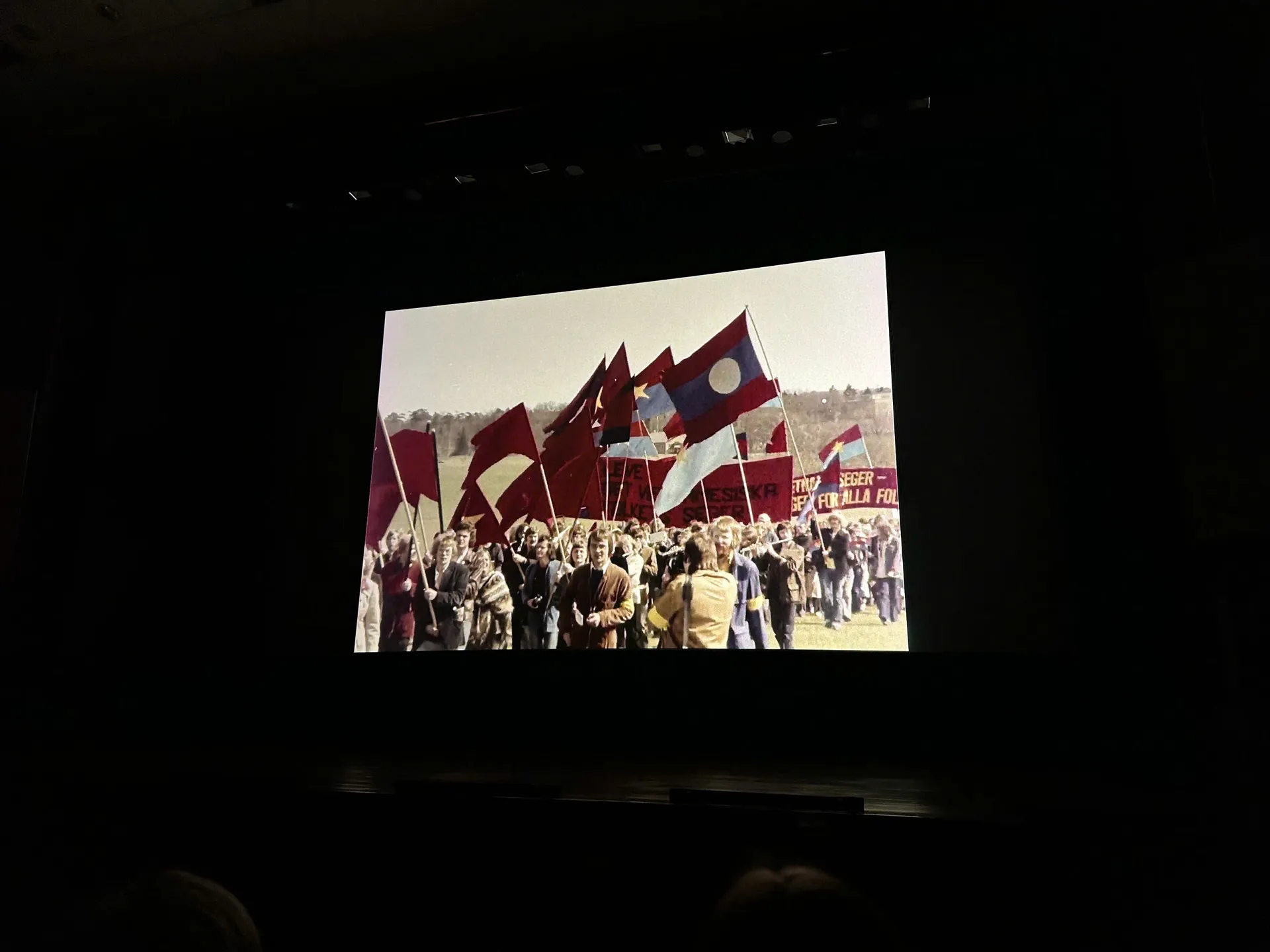
Thousands of Swedish people took on the streets to celebrate the 1975 victory.
The journey of the film
Bo Öhlén talked about the journey of the film, which has just been found at the Royal Library of Sweden. As the film was finished, they could only make one single copy and sent it to Vietnam. Bo Öhlén thought of the film, but he had no copy to watch it. Last Autumn, a very special discovery was made at the Royal Library – the National Library of Sweden, a data file was found that turned out to be their movie. He described the move as “really a moving moment.”
“Victory Vietnam”, directed by Swedish filmmaker Bo Öhlén and shot on April 30, 1975, captures the lively and emotional atmosphere in Stockholm on the day Saigon was liberated, marking the end of the war against American troops.
The film vividly portrays Swedish citizens celebrating Vietnam’s victory, singing peace songs, waving banners in support of the National Liberation Front (NLF), and expressing solidarity with the Vietnamese people.
Interspersed with scenes of parades and heartfelt speeches, the documentary honors the resilience of Vietnam’s struggle and reflects the ongoing political and material support from the global solidarity movement.
The documentary stands as a moving testament to the Swedish people’s support for Vietnam and a valuable record of the spirit of peace and independence that resonated globally. This year’s handover coincides with the anniversary of April 30, making it an especially meaningful addition to the Vietnam Film Institute’s archives.
The filmmaker said the day was surely a very great day for Vietnam, but it was also a significant day for tens of thousands of young Swedish people who have been supporting Vietnam’s struggles.
“Today I’m satisfied that with the help of our Embassy in Hanoi and the Vietnamese Film Institute will be able to show the film again to the Vietnamese audience and convey a feeling of brotherhood and sisterhood between our countries,” Bo Öhlén stressed.
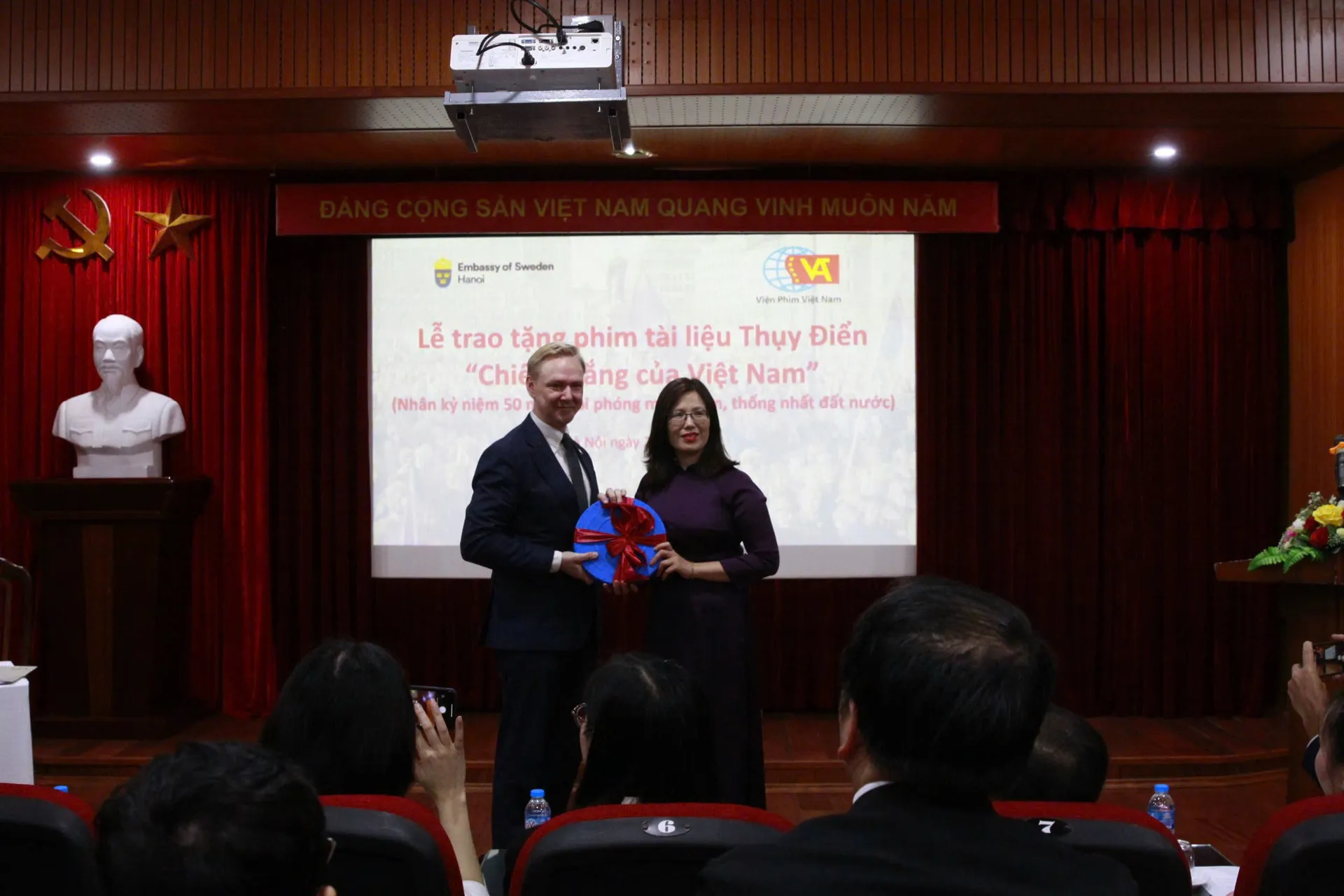
Oscar Edström, Head of Trade and Promotion, the Embassy of Sweden in Hanoi, hands over the “Vietnam Victory” documentary to Le Thi Ha, Director of the Vietnam Film Institute, in late April.
Handing over
The documentary “Victory Vietnam” was handed over to the Vietnam Film Institute a few days before Vietnam celebrated its historic victory and reunification on April 30, 2025.
The handover ceremony was attended by officials, historians, cultural leaders, and media representatives. Swedish Ambassador to Vietnam Johan Ndisi said: “This documentary reflects the deep friendship that Sweden and Vietnam have shared during important moments of history. Through the lens of this film, we see not only Vietnam’s courage and resilience but also the enduring human values of peace and unity that connect us all.”
He hoped that the film would continue to inspire future generations to remember the lessons of the past and work towards a future built on mutual respect, understanding, and cooperation. “Our shared connection is our foundation for building our current and future partnership.”
Dang Van Dong, Deputy Minister of Vietnam’s Ministry of Culture, Sports and Tourism, said: “Victory Vietnam is such an important documentary in color, beautifully captures the support and friendship between Vietnam and Sweden during a defining moment in history. We are proud to preserve it as part of our cultural heritage for future generations.”
The handover of “Victory Vietnam” reinforces the long cultural connection and shared values between Sweden and Vietnam.
Sweden and Vietnam have a long history of cooperation in film preservation. In the 1980s, with support from the Swedish International Development Agency (SIDA), climate-controlled storage facilities were built in Hanoi to address Vietnam’s dire film preservation needs.
Sweden’s extensive collection of Vietnamese films, initially gathered by FilmCentrum, played a significant role. These films were transferred to the Swedish Film Institute for preservation and later handed over to the Vietnamese film archive during a visit by Swedish Culture Minister Marita Ulvskog in 2000. This collection highlighted Vietnam's cultural and historical narratives and fostered deeper cultural ties.
The "Institution Meets Institution" project, funded by SIDA, further strengthened collaboration between Vietnamese and Swedish cultural institutions through knowledge exchange, workshops, and joint projects.
According to Vietnam’s Ministry of Foreign Affairs, Sweden was the first Western country to recognize and establish diplomatic relations with Vietnam (on January 11, 1969). Sweden is also the Western country with the strongest and earliest movement supporting Vietnam during the war (1965). In October 1968, the National Front for the Liberation of South Vietnam established an information office in Stockholm.