Over 30 Vietnamese national intangible heritage added
Communities would make full use of heritage values for tourism and economic development through promotional activities.
Minister of Culture, Sports and Tourism Nguyen Van Hung has just signed a decision to list another 30 practices, representations and knowledge as national intangible cultural heritage.
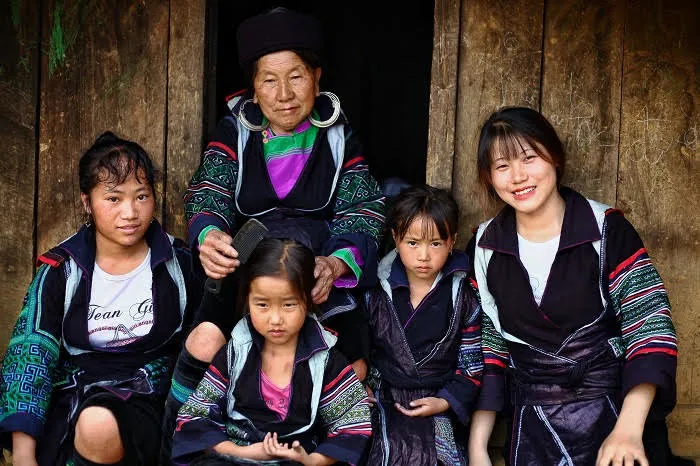
| The Black H'mong women in Sapa, Lao Cai Province are famous for making cloth out of hemp and dyeing it a deep indigo blue. Photo: Sapa Ecolodge |
This would be a good opportunity for localities to promote heritage conservation and develop them into tourism products to attract more travelers.
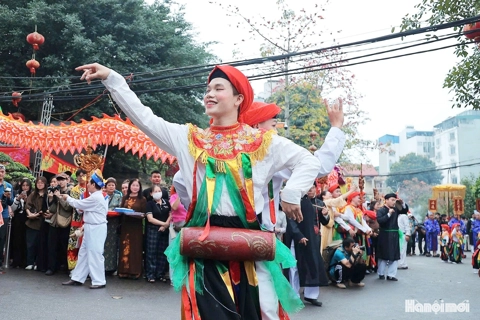
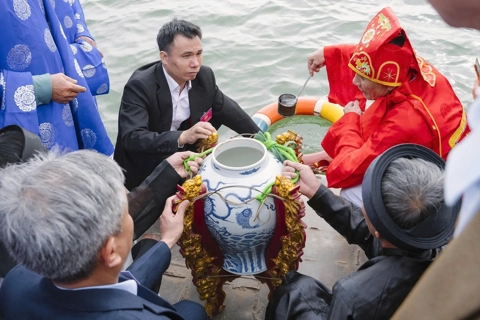
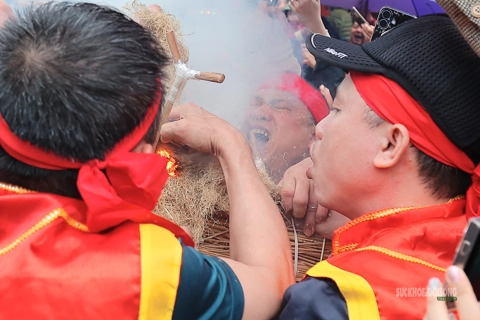
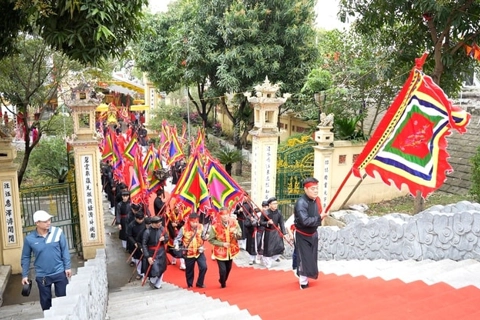
The recently recognized intangible heritage include the Lai Vung spring roll making craft in Dong Thap Province, Liem Thuan drum singing in Ha Nam Province, Vovinam material arts in Ho Chi Minh City, Bong Dien Festival in Thai Binh Province, Black H'Mong ethnic group costume making art in Lao Cai Province, Co Lao ethnic group forest worship ceremony in Ha Giang Province, Kieu singing in Quang Binh Province, and others.
The costumes of the Black H'Mong people of Sapa are completely handmade from natural materials. The fabric is made of linen fibers dyed with natural indigo and polished with beeswax.
The traditional costume reflects the Black H'Mong people's relationship with their environment and their way of thinking through weaving skills, pattern design and motifs on the costume.
According to the Lao Cai Tourism Department, the local government, with the support of businesses, is now helping locals to preserve the folk trade, making it one of the unique intangible heritage of Sapa Town.
| Vovinam Material Arts performance. Photo: Tan Viet |
Hat Kieu or Kieu singing is a unique folk art of the people living in the northern bank of Gianh River, the central region of Quang Binh Province. From the masterpiece "the Tale of Kieu" by the great poet Nguyen Du, many related arts have been formed in the locality, including Kieu fortune telling, Kieu chanting, Kieu singing, and others.
Among them, Kieu singing is the most interesting folk art that features a variety of folk performances such as singing, dancing and games. This type of folk art is popular in Quang Kim, Quang Phuong communes in Quang Trach District; Chau Hoa in Tuyen Hoa District; Quang Minh and Quang Thuy in Ba Don Town.
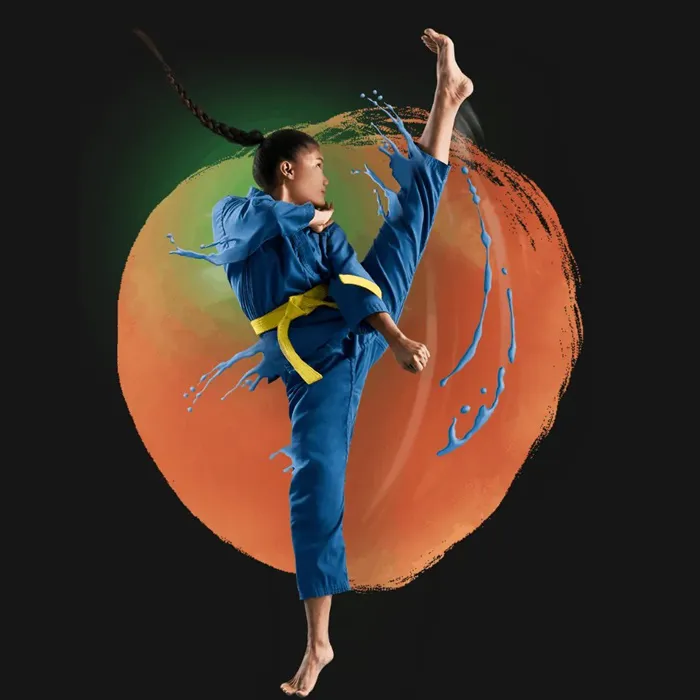
Meanwhile, Vovinam, another heritage, was founded in 1936 by Master Nguyen Loc, is one of the most popular style of martial arts in Vietnam and around the world. The Vietnam Vovinam Federation confirms that there are more than 2.5 million practitioners of the martial art in 70 countries and territories.
Vovinam involves the use of different parts of the body such as hands, elbows, legs and knees for self-defense. Martial artists also learn to use weapons, including swords, knives, and fans.
The strong growth of the art form is evidenced by the establishment of the World Federation as well as continental federations in Asia, Europe and Africa.