PM calls for FaceID technology to be used in immigration process
Vietnam utilizes FaceID technology to streamline immigration.
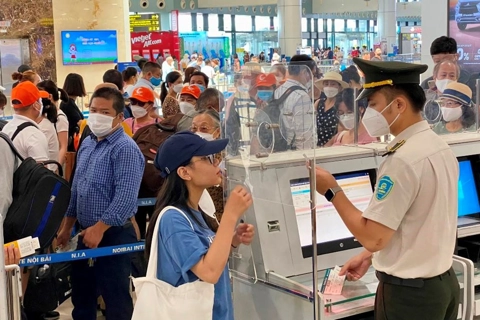
Vietnam's Prime Minister Pham Minh Chinh has asked the Ministry of Public Security (MPS) to study the application of online immigration procedures using facial recognition (FaceID) and electronic passport (e-passports).
"The move aims to streamline the process for foreign visitors to Vietnam and make online immigration procedures more convenient," said the head of government.
He has just signed a comprehensive directive on tourism development, urging the MSP to overhaul administrative procedures and use technology and automation to process international visitors to Vietnam.
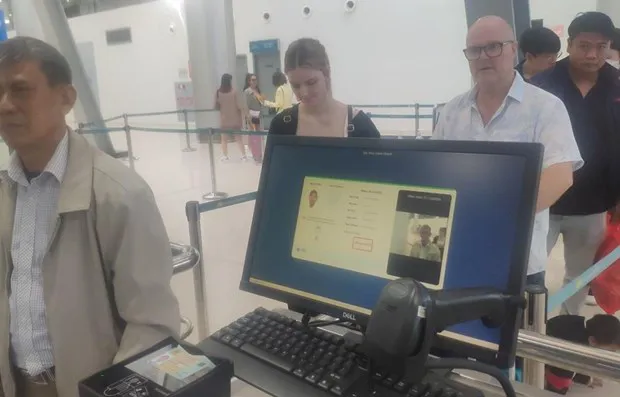
As of the beginning of February 2023, passengers have been biometrically verified as they pass through the security checkpoint at Cat Bi International Airport. Photo: The Airports Corporation of Vietnam |
"As Vietnam embarks on a digital revolution in its tourism sector, the policy aims not only to improve administrative efficiency through technology and automation, but also to attract tourists from high-end source markets," PM Chinh stressed.
The MSP will also consider piloting on-the-spot border gate visas and long-term incentives for foreign visitors, and plans will be reported to PM Chinh in the second quarter of 2024.
The MPS will coordinate with the Ministry of Culture, Sports and Tourism, the Ministry of Foreign Affairs, and relevant agencies to propose a conditional exit and entry incentive policy for tourists from specific potential source markets with high tourism spending and long stays.
Prime Minister Chinh has also urged tourism establishments to publish their prices, offer their services at fair market prices, and create a friendly and hospitable environment for tourism.
Relaxing visa policies
To faciliate the visitors' stay, Vietnam will expand the list of unilateral visa waiver countries; a pilot visa exemption for short-term stays (from 6 to 12 months) will be introduced for tourists from a number of large and high-spending markets.
The country will also pilot long-stay visas (12-36 months) to attract market segments of high-end tourists and retirees with high spending capacity from a number of target markets such as Europe, Northeast Asia, North America, India, and some countries in the Middle East.
The directive emphasised that Vietnamese tourism still faces many challenges that require the tourism industry and business community to truly innovate their thinking, approaches and methods.
The directive also sets out to create a favourable business environment, encourage innovation and creative start-ups, develop tourism businesses with strong brands, support small and medium-sized tourism enterprises to apply science and technology, promote digital transformation and access capital sources.
In the directive, the prime minister also emphasised the need to proactively innovate methods of promoting tourism and retaining tourists, focusing on exploiting customer market segments where Vietnam has strengths, such as: conference tourism, golf tourism, night tourism, community tourism, rural tourism, culinary tourism.
Since February 2023, the Civil Aviation Authority of Vietnam (CAAV) has been piloting facial recognition (biometric authentication) for passengers at check-in counters to board aircraft. Travellers using electronic citizen ID cards with embedded chips will be required to pass through a facial recognition system at security checkpoints.
Cat Bi International Airport in Haiphong is the first airport in Vietnam to install the pilot equipment and software. So far, the cameras have been able to identify 100% of passengers.