“Produce more from less”: Danish agricultural philosophy for Vietnam
Denmark, through strategic sector cooperation (SSC) with Vietnam, helps implement national action plan in agriculture while promoting the engagement of stakeholders in the value chain.
Among issues shared at an event held in Hanoi on August 17, Vietnamese officials, experts, and businesses were impressed with the philosophy of “producing more from less” in Denmark’s agri-food sector.
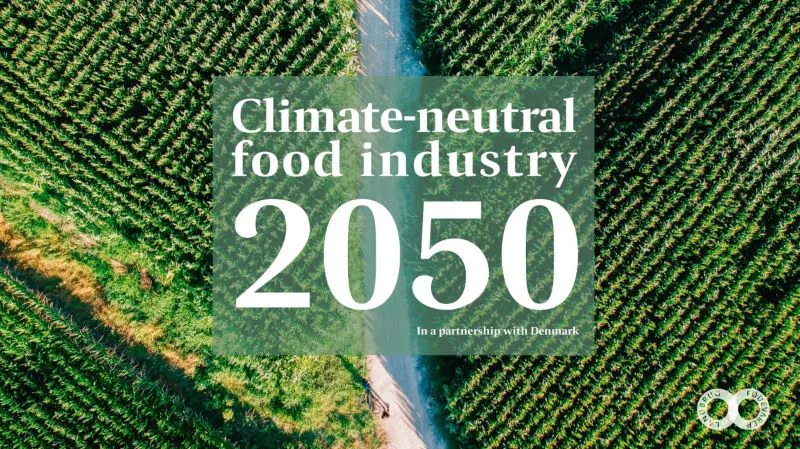
Denmark targets the climate-neutral food industry by 2050. Photo: Danish Agriculture and Food Council |
Troels Jakobsen, Trade Counsellor of the Embassy of Denmark, said Denmark produces three times more food than the Danish population can consume, with some of the lowest greenhouse gas emissions in Europe.
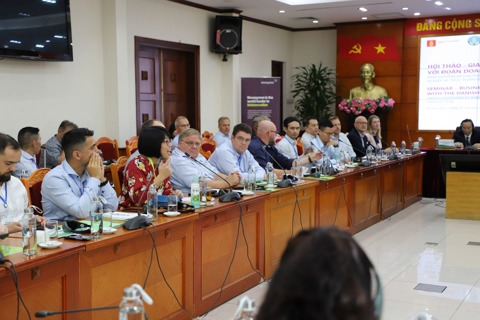
The idea was shared at Seminar – Business Matchmaking held in Hanoi on August 17 to discuss Danish experiences and solutions in sustainable agri-food production.
Meanwhile, Jeppe Søndergaard Pedersen, International Chief Advisor, the Danish Agriculture and Food Council, said Denmark has applied technology in the value chain in the agriculture and food cluster in the fields of primary, processing, and agro with a close eye on the production to ensure food safety from farm to table.
He said the production base accounts for 2.62 million hectares or 61% of the total land area of Denmark. However, the yield is far more than expected. In 2020, the Nordic country earned 9,6 million tons of grain, 5.7 million tons of milk, nearly 2 million tons of pork, some 170,000 tons of poultry, and more than 130,000 tons of beef.
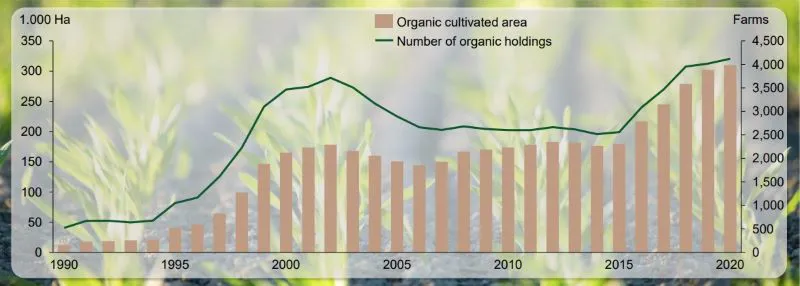
The Danish agri-food sector is impressed by the reduction in the use of pesticides which was 53% lower in 2019 than in 2010. At the same time, organic production has increased significantly. In 2020, more than 4,000 organic farms farmed on 310,000 hectares of land.
The thing that left an impression on participants at the event in Hanoi is “More with less” or “sustainable intensification.” It means that Sustainability is a prerequisite; a more circular and resource-efficient approach; ensures a smaller impact on the environment, climate and surroundings; yet remains competitive through higher yields and increased efficiency, more value-added, targeted efforts towards promising new markets, and new partnerships and alliances.
Sharing the same philosophy on sustainability, Director of the Center for International Cooperation, the Danish Veterinary and Food Administration (DVFA) Troels Vensild said the Government supports exporting from the green and sustainable food clusters in Denmark. DVFA is responsible for food, feed and veterinary legislation; food, feed, and veterinary control; animal diseases; animal welfare; nutritional information; and international cooperation.
Accordingly, the Danish food sector is well positioned abroad in terms of brand and sustainability for the following reasons: Danish companies are among the world’s most sustainable food producers; Denmark is seen as a sustainable “frontrunner” in many countries in organic production and milk production; the green transition is key for Danish and the country’s companies to export sustainable products, resource-efficient solutions, and technologies.
In pursuing its philosophy of “Larger production with less input and impact”, Denmark is heading toward a climate-neutral food industry by 2050 in partnership with other countries to spread the idea.
Carsten Baltzer Rode, Chargé d'affaires, the Embassy of Denmark in Hanoi, said at the Seminar – Business Matchmaking held in Hanoi on August 17. Photo: Embassy of Denmark in Hanoi |

Fruitful partnership
In recent years, the cooperation between the two countries is based on the spirit of fairness for mutual benefits. As a result, many Danish businesses are working in Vietnam thanks to many comprehensive agreements, Carsten Baltzer Rode, Chargé d'affaires, the Embassy of Denmark in Hanoi, said at the event.
Addressing the event in Hanoi, Sanne Høj Andrén, Sector Counsellor for Agri-Food, the Embassy of Denmark in Vietnam, said the two countries have intensified agri-food partnership through the Strategic Sector Cooperation (SSC), which involves Danish knowledge, Danish public-private solutions and technological leadership in different areas, including agriculture and food.
The overall aim of SSC for Vietnam is promoting sustainable development goals (SDGs), contributing to stronger bilateral relations, and opening doors for Danish companies, Sanne Høj Andrén told The Hanoi Times. She pointed out that the ongoing business matchmaking in Hanoi and Ho Chi Minh City demonstrates the partnership with the Government of Vietnam over the years and promotes the sharing of advanced technologies and know-how in the agri-food sector.
She said Vietnam is one of the first countries to engage in SSC with cooperation since 2015. Among four areas, there’s one project on food safety in the pork value chain joined by the Vietnamese Ministry of Agriculture and Rural Development (MARD) and the Danish Ministry of Food, Agriculture and Fisheries of Denmark (MFVM).
The partnership is aimed to improve feed and food safety in the Vietnamese pork value chain to improve food safety in Vietnam and contribute to the UN Sustainable Development Goals (SDGs) and Global Climate Action Strategy.
Danish and Vietnamese experts in SSC on food safety in the pork value chain. Photo: Embassy of Denmark in Vietnam |
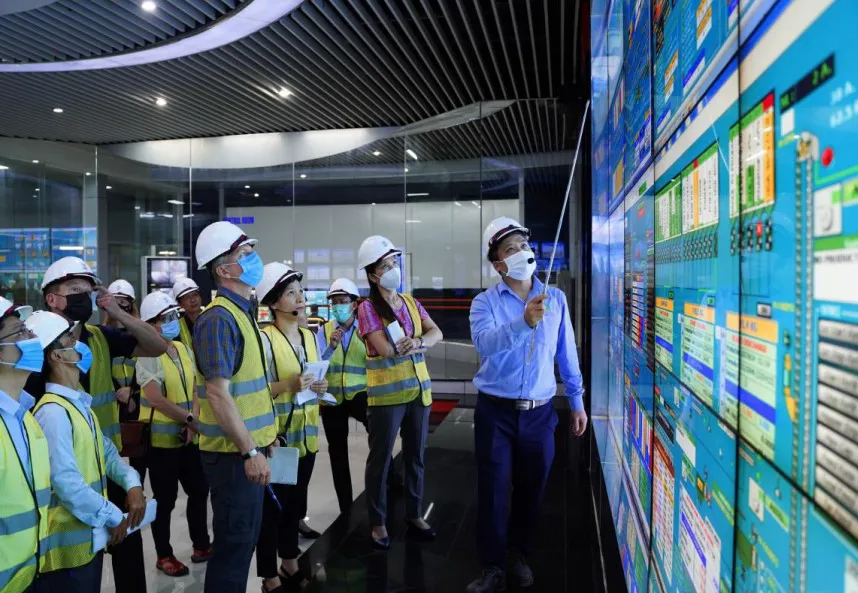
Their cooperation focuses on assisting the Vietnamese competent authorities in traceability in the pork value chain; control and use of veterinary medicines (AMR prevention); food safety in meat processing; feed management and safety; capacity building in risk-based food safety management.
The SSC on food safety in the pork value chain includes three phases: the first taking place from February 2017 to December 2019, the second phase from April 2020 to December 2023, and the third phase between 2024 and 2026.
According to Sanne Høj Andrén, results from the first and second phases have been shown through the engagement of stakeholders and changes in the legal framework. In reality, they have helped issues regulations on feed management in the Animal Husbandry Law, issue a new Circular on the prescription of veterinary drugs with inputs from SSC experts, and issue a Circular on traceability and recall in 2021.
Affirming the role of SSC, Dinh Pham Hien, International Cooperation Department, MARD, said the assistance from Denmark matters a lot to the Partnership for Sustainable Agriculture in Vietnam (PSAV), which is an “initiative of a new vision for agriculture”. PSAV focuses on connecting players in the agricultural sector in order to share experience, and cooperate to develop the value chain of the Vietnamese key products under the public-private partnership (PPP), with the aim of increasing labor productivity, and creating more income for farmers, improving environmental sustainability in agricultural production.
Hien said PSAV has developed various environmentally friendly site models of sustainable farming and raised income for farmers. Certain PPP models have increased productivity by 17% and income by 17%, whereas they reduced CO2 by 43%, in comparison with several traditional models.
| Data on organic farms and area in Denmark between 1990 and 2020. Photo: Danish Agriculture and Food Council |