QR code makes shopping easier for Hanoi residents
Among all payment methods, QR code-based payments grew 160% in volume and 40% in value from January to May.
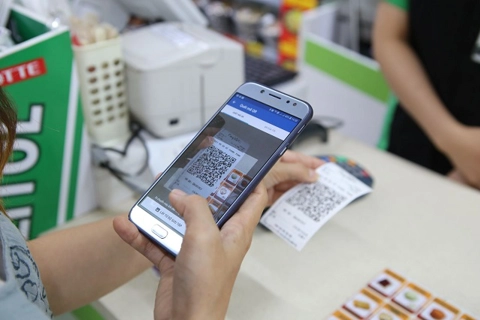
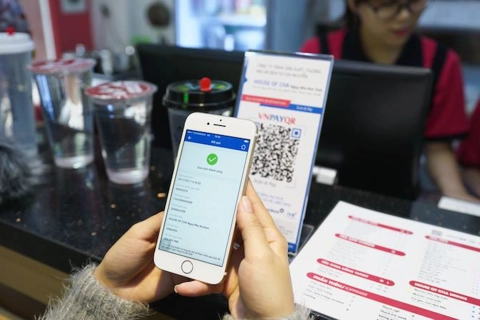
The development of digital payment means that shoppers in Hanoi no longer need to carry cash around with them, and all items are just a click away.
| QR code used to pay for vegetables at a local market in Hanoi. Photo: Economic & Urban Newspaper |
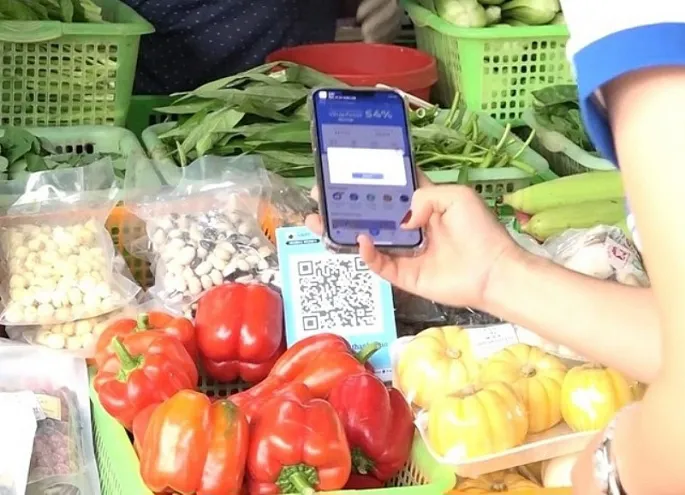
At Vinh Ho market in Dong Da District, more than 90% of shop owners have QR codes for their bank accounts.
Shoppers scan QR codes and transfer their payments for items purchased. Bank transfers replace cash payments in transactions.
"We accept bank transfers for all items, even a piece of chewing gum worth VND1,000 (US$0.042)," Lam Thi Gam, a seafood vendor at Vinh Ho market, told The Hanoi Times.
Vendors also accept payments through e-wallet apps such as Momo, VNpay and ZaloPay, she said.
"All you need is the QR code to pay for the items. It is especially convenient when there are many customers at the same time," she said.
"QR codes ensure customer loyalty once the problem of waiting in line just to pay is solved. It also helps me collect the right money from the right people."
For Nguyen Thanh Ha, a shopper in Tay Son Ward, Dong Da District, and Nguyen Hong Hanh, a resident of Truc Bach Ward, Ba Dinh District, cashless payment saves them a lot of time.
"It used to take me a lot of time to get the bills and give them to the shoppers and then get the change if there was any," Ha said.
Now, QR codes make her shopping day easier, she said.
"I can transfer money for a VND10,000 (US$0.42) water bottle using QR codes or bank accounts," Ha said. "With no cash involved, I'm no longer afraid of being stolen and robbed."
"Shopping has never been easier for me," Hanh said. "All I need is a smartphone connected to the Internet."
Pham Le Thuy in La Khe Ward, Ha Dong District, said that cash is no longer her basic need because everything can be paid through smart banking applications.
"Withdrawing bills from ATMs used to cost me commissions, time, and the risk of the machine breaking down. Now I only need cash to fill up my motorcycle," he says.
Other expenses such as house rent, utilities, and food are paid through bank transfers, Thuy explains.
Thuy feels less anxious now that she does not have to carry too much cash in her purse.
Like other interviewees, Thuy acknowledges that the smartphone has replaced the bank card and cash as indispensable.
It is the Covid-19 pandemic that has changed the way they spend and store money via online platforms, they claimed.
The inevitable change
Online bank transfer or remittance has become familiar to people in Hanoi, as QR codes and bank account numbers can be found everywhere, from old-fashioned markets to eateries, restaurants, gas stations, and clothing stores.
Not only young people, who are receptive to new technologies, but also middle-aged people are now used to having at least one e-wallet app and one smart banking app installed on their smartphones.
According to the Vietnam Banks Association (VNBA), Vietnamese banks are making great progress in digital transformation, with digital transactions accounting for 94-97% of all payments.
A report by Visa on consumer preferences showed that the circulation of banknotes in Vietnam decreased significantly last year compared to 2020. Specifically, 89% of consumers prefer e-wallet apps, 85% of them frequently use credit and debit cards for e-commerce and contactless payments, which doubled in 2022 compared to the previous year.
The State Bank of Vietnam also predicted that smartphone transactions in Vietnam would reach US$70.9 billion by 2025, while the 2022 e-Conomy SEA report predicted that digital payments in the country would reach US$143 billion in the same year.
According to the State Bank of Vietnam, the volume of cashless transactions increased by 50% in the first five months of the year. Among all types of payments, QR code-based payments grew 160% in volume and 40% in value during the period.
Lawyer Le Son Tung said cashless payment is an inevitable trend that will continue to grow in the future and will have a huge impact on the way self-employed merchants do business, especially as the population gets younger, new technologies are developed, and the legal framework for cashless payment is improved.